Executive Summary
- Detection of data and concept drift to maintain inference accuracy over time.
- Real-time tracking of latency, throughput, and error rates within production API environments.
- Implementation of automated feedback loops for continuous model retraining and optimization.
What is Model Monitoring?
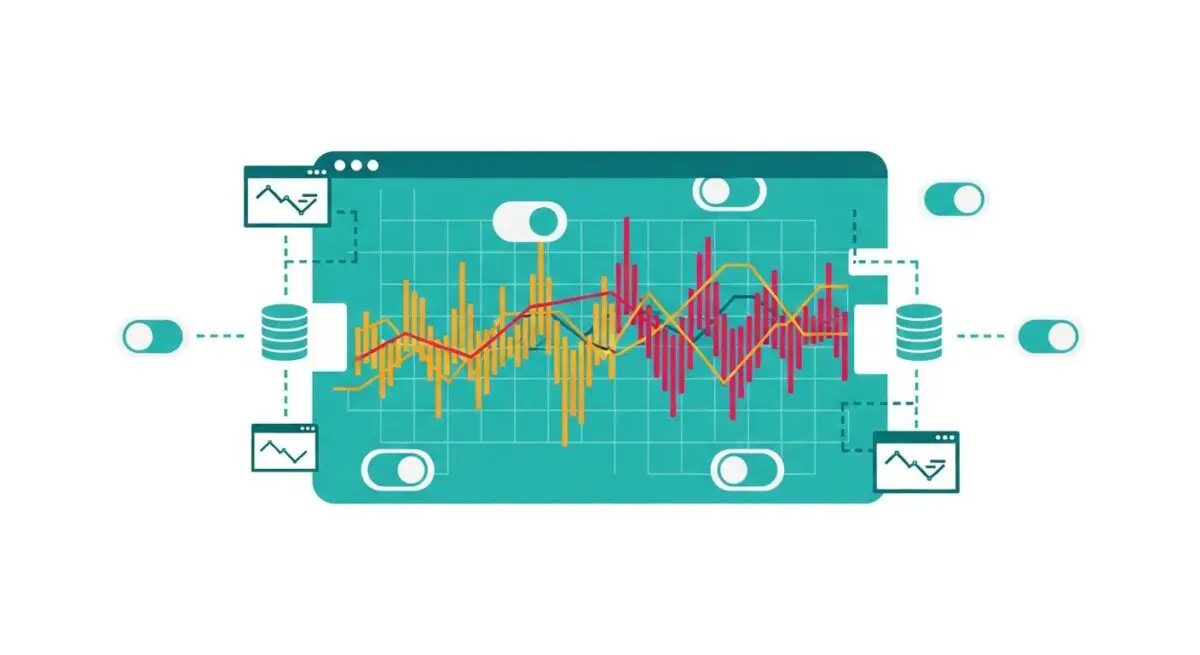
Model monitoring is the systematic process of tracking the performance, health, and reliability of machine learning models once they are deployed into production environments. In the context of AI automations and content operations, it involves the continuous observation of technical metrics such as data drift, concept drift, and model decay. These processes ensure that the model’s outputs remain aligned with the original training objectives and business requirements, even as the underlying data landscape evolves.
Technically, model monitoring requires the integration of telemetry tools that capture input features, output predictions, and ground-truth labels. By analyzing these data points, engineers can identify when a model’s predictive power begins to degrade. This is particularly critical for Generative AI and Large Language Models (LLMs), where subtle shifts in prompt effectiveness or API versioning can lead to significant variations in JSON payload quality and programmatic SEO outcomes.
The Real-World Analogy
Consider a high-precision GPS system installed in an autonomous delivery vehicle. When the vehicle is first programmed, it has a perfect map of the city. However, cities are dynamic; roads close for construction, new buildings appear, and traffic patterns shift. Model monitoring is equivalent to the vehicle’s sensors constantly comparing its internal map against the physical world. If the sensors detect a new one-way street that wasn’t in the original data, the system flags the discrepancy so the map can be updated. Without this monitoring, the vehicle would eventually attempt to drive through a wall or enter a restricted zone, leading to a total failure of the automated delivery service.
Why is Model Monitoring Critical for Autonomous Workflows and AI Content Ops?
In autonomous workflows, model monitoring serves as the primary defense against silent failures. Unlike traditional software bugs that trigger immediate error codes, a drifting AI model may continue to produce syntactically correct JSON payloads that are factually incorrect or contextually irrelevant. This is catastrophic for programmatic SEO and AI content ops, where thousands of pages might be generated based on degraded model logic.
Furthermore, monitoring is essential for scaling serverless architectures. By tracking latency and token usage, organizations can optimize their API calls, reducing overhead and preventing “runaway” costs associated with inefficient inference. It provides the necessary data to trigger automated retraining pipelines, ensuring that the stateless automation remains robust against changing market trends and search engine algorithm updates.
Best Practices & Implementation
- Establish a Statistical Baseline: Define a “golden dataset” during the validation phase to serve as a benchmark for production performance.
- Monitor for Data and Concept Drift: Use statistical tests (e.g., Kolmogorov-Smirnov) to detect shifts in the distribution of input features and output predictions.
- Implement Real-Time Alerting: Configure automated notifications for when performance metrics, such as F1-score or Mean Absolute Error, fall below predefined thresholds.
- Log Comprehensive Metadata: Capture not just the model output, but also the prompt version, API parameters, and system latency for every inference.
- Automate Feedback Loops: Integrate human-in-the-loop (HITL) systems to label production data, which can then be used to fine-tune models periodically.
Common Mistakes to Avoid
One frequent error is focusing solely on infrastructure metrics (like CPU usage) while ignoring model-specific performance metrics. A model can be “healthy” from a server perspective while providing entirely useless predictions. Another mistake is failing to account for seasonal drift, where temporary changes in user behavior are misinterpreted as permanent model degradation, leading to unnecessary and costly retraining cycles.
Conclusion
Model monitoring is the foundational layer for maintaining the integrity of AI-driven automation. By proactively identifying drift and performance decay, engineers ensure that autonomous data pipelines remain accurate, efficient, and scalable.