Executive Summary
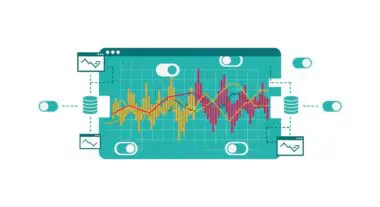
- AI-driven personalization replaces static rule-based logic with dynamic machine learning inference for real-time content adaptation.
- The architecture relies on high-speed data pipelines, vector embeddings, and API-driven payloads to deliver hyper-relevant user experiences.
- Implementation requires a focus on low-latency edge computing and stateless automation to ensure scalability within AI Content Ops.
What is AI-Driven Personalization?
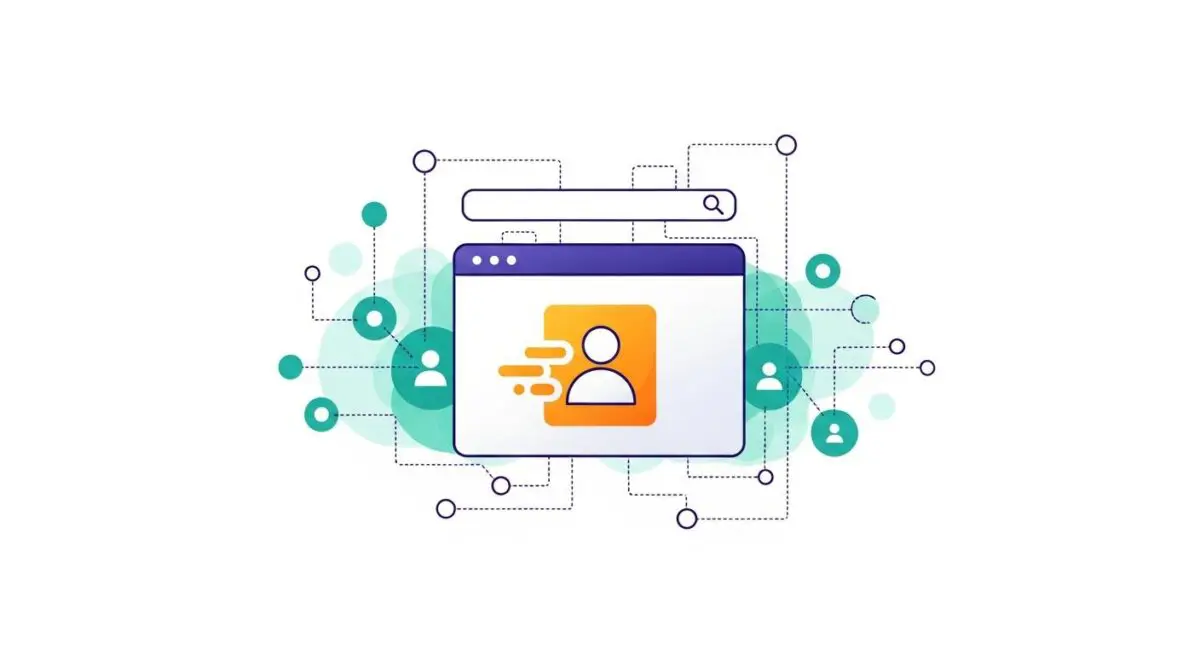
AI-driven personalization is the systematic application of machine learning (ML) algorithms and large language models (LLMs) to dynamically modify digital content, interfaces, and user journeys in real-time. Unlike traditional rule-based personalization, which relies on static “if-then” logic, AI-driven systems utilize high-dimensional vector embeddings and predictive analytics to process vast datasets—including behavioral signals, historical interactions, and contextual metadata—to deliver hyper-relevant outputs at the individual level.
In the context of AI automations, this process involves the orchestration of data pipelines where raw user input is ingested, processed through an inference engine, and returned as a customized JSON payload. This allows for the programmatic generation of content that adapts to user intent, significantly increasing engagement metrics and conversion rates within autonomous workflows.
The Real-World Analogy
Imagine a high-end digital library that doesn’t just store books but physically rearranges its entire architecture the moment you step through the door. Based on your previous reading habits, the current time of day, and even the speed at which you walk, the library instantly moves the most relevant chapters to the front desk, translates them into your preferred technical dialect, and highlights the exact paragraphs that solve your current problem. It is an environment that evolves in real-time to match the specific needs of the visitor without any manual intervention from a librarian.
Why is AI-Driven Personalization Critical for Autonomous Workflows and AI Content Ops?
For modern AI Content Ops, AI-driven personalization is the catalyst for scaling programmatic SEO and stateless automation. By integrating personalization into the automation stack, organizations can move beyond generic content templates. Instead, API-driven workflows can inject user-specific data points into LLM prompts, ensuring that the generated output is contextually aligned with the recipient’s technical requirements or stage in the buyer’s journey.
Furthermore, this approach optimizes serverless architecture scaling. By utilizing edge functions to handle personalization logic, developers can reduce the load on central databases while maintaining low-latency response times. This is essential for maintaining the performance of high-traffic autonomous systems that require instantaneous data retrieval and content rendering.
Best Practices & Implementation
- Implement Vector Databases: Utilize specialized databases like Pinecone or Milvus to store and retrieve user embeddings, enabling high-speed similarity searches for real-time content matching.
- Leverage Edge Computing: Deploy personalization logic via Cloudflare Workers or AWS Lambda@Edge to process user data closer to the source, minimizing latency in the delivery of personalized payloads.
- Maintain Data Integrity: Ensure rigorous ETL (Extract, Transform, Load) processes to prevent “garbage in, garbage out” scenarios, which can lead to inaccurate or biased personalization outputs.
- Adopt a Stateless Architecture: Design workflows where the personalization logic is decoupled from the core application, allowing for independent scaling and easier integration with third-party AI APIs.
Common Mistakes to Avoid
One frequent error is over-engineering the segmentation logic, which leads to data sparsity and inaccurate model predictions. Another critical mistake is neglecting data privacy and compliance; failing to anonymize PII (Personally Identifiable Information) within the AI training or inference pipeline can lead to significant legal liabilities. Finally, many brands fail to monitor for “model drift,” where the AI’s personalization accuracy degrades over time as user behavior evolves.
Conclusion
AI-driven personalization represents the transition from static digital assets to dynamic, intelligent ecosystems that optimize themselves for every interaction. For AI-Search and automation professionals, mastering these real-time data pipelines is essential for maintaining a competitive edge in autonomous content delivery.