Executive Summary
- Dynamic compression reduces the size of HTTP payloads in real-time, significantly lowering the volume of data transferred over the network for non-static resources.
- While it decreases download times and improves Largest Contentful Paint (LCP), it introduces a computational overhead on the server that must be balanced against Time to First Byte (TTFB).
- Modern implementations utilize advanced algorithms like Brotli and Gzip to optimize delivery for personalized, database-driven, or frequently changing content.
What is Dynamic Compression?
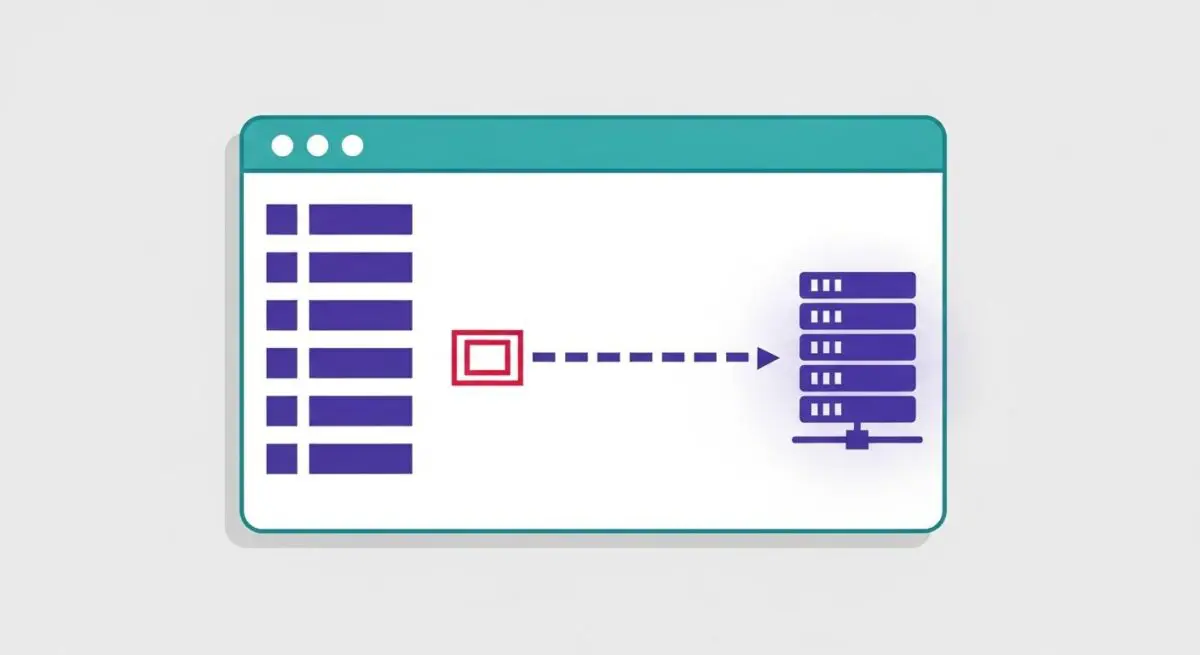
Dynamic compression is a server-side process where web assets—primarily HTML, JSON, and XML—are compressed in real-time as they are requested by a client. Unlike static compression, where files are pre-compressed and stored on the disk (e.g., .gz or .br versions of CSS and JS files), dynamic compression occurs on-the-fly during the HTTP request-response cycle. This is essential for content that is generated dynamically by a backend application, such as personalized user dashboards, search results, or real-time data feeds, where the final output cannot be predicted or pre-rendered.
At its core, the server uses algorithms like Gzip or the more modern Brotli to encode the data stream, removing redundancies and representing the information in a more compact binary format. When the browser receives this compressed stream, it decompressess the data before rendering it. This mechanism is negotiated via the Accept-Encoding and Content-Encoding HTTP headers, ensuring compatibility between the server’s capabilities and the client’s decompression engine.
The Real-World Analogy
Imagine a custom furniture store where every piece is built to order. Instead of shipping a fully assembled, bulky sofa that takes up massive space in a delivery truck (high bandwidth usage), the craftsman quickly disassembles the sofa into a compact, flat-packed kit right before it leaves the warehouse (dynamic compression). The delivery truck can now move much faster and carry more items. Once the kit arrives at the customer’s house, the customer quickly reassembles it (browser decompression). The time spent disassembling the sofa at the warehouse is the “CPU overhead,” but it is vastly outweighed by the speed and efficiency of transporting a smaller package.
Why is Dynamic Compression Critical for Website Performance and Speed Engineering?
In the era of Core Web Vitals, dynamic compression is a primary lever for optimizing Largest Contentful Paint (LCP) and Time to First Byte (TTFB). By reducing the total byte count of the HTML document, the browser can begin parsing the DOM significantly earlier. This is particularly critical for mobile users on high-latency or bandwidth-constrained networks, where every kilobyte saved translates directly into reduced round-trip times.
Furthermore, dynamic compression optimizes the utilization of the TCP slow-start phase. Since TCP connections start with a small initial congestion window, smaller compressed payloads are more likely to be delivered in the first few round trips, leading to a faster perceived and actual load time. However, speed engineers must carefully calibrate the compression level; excessive compression can lead to high CPU utilization, which may paradoxically increase TTFB if the server takes too long to process the encoding.
Best Practices & Implementation
- Prioritize Brotli over Gzip: Brotli typically offers 15-20% better compression ratios than Gzip for text-based assets. Ensure your server or CDN is configured to prefer Brotli when the Accept-Encoding: br header is present.
- Calibrate Compression Levels: For dynamic content, avoid the maximum compression level (e.g., Brotli 11). Use a mid-range setting (e.g., Brotli 4 or 5) to achieve a high compression ratio without incurring prohibitive CPU latency.
- Implement Byte-Thresholds: Do not compress very small files (e.g., under 1KB). The overhead of the compression headers and the CPU cycles required often outweigh the negligible savings in payload size.
- Offload to the Edge: Utilize Content Delivery Networks (CDNs) or Edge Workers to handle dynamic compression. This offloads the computational burden from your origin server and places the compression process closer to the end-user.
Common Mistakes to Avoid
One frequent error is attempting to dynamically compress already compressed binary formats, such as JPEGs, PNGs, or WOFF2 fonts. This wastes CPU cycles and can occasionally result in a larger file size. Another mistake is failing to monitor server CPU metrics; if dynamic compression is enabled on a high-traffic site with underpowered hardware, the server may become CPU-bound, leading to significant delays in response times that negate the benefits of the smaller payload.
Conclusion
Dynamic compression is a fundamental pillar of modern web performance, enabling the efficient transfer of real-time data. When properly balanced with server resources, it serves as a critical tool for reducing latency and improving the overall user experience.