Executive Summary
- Eliminates the computational latency of repeated TCP handshakes and TLS negotiations by maintaining a cache of active connections.
- Significantly improves Time to First Byte (TTFB) by providing immediate access to pre-authenticated database or network resources.
- Protects backend infrastructure from resource exhaustion and crashes during high-concurrency traffic spikes by capping active connection counts.
What is Connection Pooling?
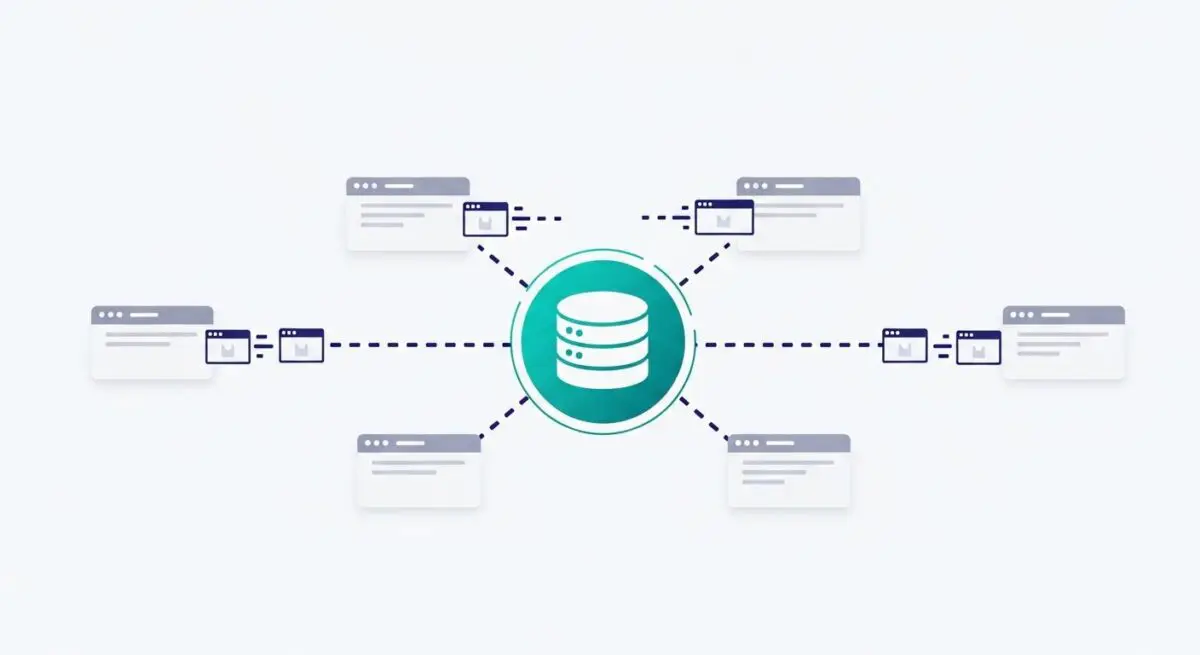
Connection pooling is a critical resource management pattern used in high-performance computing to maintain a cache of open, reusable database or network connections. In a standard non-pooled environment, every request to a data store requires the application to establish a new connection, which involves expensive overhead: DNS resolution, TCP three-way handshakes, and authentication protocols. Connection pooling mitigates this by keeping a set of connections ‘alive’ and ready for immediate reuse.
When an application requires data access, the pool manager assigns an existing idle connection from the pool. Once the operation is complete, the connection is not terminated; instead, it is returned to the pool to serve subsequent requests. We at Andres SEO Expert identify this as a fundamental requirement for scaling enterprise-level applications, as it prevents the performance degradation typically caused by the constant creation and destruction of short-lived connections.
The Real-World Analogy
Think of a busy metropolitan fire station. If the city had to recruit, hire, and train a new team of firefighters every time a fire alarm rang, the response time would be catastrophic. Instead, the station maintains a permanent ‘pool’ of trained firefighters who are already equipped and waiting in the station. When an alarm sounds, they are ready to deploy instantly. Once the fire is extinguished, they return to the station to remain on standby for the next emergency. Connection pooling ensures your server has ‘firefighters’ ready to go, rather than starting the recruitment process for every single visitor.
Why is Connection Pooling Critical for Website Performance and Speed Engineering?
Connection pooling is a cornerstone of backend optimization, directly impacting Time to First Byte (TTFB) and overall server scalability. By eliminating the latency associated with the three-way handshake and authentication protocols for every database query, servers can process requests significantly faster. This is particularly vital for dynamic websites where a single page load might require multiple database interactions to fetch content, user data, and configuration settings.
Furthermore, connection pooling protects the database from resource exhaustion. Without a pool, a sudden spike in traffic could force the database to open thousands of concurrent connections, consuming all available RAM and CPU cycles just to manage the connection overhead. A well-configured pool acts as a throttle, ensuring the database operates within its optimal performance envelope while maintaining high throughput for the application layer, which is essential for passing Core Web Vitals under heavy load.
Best Practices & Implementation
- Right-Size the Pool: Avoid the temptation to create an excessively large pool. A pool that is too large can lead to context switching overhead and memory bloat; use load testing to find the ‘sweet spot’ for your specific hardware and concurrency needs.
- Implement Connection Timeouts: Configure strict ‘max lifetime’ and ‘idle timeout’ settings to ensure that stale or hung connections are periodically purged and replaced with fresh ones to maintain pool health.
- Monitor for Connection Leaks: Ensure that your application code explicitly returns connections to the pool in a
finallyblock or via automated resource management to prevent the pool from draining and causing application hangs. - Use Specialized Middleware: For distributed environments, consider using dedicated connection poolers like PgBouncer for PostgreSQL or ProxySQL for MySQL to manage connections at the infrastructure level rather than the application level.
Common Mistakes to Avoid
One frequent error is failing to account for the Maximum Connection Limit of the underlying database. If the application’s pool size exceeds the database’s capacity, the system will experience intermittent connection failures. Another common mistake is ‘Connection Leaking,’ where developers open a connection but fail to return it to the pool due to improper error handling. Finally, ignoring the network latency between the application server and the database can negate the benefits of pooling if the two are not geographically co-located within the same data center.
Conclusion
Connection pooling is an indispensable optimization for modern web architectures, significantly reducing latency and server strain by reusing established communication channels. Proper implementation ensures stable, high-speed delivery of dynamic content even under heavy concurrent loads.