Executive Summary
- Keep-Alive enables persistent HTTP connections, allowing multiple requests to be sent over a single TCP connection, significantly reducing handshake overhead.
- By eliminating the need for repeated TCP and TLS negotiations, it lowers latency and improves Time to First Byte (TTFB) for resource-heavy pages.
- Proper configuration of Keep-Alive timeouts and request limits is essential to balance server resource utilization with client-side performance gains.
What is Keep-Alive?
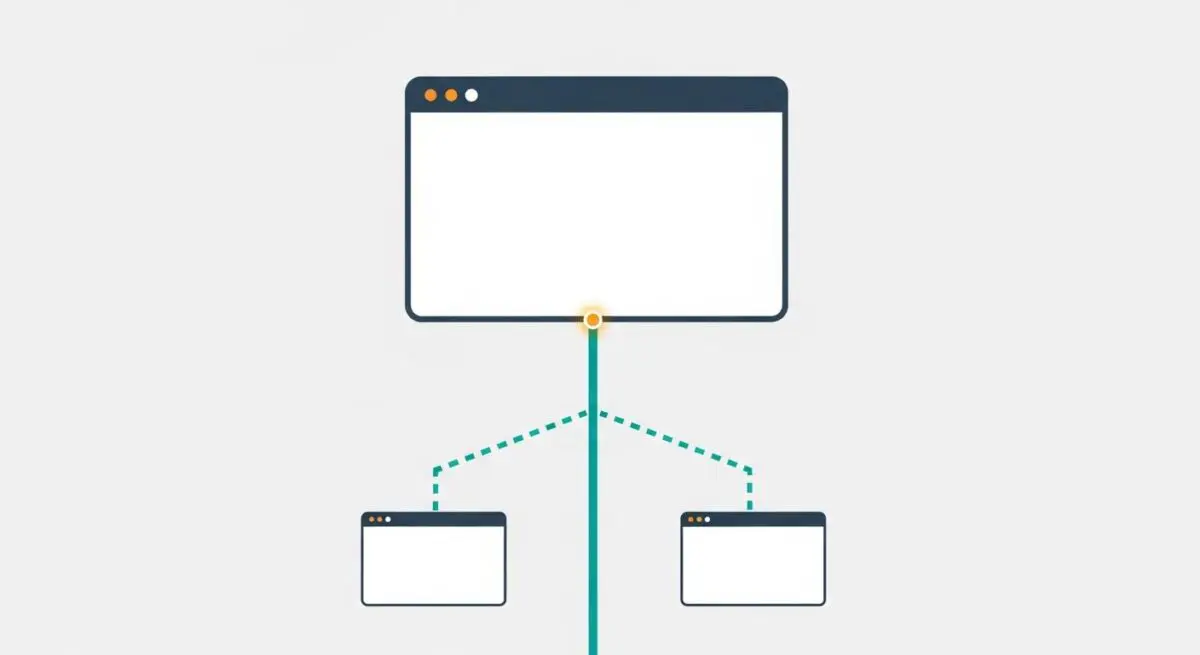
Keep-Alive, also known as HTTP persistent connection, is a method used to allow the same TCP connection to send and receive multiple HTTP requests and responses, rather than opening a new connection for every single file. In the legacy HTTP/1.0 protocol, a separate connection was required for every object (HTML, CSS, JS, images) on a page. Keep-Alive was introduced to mitigate the performance bottleneck caused by the constant opening and closing of connections.
From a technical standpoint, Keep-Alive functions by including a Connection: keep-alive header in the HTTP request. This signals to the server that the client wishes to maintain the connection after the current transaction is complete. The server then responds with the same header, keeping the socket open for a specified duration or until a maximum number of requests is reached. This is fundamental for modern web architecture, as it reduces the round-trip time (RTT) associated with the three-way TCP handshake and the subsequent TLS/SSL handshake for encrypted traffic.
The Real-World Analogy
Imagine you are ordering a multi-course meal at a restaurant. Without Keep-Alive, you would have to call your waiter over, order a single appetizer, wait for it to arrive, and then the waiter would immediately clock out and go home. To order your main course, you would have to call the restaurant, wait for a new waiter to be assigned to your table, and go through the entire introduction process again. With Keep-Alive, your waiter stays at your table for the duration of your meal, ready to take your next order immediately without the repetitive overhead of introductions and administrative setup for every single dish.
Why is Keep-Alive Critical for Website Performance and Speed Engineering?
Keep-Alive is a cornerstone of Speed Engineering because it directly addresses network latency. Every new TCP connection requires a three-way handshake (SYN, SYN-ACK, ACK). On HTTPS sites, this is followed by a complex TLS handshake. For a website with 50 assets, establishing 50 separate connections would result in massive cumulative delays, particularly on high-latency mobile networks. By reusing connections, Keep-Alive significantly improves Time to First Byte (TTFB) and reduces the Largest Contentful Paint (LCP) by ensuring that subsequent resources (like critical CSS or hero images) can be fetched without waiting for new network negotiations.
Furthermore, Keep-Alive reduces the CPU and memory load on the web server. Managing thousands of concurrent connection setups and teardowns is resource-intensive. Persistent connections allow the server to handle more traffic with less overhead, leading to more stable Server Response Times during traffic spikes.
Best Practices & Implementation
- Optimize Timeout Settings: Set the
KeepAliveTimeout(in Apache) orkeepalive_timeout(in Nginx) to a balanced value, typically between 5 and 15 seconds. Too low a value closes connections prematurely; too high a value can exhaust server memory by holding open idle connections. - Configure Max Requests: Define the maximum number of requests allowed per connection (e.g.,
MaxKeepAliveRequests). Setting this to 100 or higher ensures that complex pages can load all assets over a single or few connections. - Prioritize HTTP/2 and HTTP/3: While Keep-Alive is a manual configuration in HTTP/1.1, HTTP/2 uses multiplexing by default, which is an evolved form of persistence. Ensure your server supports these modern protocols to maximize connection efficiency.
- Monitor Server Resources: Use tools like
toporhtopto monitor how many persistent connections are active. If your server is hitting its connection limit, consider scaling horizontally or fine-tuning the timeout duration.
Common Mistakes to Avoid
One frequent error is setting an excessively long Keep-Alive timeout on high-traffic servers, which leads to “zombie” connections that consume RAM without transferring data, eventually causing the server to refuse new connections. Another mistake is disabling Keep-Alive entirely in an attempt to save memory, which inadvertently destroys performance by forcing every asset to undergo a full TCP/TLS handshake. Finally, many developers fail to verify if their Content Delivery Network (CDN) or Load Balancer is correctly passing the Keep-Alive headers to the origin server, resulting in broken persistence chains.
Conclusion
Keep-Alive is an essential mechanism for reducing network overhead and improving resource delivery speed. Proper implementation ensures a more efficient use of server resources and a significantly faster experience for the end-user.