Executive Summary
- Algorithmic prioritization of prospects based on behavioral triggers, demographic data, and intent signals within a CRM or automation platform.
- Enables autonomous routing of high-intent payloads to sales teams while maintaining low-latency processing for cold leads.
- Integrates with Large Language Models (LLMs) to perform sentiment analysis and intent classification on unstructured data inputs.
What is Lead Scoring?
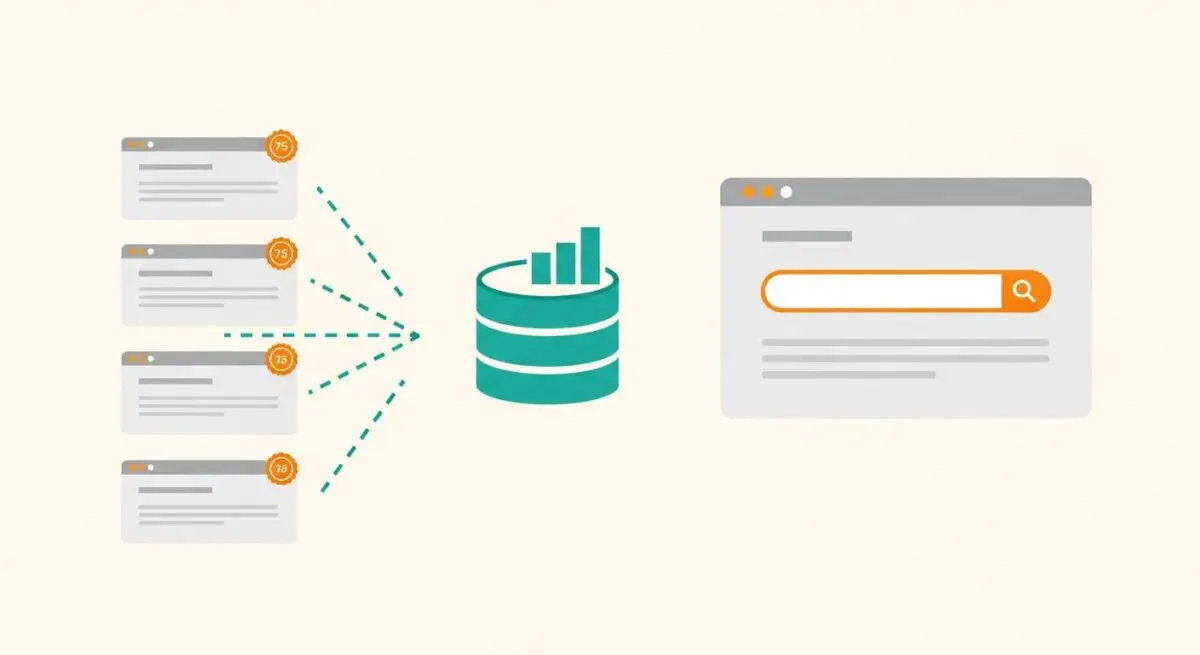
Lead scoring is a quantitative methodology used to rank prospects against a scale that represents the perceived value each lead represents to the organization. In the context of AI automations, this involves the programmatic assignment of numerical values based on specific attributes, such as job title, industry, and engagement metrics like email opens or API calls. These scores are typically calculated using a combination of explicit data provided by the user and implicit data gathered through tracking pixels and server-side events.
Advanced lead scoring systems utilize machine learning models to identify patterns in historical conversion data, allowing for predictive scoring. This shifts the process from static, rule-based logic to dynamic, stateless automation where the score evolves in real-time as new data points enter the pipeline. By normalizing these scores across a unified data layer, organizations can ensure that their sales and marketing stacks operate on a single source of truth.
The Real-World Analogy
Imagine a high-end restaurant with a limited number of tables and a long line of people waiting outside. Instead of seating people in the order they arrived, the maître d’ uses a checklist: Are they wearing formal attire? Do they have a prior reservation? Have they dined here before and spent significantly? Those who check more boxes are moved to the front of the line. Lead scoring is that digital maître d’, ensuring your best tables (your sales team’s time) are reserved for the guests most likely to provide the highest value.
Why is Lead Scoring Critical for Autonomous Workflows and AI Content Ops?
In autonomous workflows, lead scoring acts as a logic gate for data routing. Without a robust scoring mechanism, AI agents and automated sequences would treat every inbound webhook with equal priority, leading to resource exhaustion and inefficient API credit usage. By implementing a scoring layer, developers can trigger high-compute LLM tasks—such as personalized video generation or deep-research reports—only for leads that exceed a specific threshold. This ensures that expensive serverless functions are reserved for high-probability conversions, optimizing the ROI of the automation stack.
Best Practices & Implementation
- Implement decay functions to automatically reduce scores over time, ensuring that stale engagement data does not inflate lead priority.
- Utilize negative scoring for disqualifying actions, such as visiting the “Careers” page or using a personal email domain in a B2B context.
- Sync scoring data bi-directionally between the CRM and the automation layer via REST APIs to maintain state across disparate systems.
- Incorporate unstructured data analysis by passing lead comments or chat transcripts through an LLM to extract intent-based sentiment scores.
Common Mistakes to Avoid
One frequent error is the reliance on static thresholds that do not account for seasonal fluctuations or changes in product-market fit. Another mistake is failing to distinguish between marketing-qualified leads (MQLs) and sales-qualified leads (SQLs) within the automation logic, which often results in premature sales outreach. Finally, many brands neglect to audit their scoring algorithms, leading to “ghost leads” that inflate metrics without contributing to revenue.
Conclusion
Lead scoring is the essential filtering mechanism that allows AI-driven organizations to scale their operations without sacrificing lead quality or operational efficiency. By automating the prioritization of data payloads, businesses can ensure their most valuable resources are always focused on the highest-impact opportunities.