




Executive Summary
- Differentiates between vertical scaling (increasing hardware capacity) and horizontal scaling (adding more nodes) for performance stability.
- Directly influences Core Web Vitals by preventing resource contention and latency spikes during high-concurrency events.
- Requires stateless architecture and efficient load balancing to ensure seamless distribution of incoming network traffic.
What is Scalability?
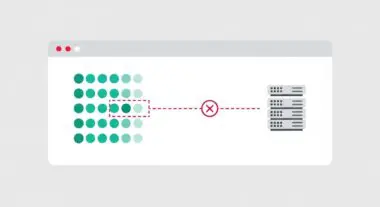
Scalability refers to the architectural capability of a web system to handle an increasing volume of work—typically measured in concurrent users, requests per second, or data volume—by proportionally scaling its underlying resources. In the context of high-performance speed engineering, scalability is not merely about surviving traffic spikes; it is about maintaining consistent latency and throughput regardless of the load. A truly scalable system ensures that the relationship between resource consumption and performance remains linear or near-linear.
Technically, scalability is categorized into two primary dimensions: vertical and horizontal. Vertical scalability, or scaling up, involves adding more power (CPU, RAM) to an existing server. Horizontal scalability, or scaling out, involves adding more nodes to a distributed system, such as a cluster of web servers behind a load balancer. For enterprise-level performance, horizontal scalability is preferred as it offers higher fault tolerance and removes the physical hardware limits inherent in a single machine.
The Real-World Analogy
Imagine a busy metropolitan highway. A non-scalable road has only two lanes; as more cars enter, traffic slows to a crawl. Vertical scaling would be like upgrading the cars to be faster, which doesn’t solve the congestion. Scalability, specifically horizontal scaling, is like having a highway system that can instantly add new lanes as more cars arrive. No matter how many thousands of vehicles join the flow, every driver maintains the same high speed because the infrastructure expands to accommodate the exact volume of traffic in real-time.
Why is Scalability Critical for Website Performance and Speed Engineering?
Scalability is the primary safeguard for Core Web Vitals during periods of high demand. Without adequate scalability, server resources become saturated, leading to increased Time to First Byte (TTFB) and delayed Largest Contentful Paint (LCP). When a server reaches its capacity limit, it begins queuing requests, which exponentially increases the Interaction to Next Paint (INP) as the backend struggles to process logic and return responses.
Furthermore, modern AI-Search crawlers and GEO-distributed bots often perform aggressive, high-frequency indexing. A scalable infrastructure ensures that these automated agents do not consume all available threads, which would otherwise degrade the experience for human users. By offloading static assets to the edge and utilizing elastic compute resources, developers can maintain a sub-second rendering path even under extreme concurrency.
Best Practices & Implementation
- Implement Stateless Architecture: Ensure that application servers do not store session data locally. Use externalized state management (e.g., Redis) to allow any server in a cluster to handle any incoming request, facilitating seamless horizontal scaling.
- Utilize Elastic Load Balancing: Deploy intelligent load balancers that monitor server health and traffic patterns, automatically distributing load to the least-congested nodes and triggering the instantiation of new instances when thresholds are met.
- Database Sharding and Read Replicas: Prevent the database from becoming a single point of failure by distributing data across multiple shards or using read replicas to handle high-volume GET requests, reducing contention on the primary write node.
- Microservices Decoupling: Break down monolithic applications into smaller, independent services. This allows for granular scalability, where only the resource-intensive components of the site are scaled, optimizing infrastructure costs and performance.
Common Mistakes to Avoid
One frequent error is over-provisioning, where brands pay for massive server capacity that remains idle 90% of the time, rather than implementing automated elastic scaling. Another critical mistake is ignoring database bottlenecks; scaling the web tier is useless if the database cannot handle the increased connection count. Finally, many organizations fail to perform load testing, assuming their cloud provider handles scalability automatically without configuring the necessary triggers and limits.
Conclusion
Scalability is a fundamental requirement for modern speed engineering, ensuring that website performance remains stable and responsive under any load condition. By prioritizing horizontal growth and stateless design, architects can guarantee optimal user experiences and maintain high search engine visibility.