



Executive Summary
- Centralization of third-party scripts through a unified container to mitigate DOM bloat and optimize Core Web Vitals.
- Standardization of data collection via a robust Data Layer (dataLayer) to ensure cross-platform attribution consistency.
- Transition from client-side to server-side tagging to enhance data privacy, security, and bypass browser-based tracking limitations.
What is Tag Management System?
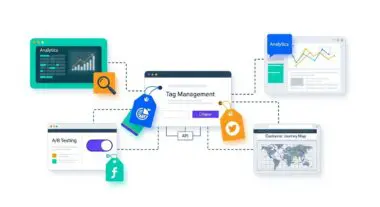
A Tag Management System (TMS) is a sophisticated software architecture designed to manage and deploy marketing and analytics tags (snippets of JavaScript or tracking pixels) on a digital property without requiring direct modifications to the underlying source code. At its core, a TMS utilizes a single master container script that, when executed, dynamically injects the necessary third-party scripts based on predefined triggers and variables. This decoupling of the marketing technology (MarTech) stack from the core web development workflow allows for greater agility, as marketing teams can deploy tracking mechanisms in real-time while developers focus on application logic and performance.
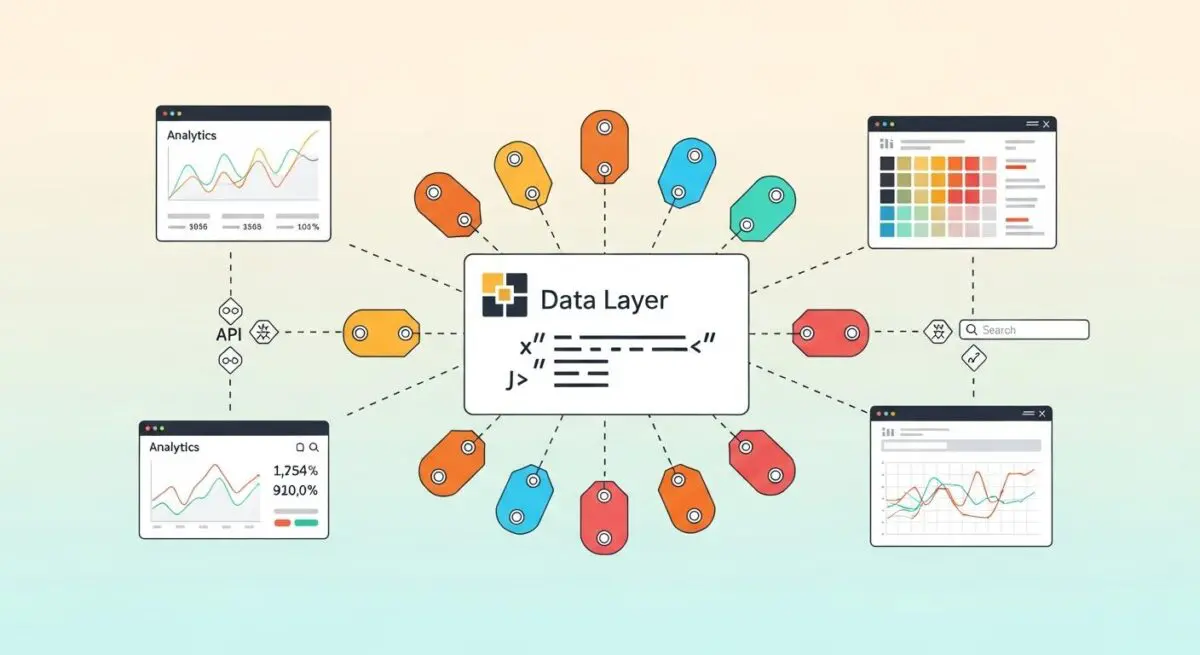
Technically, a Tag Management System operates through a Data Layer, which serves as a virtual repository for all structured data points generated by user interactions. By abstracting data from the Document Object Model (DOM) and placing it into a standardized JSON object, the TMS ensures that various vendors—such as Google Analytics 4, Meta Pixel, or LinkedIn Insight Tag—receive consistent, high-fidelity data. This architecture is critical for maintaining data integrity in complex enterprise environments where multiple stakeholders require access to the same behavioral signals for disparate reporting and optimization purposes.
The Real-World Analogy
To understand a Tag Management System, imagine a high-density commercial skyscraper’s electrical system. Without a TMS, every time a tenant (a marketing tool) wanted to install a new light fixture or appliance (a tracking pixel), they would have to tear open the walls and rewire the building’s main electrical grid (the website’s source code). This is inefficient, prone to causing short circuits (site crashes), and requires a master electrician (a senior developer) for every minor change. A Tag Management System acts as a sophisticated universal power strip and breaker panel installed in every room. The building’s core wiring is done once, and tenants can simply plug their devices into the panel. The panel manages the load, ensures no single device blows a fuse, and allows for instant activation or deactivation of equipment without ever touching the building’s structural integrity.
How Tag Management System Impacts Marketing ROI & Data Attribution?
The implementation of a Tag Management System directly influences Marketing ROI by optimizing the technical performance of the website and the accuracy of the data used for budget allocation. From a performance perspective, a TMS facilitates asynchronous loading of scripts. Unlike synchronous scripts that block the browser from rendering content until the script is fully loaded, asynchronous tags fire in the background. This significantly improves the Largest Contentful Paint (LCP) and First Input Delay (FID), which are critical components of Google’s Core Web Vitals. Improved site speed correlates directly with higher conversion rates and lower bounce rates, thereby maximizing the efficiency of paid media spend.
Furthermore, a TMS is the backbone of advanced data attribution. By utilizing a centralized Data Layer, organizations can ensure that a ‘purchase’ event is defined identically across all platforms. This eliminates the common discrepancy where different ad platforms report conflicting conversion numbers. In the era of Server-Side Tagging, a TMS can move the processing load from the user’s browser to a cloud-based server. This not only improves device performance but also allows for better data governance and the ability to bypass Intelligent Tracking Prevention (ITP) and other browser-level cookie restrictions. By capturing more accurate data in a privacy-compliant manner, marketers can build more precise attribution models, leading to smarter reinvestment of capital into high-performing channels.
Strategic Implementation & Best Practices
- Establish a Standardized Data Layer Schema: Before deploying any tags, define a comprehensive JSON schema for your Data Layer. This should include universal variables such as transaction_id, user_id (hashed), and event_type to ensure all downstream tools consume the same data points.
- Implement Strict Version Control and Environments: Utilize the TMS’s built-in versioning to maintain a history of changes. Always deploy tags to a ‘Staging’ or ‘Development’ environment for rigorous QA testing before publishing to ‘Production’ to prevent breaking critical site functionality.
- Prioritize Server-Side Tagging for PII: For sensitive data or performance-critical applications, migrate to a server-side container. This allows you to sanitize data before it is sent to third-party vendors, enhancing security and reducing the client-side JavaScript execution burden.
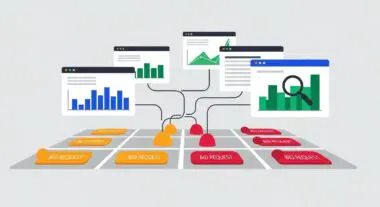
- Audit and Prune Tags Regularly: Conduct quarterly audits to identify and remove ‘ghost tags’—scripts for platforms no longer in use. This reduces unnecessary HTTP requests and minimizes the security risk associated with third-party script vulnerabilities.
Common Pitfalls & Strategic Mistakes
One of the most frequent errors is Tag Bloat, where organizations treat the TMS as a ‘set it and forget it’ tool. Over time, the container size grows as legacy pixels remain active, leading to increased latency and potential conflicts between scripts. Another critical mistake is the lack of a Content Security Policy (CSP). Without a properly configured CSP, a TMS can become a vector for Cross-Site Scripting (XSS) attacks if a third-party vendor’s script is compromised. Finally, many enterprises fail to document their trigger logic, creating a ‘black box’ where it becomes impossible to troubleshoot why certain events are firing incorrectly, leading to data silos and misinformed strategic decisions.
Conclusion
A Tag Management System is no longer just a convenience tool for marketers; it is a fundamental component of a high-performance, privacy-compliant, and scalable data architecture. By centralizing script management and standardizing data collection, organizations can achieve the technical agility required to compete in an AI-driven, data-centric marketplace.