Executive Summary
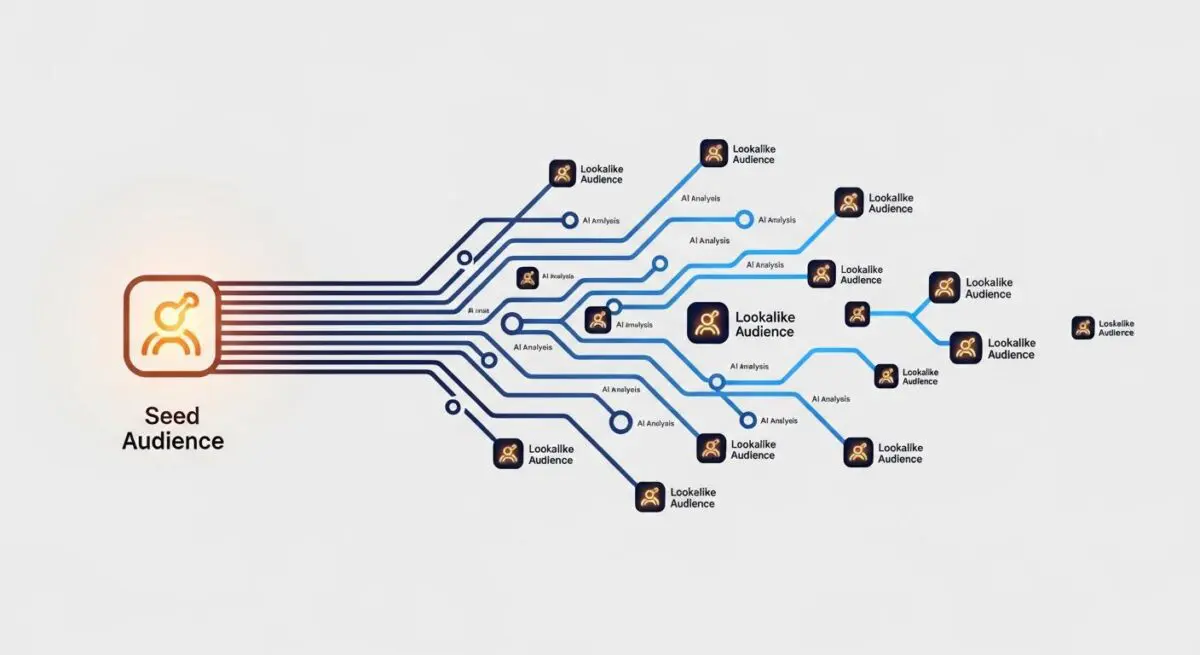
- Lookalike Audiences utilize machine learning algorithms to identify and target new users who share high-dimensional statistical similarities with a predefined seed audience.
- The precision of these audiences is contingent upon the quality of first-party data, such as CRM records or pixel-based conversion events, which serve as the algorithmic blueprint.
- Strategic implementation allows for scalable customer acquisition by balancing audience reach with conversion probability through variable similarity thresholds (1% to 10%).
What is Lookalike Audiences?
Lookalike Audiences represent an advanced targeting methodology in digital advertising that leverages machine learning (ML) to expand a brand’s reach by identifying new individuals who exhibit behavioral and demographic characteristics similar to an existing “seed” group. This seed group, often referred to as a Custom Audience, is typically composed of high-value segments such as existing customers, newsletter subscribers, or users who have completed specific high-intent actions on a website. By analyzing thousands of data points—ranging from browsing history and purchase patterns to social interactions—advertising platforms like Meta, Google, and LinkedIn can construct a statistical profile of the ideal customer.
In the context of a modern MarTech stack, Lookalike Audiences serve as a bridge between first-party data and programmatic customer acquisition. They allow marketers to move beyond broad interest-based targeting, which often suffers from low precision, and instead rely on algorithmic pattern recognition. This approach is particularly critical in an era of evolving data privacy regulations, as it enables efficient targeting while minimizing the need for invasive third-party tracking by focusing on the mathematical commonalities between known and unknown users. By utilizing these models, organizations can effectively automate the prospecting phase of the marketing funnel with a high degree of statistical confidence.
The Real-World Analogy
Imagine a professional scout for a world-class symphony orchestra. Instead of auditioning every musician in the city at random, the scout first meticulously analyzes the technical proficiency, practice habits, and stylistic nuances of the orchestra’s current lead violinists. Using these specific traits as a blueprint, the scout then scans global conservatories to find new musicians who possess the exact same combination of skills and artistic temperament. Lookalike Audiences function as this digital scout, using your best “performers” (current customers) to find the most promising “recruits” (prospects) across the vast digital landscape, ensuring that every new addition is statistically likely to harmonize with your brand’s objectives.
How Lookalike Audiences Impact Marketing ROI & Data Attribution?
The integration of Lookalike Audiences into a performance marketing strategy significantly impacts the Customer Acquisition Cost (CAC) by narrowing the top-of-funnel focus to users with a higher baseline propensity to convert. From a data attribution perspective, Lookalike modeling provides a more structured framework for understanding which customer segments drive the highest Lifetime Value (LTV). By creating “Value-Based Lookalikes,” where the seed audience is weighted by purchase frequency or total spend, marketers can direct programmatic budgets toward segments that are statistically likely to mirror the brand’s most profitable cohorts.
Furthermore, Lookalike Audiences enhance the efficiency of the conversion path. Because the algorithm identifies users who already share traits with converted leads, the friction in the awareness-to-consideration phase is reduced. This leads to higher Click-Through Rates (CTR) and lower Cost Per Mille (CPM) relative to broad targeting, as the relevance score of the advertisements is inherently higher. In a multi-touch attribution model, Lookalike Audiences often serve as the primary engine for high-quality prospecting, ensuring that the initial touchpoint is established with a user who has a high statistical affinity for the product offering, thereby shortening the sales cycle and improving overall capital efficiency.
Strategic Implementation & Best Practices
- Optimize Seed Data Quality: Ensure the source Custom Audience is composed of at least 1,000 to 5,000 high-quality records. Using a seed of “all website visitors” is often too broad; instead, use “past 180-day purchasers” or “high-LTV customers” to provide the algorithm with a clearer signal of conversion intent.
- Utilize Tiered Similarity Percentages: Implement a tiered testing structure (e.g., 1%, 3%, and 5% lookalikes). A 1% lookalike offers the highest similarity and usually the highest conversion rate, while larger percentages provide the scale necessary for aggressive growth phases. Monitoring the incremental lift at each tier is essential for budget optimization.
- Implement Robust Exclusion Logic: To prevent budget waste and ensure accurate attribution, always exclude the original seed audience and recent converters from the Lookalike campaign. This ensures the algorithm focuses exclusively on net-new customer acquisition rather than retargeting existing users.
- Refresh Seed Data Regularly: Automate the synchronization between your CRM and the advertising platform via API. Lookalike models can become stagnant if the seed data is not updated to reflect current market trends and evolving customer behaviors.
Common Pitfalls & Strategic Mistakes
One frequent error is the use of “static” or outdated seed audiences. If a seed list is not dynamically updated, the Lookalike model will eventually degrade as consumer behaviors shift, leading to “audience fatigue” and rising costs. Another significant mistake is failing to account for “Garbage In, Garbage Out.” If the seed audience includes low-value users, support-ticket submitters, or accidental clickers, the resulting Lookalike Audience will replicate those undesirable traits, leading to inefficient spend and poor lead quality. Finally, many enterprise brands fail to segment their lookalikes by product category, resulting in a generic model that lacks the nuance required for specialized product lines.
Conclusion
Lookalike Audiences are a cornerstone of algorithmic marketing, enabling brands to scale customer acquisition by leveraging the predictive power of machine learning. When grounded in high-quality first-party data and managed with rigorous exclusion logic, they provide a scalable and privacy-conscious framework for identifying high-value prospects in a competitive digital economy.