



Executive Summary
- Strategic orchestration across Owned, Earned, and Paid media to maximize asset lifecycle and reach.
- Technical integration with MarTech stacks for automated syndication and cross-platform data synchronization.
- Optimization for Generative Engine Optimization (GEO) and LLM-based discovery through semantic structuring.
What is Content Distribution?
Content distribution is the strategic and technical process of disseminating digital assets across a variety of channels to reach target audiences, drive engagement, and achieve specific marketing objectives. In the context of a modern MarTech stack, content distribution transcends simple social media posting; it involves a sophisticated architecture of API integrations, automated syndication workflows, and data-driven channel selection. It is the bridge between content production and audience acquisition, ensuring that high-value assets are not siloed within a Content Management System (CMS) but are actively pushed to the environments where target users reside.
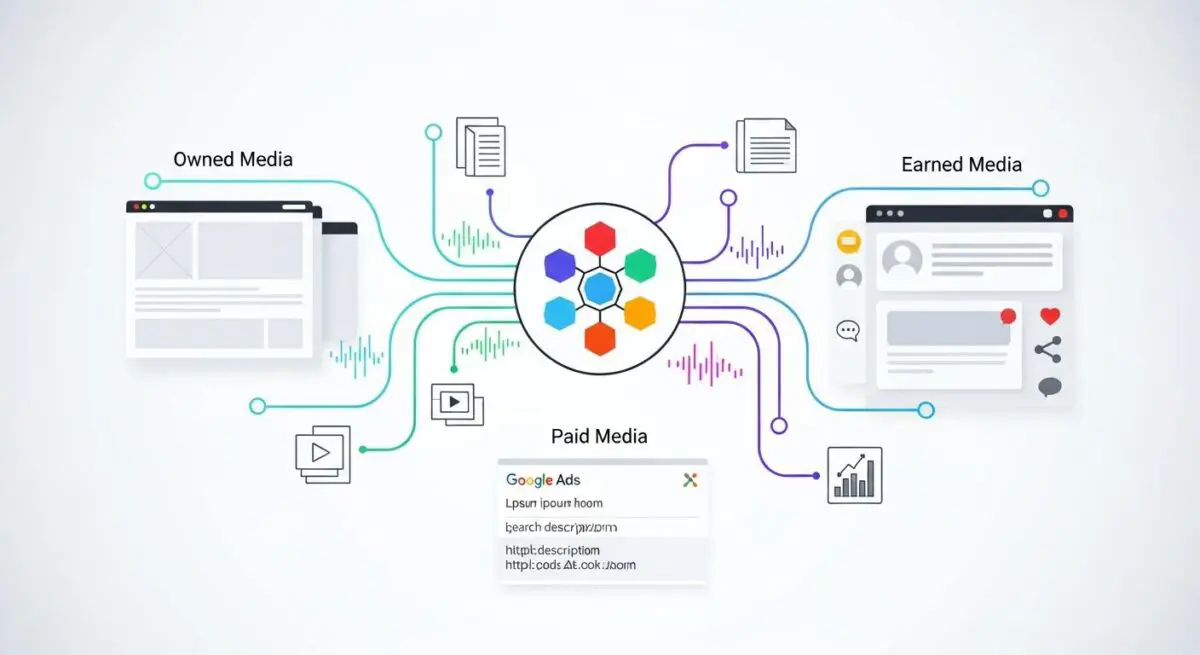
From a technical standpoint, content distribution is categorized into three primary pillars: Owned, Earned, and Paid media. Owned media includes properties controlled by the brand, such as websites, email lists, and mobile applications. Earned media encompasses third-party mentions, social shares, and PR-driven backlinks. Paid media involves programmatic advertising, sponsored content, and social media amplification. A robust distribution framework utilizes metadata, Open Graph tags, and schema markup to ensure that content is rendered correctly and indexed efficiently by both traditional search engines and emerging AI-driven discovery platforms.
The Real-World Analogy
To understand content distribution, consider the global logistics and supply chain of a high-end electronics manufacturer. The content itself is the product—a sophisticated smartphone, for example. However, the most advanced smartphone provides zero value if it remains in the factory warehouse. Content distribution is the entire logistics network: the cargo planes (paid media), the retail partnerships (earned media), and the company’s own flagship stores (owned media). Just as a logistics manager must decide which regions receive priority based on market demand and shipping costs, a marketing director must allocate distribution resources based on channel performance data and audience behavior. Without this network, the product—no matter how well-engineered—never reaches the consumer.
How Content Distribution Impacts Marketing ROI & Data Attribution?
Content distribution is a primary driver of Marketing Return on Investment (ROI) because it directly influences the efficiency of content production costs. By repurposing and redistributing a single high-quality asset across multiple channels—a process often referred to as content atomization—organizations can significantly lower their Customer Acquisition Cost (CAC). Instead of creating ten separate pieces of content, a technical team can create one comprehensive whitepaper and distribute it as a series of blog posts, infographics, social snippets, and email newsletters, effectively multiplying the touchpoints generated from a single investment.
Furthermore, content distribution is critical for accurate data attribution. In a multi-touch attribution model, distribution channels provide the necessary tracking parameters (such as UTM codes and first-party cookies) to map the customer journey. This allows data scientists to identify which channels are most effective at different stages of the funnel—from initial awareness to final conversion. Without a structured distribution strategy, data silos emerge, making it impossible to determine which efforts are actually contributing to the bottom line. High-level distribution also impacts Search Engine Optimization (SEO) by generating the social signals and backlinks necessary for domain authority, which in turn lowers the long-term cost of organic traffic.
Strategic Implementation & Best Practices
- Implement Automated Syndication via APIs: Utilize headless CMS capabilities to automatically push content to third-party platforms and social media aggregators. This ensures real-time distribution and reduces manual overhead while maintaining version control across all endpoints.
- Optimize for Semantic Search and GEO: Beyond traditional keywords, structure content using JSON-LD schema and semantic HTML to ensure it is easily digestible by Large Language Models (LLMs). This increases the likelihood of being cited in AI-generated search results and voice search queries.
- Leverage Technical SEO for Syndicated Content: When distributing content to third-party publishers, always implement
rel="canonical"tags pointing back to the original source. This prevents duplicate content penalties and ensures that the SEO equity (link juice) is consolidated on the primary domain. - Data-Driven Channel Weighting: Use historical performance data to dynamically allocate budget and effort. If analytics show that LinkedIn drives higher-quality B2B leads than Twitter, the distribution workflow should automatically prioritize LinkedIn for professional whitepapers.
Common Pitfalls & Strategic Mistakes
One of the most frequent errors in enterprise content distribution is the “spray and pray” approach, where content is blasted across all available channels without regard for audience context or platform-specific nuances. This leads to brand dilution and inefficient budget spend. Another significant mistake is failing to account for technical SEO when syndicating content; without proper canonicalization, a brand may find its own website outranked by a high-authority third-party site hosting the same content. Finally, many organizations ignore the importance of “Dark Social”—the untrackable sharing of content via private messaging apps. Failing to include easy-to-track sharing buttons or shortened, trackable URLs makes it difficult to measure the true reach of distribution efforts.
Conclusion
Content distribution is the essential engine of modern digital marketing, transforming static assets into dynamic drivers of growth. By integrating technical precision with strategic channel management, organizations can optimize their MarTech stacks to ensure maximum visibility, accurate attribution, and a superior return on content investment.