Executive Summary
- XML-RPC is a legacy remote procedure call protocol that utilizes XML over HTTP to facilitate data exchange between WordPress and external systems.
- The protocol is a significant security liability, frequently exploited for amplified brute force attacks and Pingback-based DDoS (Distributed Denial of Service) campaigns.
- Modern WordPress development standards prioritize the REST API over XML-RPC due to superior performance, security, and JSON-based data handling.
What is XML-RPC?
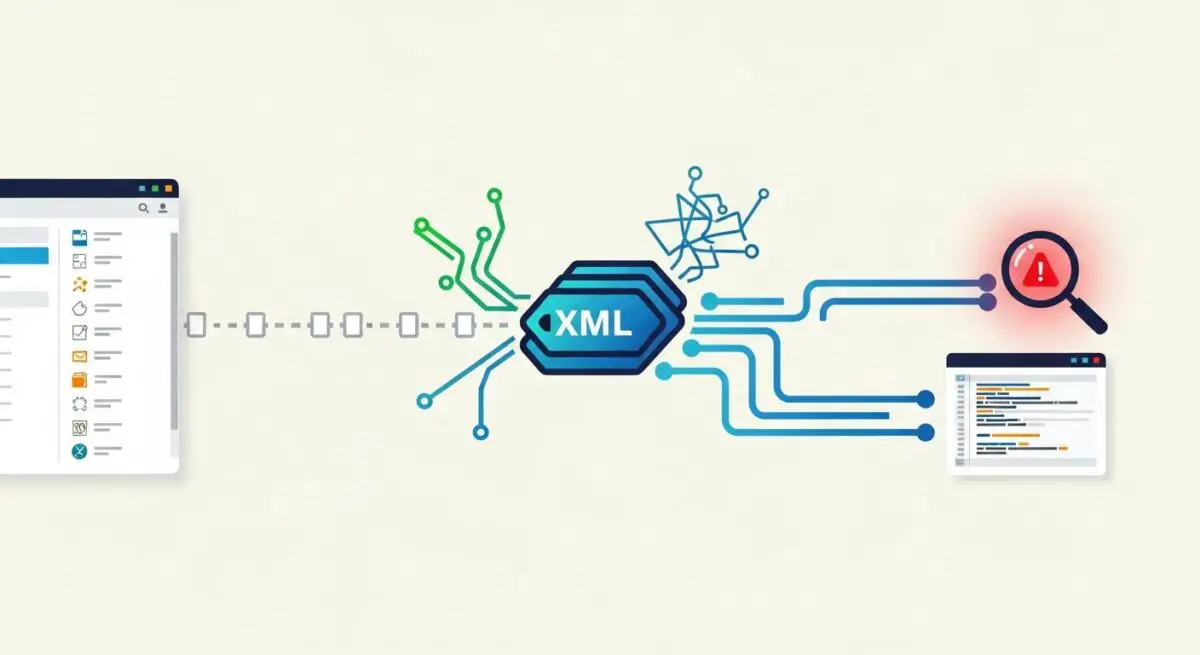
XML-RPC, or Extensible Markup Language Remote Procedure Call, is a protocol that enables software applications to communicate and execute functions across different operating systems and environments. In the WordPress ecosystem, this functionality is primarily managed by the xmlrpc.php file located in the site’s root directory. The protocol works by transmitting HTTP POST requests where the payload is formatted in XML. This allows external applications—such as the WordPress mobile app, desktop blogging clients, and automation tools like IFTTT—to interact with the WordPress database, create posts, manage comments, and upload media without a direct browser interface.
Technically, the WordPress implementation of XML-RPC is built upon the IXR (Incutio XML-RPC Library). When a request is sent to xmlrpc.php, the server initializes the WordPress core environment (loading wp-load.php), parses the XML input, and maps the request to a specific method within the wp_xmlrpc_server class. While it was the standard for remote interaction for over a decade, its architecture is inherently more verbose and resource-intensive than modern alternatives. The requirement to parse complex XML structures on every request introduces significant CPU overhead compared to the lightweight JSON parsing used by the contemporary WordPress REST API.
The Real-World Analogy
To understand XML-RPC, imagine a high-security government archive that still accepts official information requests via traditional, physical telegrams. While the rest of the world has transitioned to secure, instant digital portals (the REST API), the telegram office (XML-RPC) remains open to accommodate older branch offices or specific legacy equipment. Because telegrams must follow a very rigid, manual formatting code that requires a specialized clerk to decode and verify, the process is inherently slower and more labor-intensive. Furthermore, because the telegram office is a well-known, public entry point, malicious actors often try to flood it with thousands of fake messages at once, hoping to overwhelm the clerks and force a security breach or simply shut down the archive’s operations.
How XML-RPC Impacts Server Performance & Speed Engineering?
From a speed engineering perspective, XML-RPC is often a source of unnecessary server strain. Every time a bot or a legitimate service hits xmlrpc.php, the server must execute a full WordPress bootstrap. This means PHP must allocate memory, connect to the MySQL database, and load active plugins before the XML payload is even processed. In high-traffic environments, a flurry of XML-RPC requests can quickly exhaust the server’s PHP-FPM worker pool, leading to 504 Gateway Timeout errors for legitimate site visitors.
The most critical performance impact stems from the system.multicall method. This specific feature allows an external client to execute multiple commands within a single HTTP request. While intended to reduce round-trip latency, it is frequently weaponized by attackers to perform “amplified brute force attacks.” Instead of trying one password per request (which is easily caught by rate limiters), an attacker can attempt 500 or more password combinations in a single XML-RPC call. This forces the server to perform hundreds of database lookups and password hashing operations (using the resource-heavy wp_hash_password function) simultaneously, which can spike CPU utilization to 100% and effectively take a site offline. Additionally, the Pingback feature in XML-RPC can be used to turn a WordPress site into an unwitting participant in a DDoS attack, where the server is forced to reach out to a target URL, consuming outbound bandwidth and processing power.
Best Practices & Implementation
- Server-Level Blocking: The most effective way to optimize performance and security is to block access to
xmlrpc.phpat the web server level (Nginx or Apache). For Nginx, add a location block:location = /xmlrpc.php { deny all; access_log off; log_not_found off; }. This prevents the request from ever reaching PHP, saving significant system resources. - Filter-Based Disabling: If you cannot modify server configurations, use the WordPress
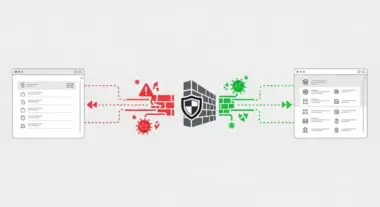
xmlrpc_enabledfilter. Addingadd_filter( 'xmlrpc_enabled', '__return_false' );to a functionality plugin will disable the protocol’s capabilities, though the file will still be accessible to the public. - WAF Integration: Implement a Web Application Firewall (WAF) like Cloudflare or Sucuri. These services can identify and block known malicious XML-RPC traffic patterns at the edge, ensuring that your origin server never has to process the overhead of a brute force attempt.
- REST API Migration: Ensure all custom integrations and mobile workflows are migrated to the WordPress REST API. The REST API is more secure, supports modern authentication (like Application Passwords), and uses JSON, which is significantly faster to parse and transmit than XML.
Common Mistakes to Avoid
A frequent mistake made by administrators is simply deleting the xmlrpc.php file. This is ineffective because the file will be restored during the next WordPress core update. Another common error is leaving XML-RPC fully open while using plugins like Jetpack. While Jetpack requires XML-RPC to communicate with WordPress.com, you should not leave it open to the entire internet; instead, use a WAF to whitelist only the specific IP ranges used by Jetpack. Finally, many developers fail to monitor their access logs for POST /xmlrpc.php entries, often ignoring a primary cause of high server load and database latency until a full-scale attack occurs.
Conclusion
XML-RPC is a legacy protocol that, while historically significant, now represents a major bottleneck for WordPress performance and a primary security vulnerability. For modern enterprise hosting environments, disabling XML-RPC and transitioning to the REST API is a non-negotiable step in achieving optimal server-side efficiency and robust security architecture.