Executive Summary
- Premium content serves as a high-utility asset designed to facilitate lead generation and data capture through strategic gating mechanisms.
- It enhances Search Engine Optimization by establishing E-E-A-T (Experience, Expertise, Authoritativeness, and Trustworthiness) through proprietary data and deep technical insights.
- Integration with CRM and Marketing Automation Platforms (MAP) allows for sophisticated lead scoring and multi-touch attribution modeling.
What is Premium Content?
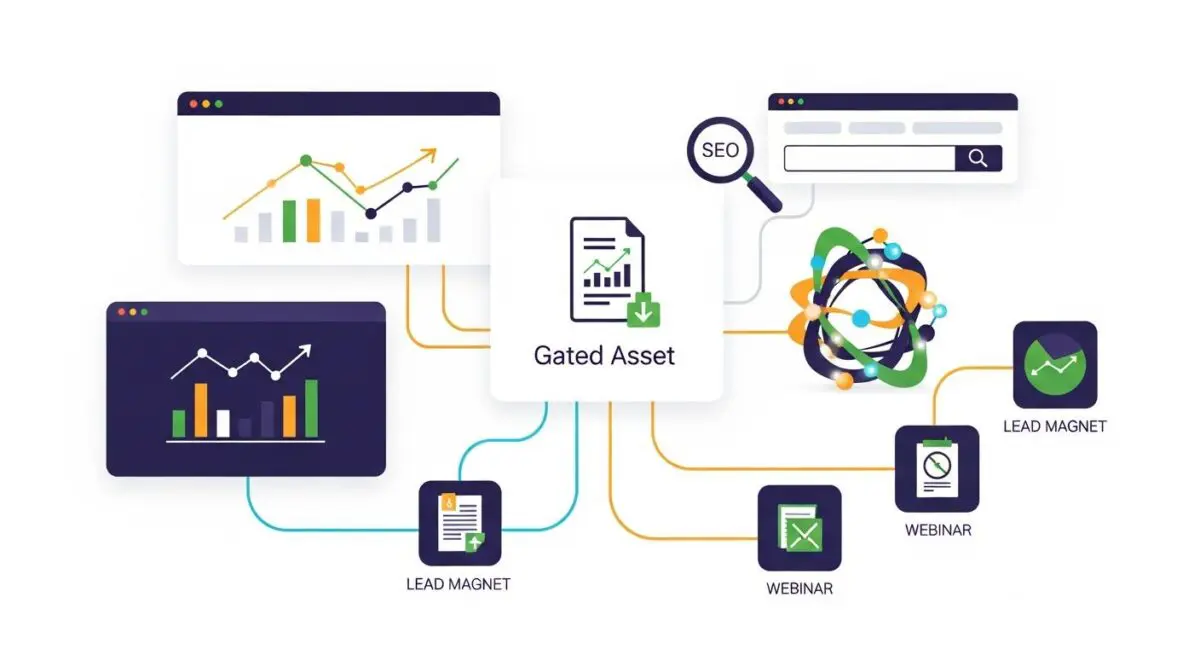
Premium content refers to high-value, proprietary, and often gated digital assets that provide significant utility or exclusive information to a specific target audience. Unlike standard top-of-funnel (TOFU) blog posts or social media updates, premium content is characterized by its depth, technical rigor, and original research. In a modern MarTech stack, these assets—such as whitepapers, technical blueprints, webinars, and industry benchmarks—function as the primary catalysts for lead acquisition and data enrichment within the Customer Relationship Management (CRM) system.
From a technical SEO and GEO (Generative Engine Optimization) perspective, premium content acts as a cornerstone for establishing domain authority. While the core asset may reside behind a lead capture form (gate), the surrounding metadata, executive summaries, and landing page architecture provide search engines with high-quality signals regarding the entity’s expertise. This content is essential for capturing high-intent traffic and moving prospects through the middle-of-funnel (MOFU) by addressing complex pain points that generic content cannot resolve.
The Real-World Analogy
Consider the difference between a free local news pamphlet and a specialized, peer-reviewed medical journal. While the pamphlet provides broad, easily accessible information for the general public, the medical journal contains rigorous, data-backed research accessible only to subscribers or professionals. In this analogy, the medical journal represents premium content: it requires a higher level of commitment to access (a subscription or credentials), but it provides specialized value that directly informs critical decision-making and establishes the publisher as a definitive authority in the field.
How Premium Content Impacts Marketing ROI & Data Attribution?
Premium content is a critical driver of Marketing ROI because it facilitates the transition from anonymous traffic to identified leads. By requiring users to exchange contact information (first-party data) for access, organizations can significantly lower their Customer Acquisition Cost (CAC) through targeted lead nurturing. From a data attribution standpoint, premium content interactions serve as high-weight touchpoints in multi-touch attribution models. They provide clear evidence of a prospect’s intent and stage in the buyer’s journey, allowing marketing teams to allocate budget more efficiently toward channels that drive high-value downloads.
Furthermore, the deployment of premium content allows for advanced lead scoring. For instance, a user downloading a technical implementation guide is assigned a higher lead score than a user who merely views a homepage. This granularity enables sales teams to prioritize outreach based on the technical depth of the content consumed, thereby increasing conversion rates and shortening the sales cycle. The integration of this data into a centralized analytics framework ensures that marketing efforts are directly tied to revenue generation and long-term Customer Lifetime Value (LTV).
Strategic Implementation & Best Practices
- Implement Progressive Profiling: Use dynamic forms to collect data incrementally over multiple interactions, reducing friction and increasing the conversion rate of gated landing pages.
- Optimize for E-E-A-T: Ensure that all premium assets are authored by subject matter experts and include proprietary data or unique case studies to maximize search engine trust and authority signals.
- Technical SEO for Gated Assets: Utilize high-quality landing pages with schema markup and comprehensive summaries to ensure the “gate” does not prevent search engines from indexing the relevance and context of the asset.
- Cross-Platform Integration: Synchronize lead capture data directly with CRM and Marketing Automation Platforms to trigger immediate, personalized follow-up sequences based on the specific asset downloaded.
Common Pitfalls & Strategic Mistakes
One frequent error is “over-gating,” where brands place low-value content behind a form, leading to high bounce rates and brand friction. Another technical mistake is failing to optimize the landing page for mobile users or neglecting the performance metrics of the lead capture form itself. Finally, many enterprise brands suffer from data silos, where the insights gained from premium content downloads are not shared between marketing and sales departments, resulting in missed opportunities for personalized engagement and misaligned attribution.
Conclusion
Premium content is a foundational element of a data-driven marketing architecture, bridging the gap between brand awareness and lead conversion through high-value information exchange. When integrated correctly with CRM systems and SEO strategies, it provides the technical depth necessary to drive measurable ROI and establish long-term market authority.