



Key Points
- Semantic Entity Mapping: Use structured data to define relationships for internal knowledge graphs.
- Vector-Friendly Chunking: Break content into 300-500 token segments for optimal embedding.
- API-First Delivery: Enable REST endpoints to reduce ingestion latency for AI crawlers.
Table of Contents
The AI Search Context
As of Q2 2026, over 70% of high-intent B2B queries are resolved directly within AI Overviews, bypassing traditional organic clicks entirely (Source: Forrester Research).
This shift fundamentally alters how digital entities must approach web visibility. Generative engines like SearchGPT and Google AI Overviews do not rank pages based on traditional keyword density. Instead, they discover, ingest, and synthesize web content into natural language answers.
To survive this transition, technical architects must understand LLM Information Retrieval and Processing (RAG Architecture). Failure to optimize for these retrieval mechanisms results in AI Invisibility. Even high-ranking traditional search results are ignored by LLM agents in favor of more technically accessible and semantically rich data sources.
Traditional indexing relied on matching user queries to inverted indexes of web pages. Today, the agentic web operates on vector mathematics and semantic proximity. When content is successfully retrieved and processed, it becomes a primary source for AI Overviews, driving authoritative brand mentions and high-intent traffic.
Core Architecture & Pillars
Core Architecture & Pillars
Semantic Entity Mapping
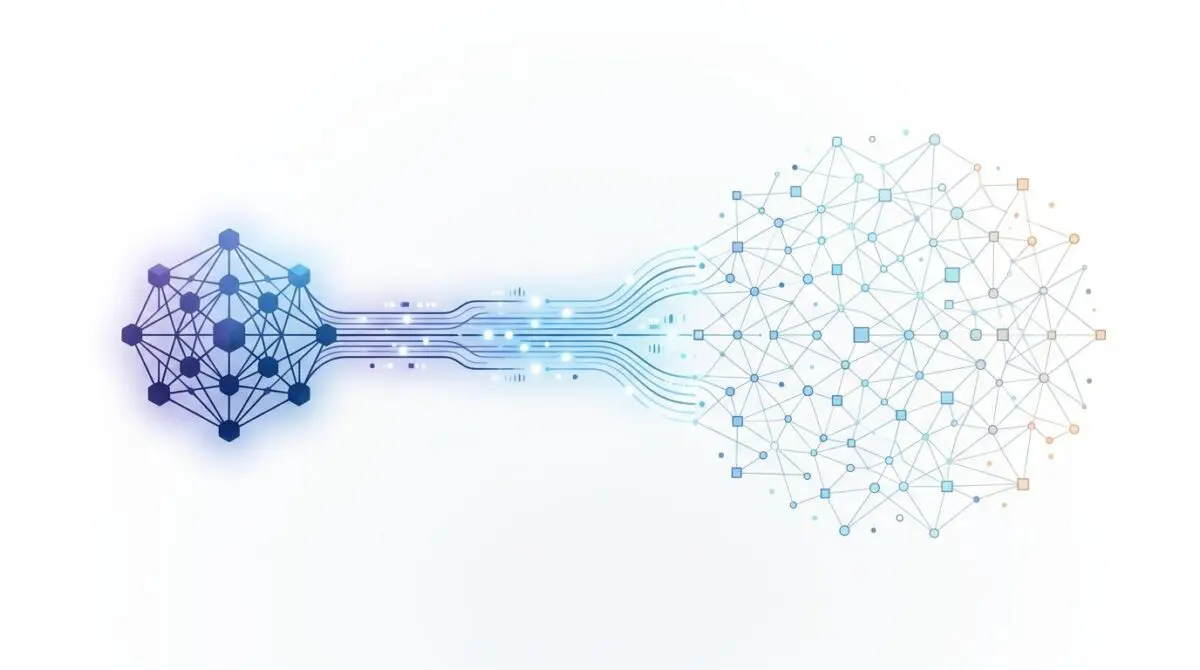
LLMs do not see keywords; they see entities and relationships. By using structured data (JSON-LD), site owners define the semantic relationship between concepts, allowing the model’s transformer architecture to map web content directly into its internal knowledge graph without ambiguity.
Vector-Friendly Content Chunking
During the RAG process, LLMs break web pages into 300-500 token chunks for vectorization. If a page’s structure is fragmented or lacks logical flow, the ’embedding’ (numerical representation) of that chunk will be weak, leading to low retrieval relevance.
LLM-Specific Crawler Accessibility
Retrieval begins with specialized user-agents like GPTBot, OAI-SearchBot, and Google-Other. These crawlers prioritize high-speed ingestion and often bypass CSS/JS rendering to focus on the DOM’s text nodes and structured data.
Attribution Signal Optimization
LLMs process content by weighing ‘source reliability’ signals. This includes checking for verifiable facts, direct citations, and the presence of ‘Trust Signals’ like Author Bio schemas that prove the content is not synthetic noise.
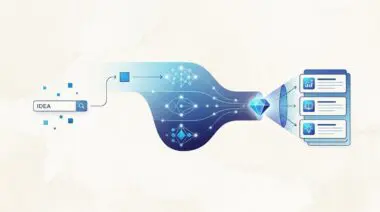
The foundation of modern generative search relies on transforming unstructured web text into machine-readable knowledge. LLM retrieval and processing is a multi-stage pipeline designed to prevent hallucinations and ensure source attribution. This process relies heavily on Retrieval-Augmented Generation (RAG) to ground the model’s response in real-time facts.
Semantic Mapping and Vectorization
Transformers map web content directly into internal knowledge graphs using defined semantic relationships. By leveraging precise structured data, site owners eliminate ambiguity during the ingestion phase. The 2026 ‘Agentic Web’ update to the Robots-Exclusion Protocol now allows websites to offer ‘Vector-Only’ sitemaps specifically for LLM ingestion (Source: IETF Draft 2026).
Without explicit semantic markers, language models must guess the context of your data. This increases the computational cost of processing your page, which often results in the crawler abandoning the ingestion process entirely.
Crawler Accessibility and Attribution
Retrieval begins with specialized user-agents bypassing heavy rendering to focus on DOM text nodes. Ensuring your server environment prioritizes text-first delivery is paramount. Furthermore, models weigh source reliability signals heavily, demanding verifiable facts and robust trust signals to validate authority.
Digital entities must shift focus from keyword density to Information Density and Entity Clarity. If a crawler cannot quickly parse the main content block without executing complex JavaScript, the page will not be vectorized.
The Execution Roadmap
Implementation Roadmap
AI-Agent Permissions Audit
Update the robots.txt file to explicitly allow OAI-SearchBot, GPTBot, and Google-Other. Ensure that the server’s firewall does not flag the high-frequency request patterns common during LLM retraining or RAG indexing.
Implement RAG-Optimized Schema
Inject JSON-LD that utilizes ‘About’ and ‘Mentions’ tags to define the core topic. Use ‘Speakable’ schema to highlight short, factual summaries that are easily extractable by LLM response generators.
Structural Chunking of Content
Refactor long-form content using H2 and H3 tags every 300-500 words. Each section must lead with a factual ‘Topic Sentence’ that encapsulates the data in that chunk, optimizing it for vector database retrieval.
Deploy API-First Content Delivery
Enable the WordPress REST API for content nodes. AI engines are increasingly moving toward API-based ingestion rather than traditional scraping to reduce latency and improve data accuracy.
Deploying a successful GEO strategy requires a systematic overhaul of how your server interacts with machine agents. The first phase is auditing your firewall and robots directives. You must configure your infrastructure to explicitly allow OpenAI crawlers and other specialized bots without triggering rate limits.
Many legacy Web Application Firewalls automatically block the aggressive crawling patterns associated with AI ingestion. Whitelisting these specific user-agents is the critical first step to ensuring your RAG architecture functions properly.
Infrastructure and Schema Upgrades
Once access is secured, the focus shifts to semantic definitions. Injecting RAG-optimized schema ensures that models instantly recognize the core topic and entities discussed. Utilizing About and Mentions tags clarifies your content footprint within the broader knowledge graph.
In WordPress environments, this involves extending the default Schema output via custom hooks. You must specifically target the Knowledge Graph nodes used by engines like Google Gemini and SearchGPT.
Content Refactoring and API Delivery
Structural formatting dictates how well your data is retained during vectorization. You must be proactive in optimizing chunking strategies by breaking long-form content into coherent 300-500 token segments. Transitioning toward API-first content delivery via REST endpoints further reduces ingestion latency and ensures maximum data accuracy.
Each chunk must lead with a factual topic sentence that encapsulates the data within that section. If a page’s structure is fragmented, the numerical representation of that chunk will be weak, leading to low retrieval relevance.
Technical Implementation
To ensure precise entity mapping during the retrieval phase, implement a robust JSON-LD architecture. This schema explicitly defines the primary topics and technical relationships for generative engines.
{ "@context": "https://schema.org", "@type": "TechArticle", "headline": "LLM Retrieval Guide", "about": { "@type": "Thing", "name": "RAG Architecture" }, "mentions": [ { "@type": "Thing", "name": "Vector Embeddings" } ], "author": { "@type": "Person", "name": "GEO Strategist", "sameAs": "https://www.linkedin.com/in/expert" } }This implementation proves the content is not synthetic noise. By using the SameAs property, you connect the content to verified professional profiles, which AI models use to validate authority and source reliability.
Validation & Future-Proofing
Validation & Monitoring
- Verify implementation by using the ‘SearchGPT Prototype’ or ‘Perplexity Pages’ to see if site content is cited.
- Monitor server logs for the ‘OAI-SearchBot’ or ‘Bytespider’ user-agents to confirm ingestion frequency and success rates.
- Audit technical accessibility to ensure DOM text nodes are reachable without complex JS rendering.
Monitoring the success of your GEO strategy requires continuous log analysis. You must track the crawl frequency of specialized user-agents to gauge how often your corpus is being re-indexed. Drops in ingestion rates often indicate underlying structural or firewall issues.
Testing your content against live AI prototypes ensures your semantic mapping holds up in real-world retrieval scenarios. As transformer models evolve, maintaining strict adherence to DOM simplicity and clear entity relationships will sustain your visibility.
Navigating the intersection of traditional SEO and Generative Engine Optimization requires a precise architecture. To future-proof your enterprise stack for AI Overviews and LLM discovery, connect with Andres at Andres SEO Expert.