



Executive Summary
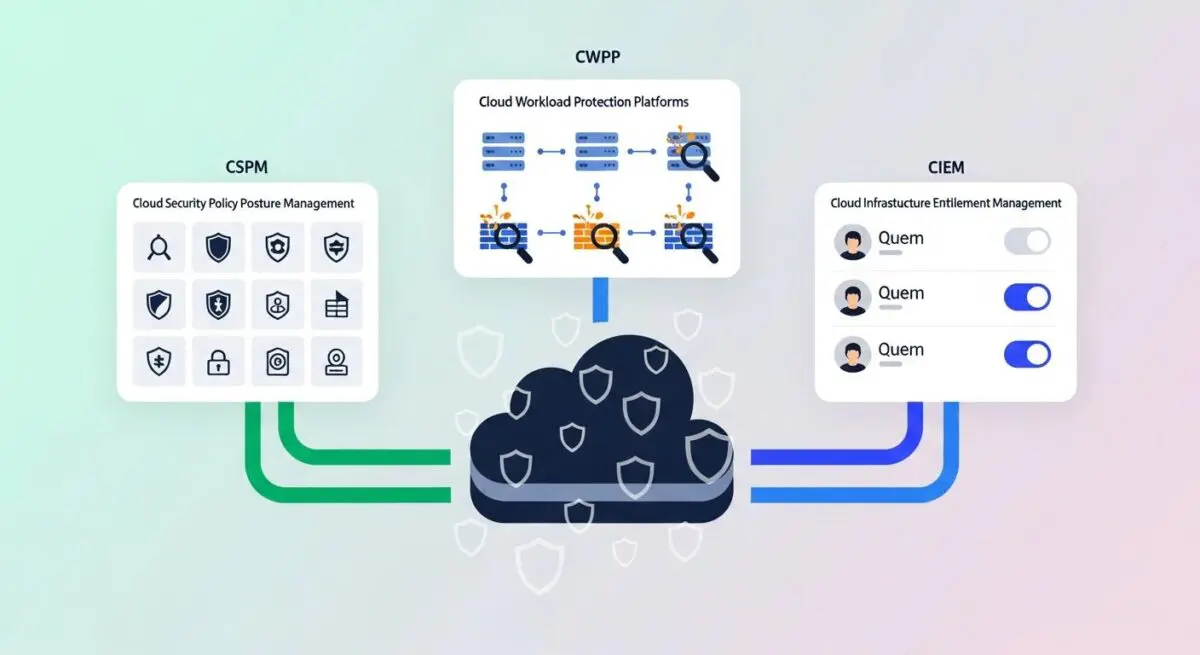
- Unified Security Convergence: CNAPP integrates Cloud Security Posture Management (CSPM), Cloud Workload Protection Platforms (CWPP), and Cloud Infrastructure Entitlement Management (CIEM) into a single architectural framework.
- Full Lifecycle Protection: The platform facilitates a “shift-left” security approach by identifying vulnerabilities during development and maintaining runtime protection across production environments.
- Contextual Risk Prioritization: By correlating data across disparate cloud layers, CNAPP reduces alert fatigue and identifies the most critical attack paths that threaten organizational data integrity.
What is CNAPP (Cloud-Native Application Protection Platform)?
A Cloud-Native Application Protection Platform (CNAPP) is an integrated security architecture designed to secure cloud-native applications across their entire lifecycle. It represents a strategic evolution from siloed security tools toward a unified platform that provides comprehensive visibility and control over complex, distributed environments.
At its core, CNAPP combines several critical security functions that were historically managed in isolation. These include Cloud Security Posture Management (CSPM) for configuration monitoring, Cloud Workload Protection Platforms (CWPP) for securing the actual software running in the cloud, and Cloud Infrastructure Entitlement Management (CIEM) for managing identities and permissions.
By consolidating these capabilities, we at Andres SEO Expert recognize that organizations can eliminate the visibility gaps that often occur between development, DevOps, and security teams. This holistic approach ensures that security is not an afterthought but is instead woven into the fabric of the application deployment pipeline, from the initial code commit to the final runtime execution.
The Real-World Analogy
Imagine a high-security, automated international airport. In a traditional security model, you would have separate companies managing the perimeter fence, another checking passports at the gate, a third inspecting the airplane’s mechanical integrity, and a fourth monitoring the pilot’s credentials in real-time.
If these four companies do not communicate, a person with a valid passport but a revoked pilot’s license could potentially board a plane with a mechanical fault. The lack of integrated data creates a catastrophic security blind spot despite each individual system functioning correctly.
A CNAPP acts as the centralized command center for this airport. it monitors the fence, the passport, the engine, and the pilot simultaneously through a single interface. It understands that a minor mechanical issue combined with an unauthorized pilot creates a high-risk scenario, allowing the system to intervene before the plane ever leaves the hangar.
How CNAPP Drives Strategic Growth & Market Competitiveness?
Implementing a CNAPP directly influences an organization’s bottom line by drastically reducing the Total Cost of Ownership (TCO) associated with security operations. Instead of licensing, training for, and maintaining five or six disparate security tools, enterprises can consolidate their stack into a single platform, reducing both capital expenditure and operational overhead.
From a growth perspective, CNAPP enables faster time-to-market for digital products. When security is integrated into the CI/CD pipeline, developers receive real-time feedback on vulnerabilities within their Integrated Development Environment (IDE). This prevents the “security bottleneck” where releases are delayed at the final stage due to late-stage discovery of critical flaws.
Furthermore, CNAPP enhances market competitiveness by fortifying brand trust and regulatory compliance. In an era where data breaches can lead to massive fines and irreparable reputational damage, a robust CNAPP provides the verifiable audit trails required for GDPR, SOC2, and HIPAA compliance. This level of data integrity is a powerful differentiator when competing for enterprise-level contracts.
The platform also optimizes human capital. By using AI-driven correlation to prioritize risks, security analysts can focus on the 5% of alerts that represent genuine threats rather than being overwhelmed by thousands of false positives. This efficiency allows the organization to scale its cloud footprint without a linear increase in security headcount, supporting sustainable and rapid business expansion.
Strategic Implementation & Best Practices
- Prioritize Agentless Visibility: Deploy agentless scanning across all cloud accounts to gain immediate, comprehensive visibility into workloads without the performance overhead or deployment friction associated with traditional agents.
- Integrate Security into the CI/CD Pipeline: Automate vulnerability scanning and configuration checks within the development workflow to identify and remediate risks before code is ever deployed to production environments.
- Enforce Least Privilege via CIEM: Utilize the entitlement management features of the CNAPP to identify over-privileged identities and implement a Zero Trust architecture that limits the potential blast radius of a credential compromise.
- Establish Unified Policy Management: Define security policies once at the platform level and propagate them across multi-cloud environments (AWS, Azure, GCP) to ensure consistent governance and eliminate configuration drift.
Common Pitfalls & Strategic Mistakes
One frequent error is treating a CNAPP as a passive monitoring tool rather than an active part of the development lifecycle. Organizations that fail to integrate the platform’s findings into developer workflows often find themselves with a massive backlog of vulnerabilities that are never addressed, negating the benefits of early detection.
Another strategic mistake is ignoring the “identity” component of cloud security. Many enterprise brands focus heavily on workload protection while leaving complex, nested IAM permissions unmonitored. This creates a scenario where an attacker can move laterally through the cloud environment using legitimate but over-privileged service accounts.
Finally, many teams suffer from “feature fatigue” by attempting to enable every CNAPP capability simultaneously. This often leads to a flood of data that the security team is not yet equipped to process. A more effective strategy involves a phased rollout, starting with high-visibility areas like CSPM before moving into deeper workload and identity protection.
Conclusion
CNAPP represents the definitive standard for modern cloud security by unifying disparate protection layers into a single, context-aware platform. For the data-driven enterprise, it is an essential component for maintaining operational velocity while ensuring uncompromising security across the entire digital supply chain.