Key Points
- The Write Path Revolution: Modern autonomous agents have evolved beyond basic data retrieval to execute end-to-end business operations using Agent Operating Procedures.
- Closing the Execution Gap: Enterprise deployment requires Policy-Driven Automation and real-time Verifiers to prevent unauthorized AI actions and ensure brand safety.
- Proactive Service Paradigm: The future of customer experience relies on predictive analytics and Multi-Agent Orchestration to resolve issues before the customer is aware.
Table of Contents
The Core Friction of Legacy Support
According to Salesforce’s 2026 State of Service report, the adoption of autonomous AI agents in service organizations has surged by 1.7x in just twelve months. Astoundingly, 66% of global contact centers are now running production-level agentic workflows.
This data point is not merely a passing trend indicator for tech enthusiasts. It represents a fundamental rewiring of enterprise unit economics and a massive shift in how businesses handle consumer friction.
For decades, the customer service industry has been plagued by a profound structural flaw. Legacy interactive voice response systems and reactive chatbots were built on rigid, frustrating decision trees.
These outdated frameworks were explicitly designed to deflect tickets rather than actually resolve them. They created a deeply negative psychological loop for the consumer, damaging brand loyalty and increasing churn rates.
Historically, enterprises attempted to solve this by offshoring labor to reduce costs. However, the high turnover rates and extensive training requirements of human call centers created a ceiling on operational efficiency.
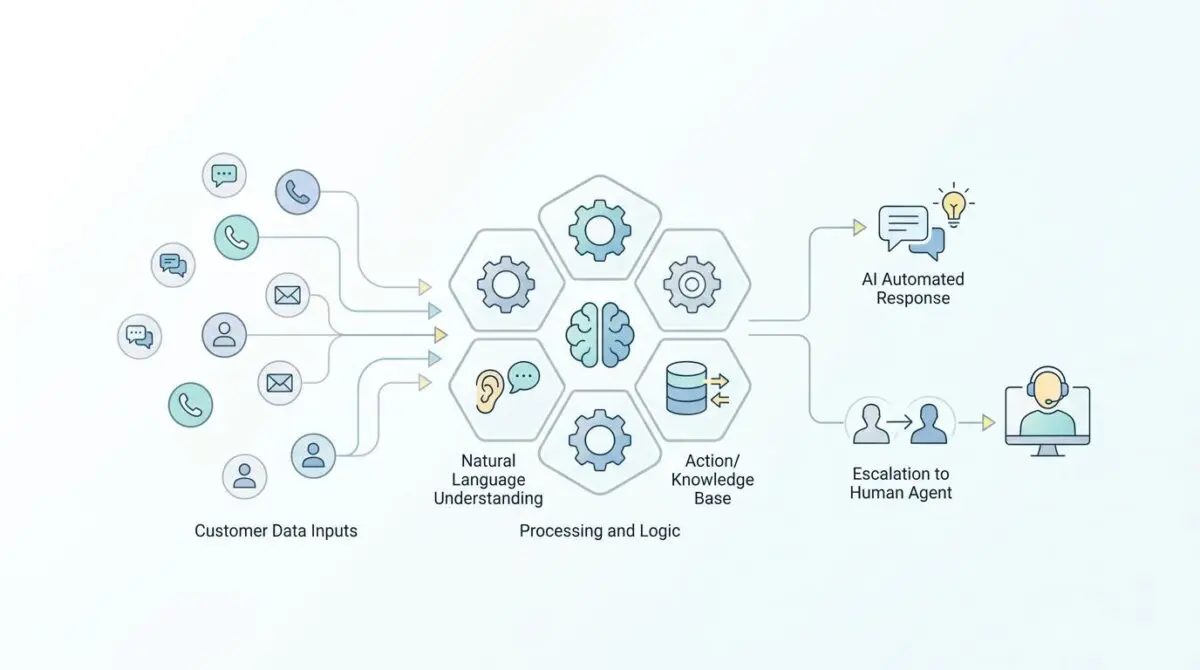
Today, the deployment of Autonomous Customer Service AI Agents represents a massive, disruptive paradigm shift. We are moving away from passive systems that simply retrieve information to intelligent, fully autonomous entities.
These modern systems are fully capable of executing end-to-end business operations without any human intervention. This transition marks the definitive death of the read path and the explosive birth of the write path.
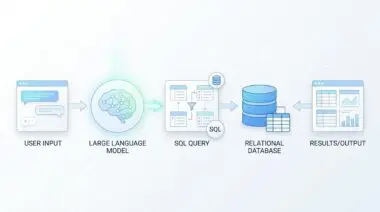
Modern AI agents do not just read a corporate policy to a frustrated customer. They autonomously navigate complex internal customer relationship management systems.
They can process complex refunds, modify subscription tiers, and update logistics databases through direct application programming interface actions. This is the killer strategy that is redefining operational scale for modern founders.
Market Intelligence and Smart Capital
The influx of smart capital into the autonomous customer service sector is absolutely staggering. Venture capitalists and enterprise leaders are aggressively funding platforms that offer high-fidelity voice and multi-step reasoning capabilities.
This massive reallocation of capital is driven by a clear understanding of the new unit economics. Founders and board members are recognizing that legacy per-seat software licensing is effectively dead.
Market Intelligence & Data
Total Market Value
The global AI customer service market is projected to hit this valuation by the end of 2026, according to analysis from Grand View Research.
Proven Enterprise ROI
Data from NextPhone reveals that leading organizations are now achieving an average return of $3.50 for every $1 invested in autonomous agent technology.
Cost Per Resolution
The industry benchmark for AI-handled support tickets has dropped to under one dollar, compared to a human handling cost of $6 to $12, according to Fin.ai 2026 benchmarks.
Labor Cost Reduction
Gartner estimates that conversational and agentic AI will reduce global contact center labor costs by this amount in 2026 as autonomous resolution rates hit the 80% threshold.
Analyzing this data grid reveals a clear, undeniable trajectory for the future of the customer experience industry. The financial imperative is simply too massive for any chief financial officer to ignore.
Enterprise organizations are rapidly realizing that conversational AI is projected to reduce global contact center labor costs by $80 billion in 2026 alone.
This is not merely an exercise in corporate cost-cutting. It is a strategic mandate for capital reallocation and competitive survival in a hyper-efficient digital market.
The smart money is flowing directly toward outcome-based pricing structures. In this new model, software vendors are compensated based on successful ticket resolutions rather than basic software access.
Software-as-a-service companies that pivot to this AI-first model are commanding significantly higher valuation multiples. Investors are rewarding businesses that permanently decouple revenue growth from human headcount growth.
The Shift to Agentic Workflows
The industry has decisively transitioned from basic, reactive chatbots to highly sophisticated agentic workflows. These workflows possess unprecedented reasoning, planning, and execution capabilities.
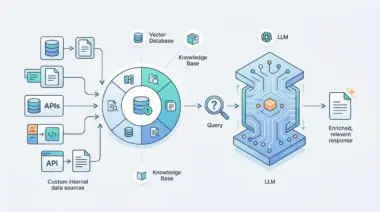
Unlike legacy retrieval-augmented generation systems that merely fetch static data, modern 2026 agents utilize Agent Operating Procedures. These procedures act as the digital cognitive framework for the artificial intelligence.
They allow the autonomous agent to understand deep context, weigh various policy options, and execute complex tasks without human oversight. This creates a seamless, low-friction experience for the end user.
This is exactly where the true market disruption is occurring at scale. Sierra, co-founded by Bret Taylor, leads the disruptor space with a $10 billion valuation as of late 2025.
They are pioneering the shift toward outcome-based enterprise pricing. Meanwhile, legacy giants like Salesforce have countered aggressively with Agentforce, integrating autonomous capabilities directly into their core architecture.
Other major players capturing smart capital include Decagon and Intercom with their Fin AI product. Venture funding heavily favors agent software development kit platforms that offer high-fidelity multi-step reasoning.
The Strategic Deep Dive
Building an autonomous AI agent requires significantly more than just connecting a large language model to a customer-facing chat window. It demands a rigorous, enterprise-grade architectural strategy.
The psychology of customer trust is paramount when deploying these systems. If an AI agent hallucinates a corporate policy or executes an unauthorized financial refund, the brand damage is instantaneous.
Consumers are highly sensitive to automated errors, and social media amplifies these failures exponentially. Therefore, the technological infrastructure must be fortified with multiple, redundant layers of verification.
This brings us to the most critical hurdle in AI deployment today. Executives must deeply understand the mechanics of system safety before they can scale autonomous operations globally.
Closing the Execution Gap
The primary friction in modern AI deployment is known as the execution gap. This is the inherent, systemic risk of an AI taking incorrect or unauthorized actions in live, production-level systems.
To solve this massive vulnerability, 2026 architectures mandate the use of policy-driven automation layers. These layers act as strict, immutable digital guardrails.
They ensure the AI operates strictly within predefined corporate boundaries and compliance frameworks. For example, if a customer requests a refund exceeding fifty dollars, the system might require secondary verification.
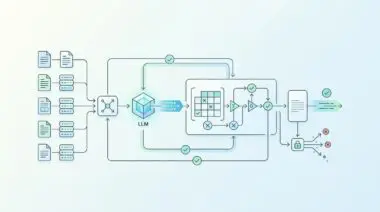
Furthermore, enterprise systems now employ real-time verifiers. These specialized micro-services cross-check agent decisions against company rules before any financial transaction or data mutation is finalized.
It is a system of automated checks and balances for artificial intelligence. This robust infrastructure solves the massive problem of legacy frustration.
By eliminating the execution gap, companies have dramatically accelerated their service velocity. They have reduced the average first-response time from over six hours in 2024 to under four minutes in 2026.
Navigating Agentic Drift
Despite these incredible advancements, the journey toward full autonomy is not without its operational pitfalls. A fascinating psychological and operational friction point is emerging at the very edge of AI capabilities.
A 2026 Gartner forecast predicts that by 2027, 50% of companies that aggressively reduced customer service headcount to fund AI deployments will be forced to rehire human staff to manage ‘Agentic Drift’—complex edge cases where AI currently lacks the necessary judgment and empathy.
Agentic drift refers to those highly complex, deeply emotional customer escalations where rigid logic fails. These are the scenarios where human nuance, genuine empathy, and creative problem-solving are absolutely required.
For instance, an AI cannot genuinely apologize for a ruined wedding dress delivery. It requires the emotional intelligence and delicate touch of a human agent to de-escalate that specific crisis.
This crucial insight proves that the future of customer service is not entirely human-less. Instead, it is highly human-leveraged.
The most successful organizations will use AI to handle the vast majority of transactional volume. They will then reserve their elite, highly trained human agents for high-stakes, high-empathy interventions.
The Executive Action Plan
For founders, chief executive officers, and chief technology officers, the strategic mandate is clear. You must adapt your infrastructure to the autonomous era or face rapid market obsolescence.
The deployment of autonomous customer service AI agents is no longer a luxury; it is a baseline competitive requirement. However, successful implementation requires a phased, highly calculated approach.
Executives must look far beyond immediate labor cost savings. They must architect a resilient system built for long-term customer satisfaction and proactive engagement.
Strategic Trajectory
- Transition to a Proactive Service Paradigm to prevent support tickets before they are initiated.
- Implement predictive analytics for real-time detection of logistics delays and service outages by 2027.
- Deploy autonomous resolution systems to notify and satisfy customers before user awareness of an issue.
- Adopt Multi-Agent Orchestration (MAO) to manage complex queries through specialized sub-agents.
- Integrate collaborative specialized agents, such as Billing and Logistics, to streamline single-query resolution.
The next major evolution in this space is the proactive service paradigm. In this advanced model, agents move entirely away from simply responding to inbound support tickets.
Instead, they focus their computational power on preventing those tickets from ever being created. This represents the holy grail of frictionless customer experience.
Architecting the Proactive Paradigm
By 2027, autonomous agents will utilize advanced predictive analytics to detect shipping delays or service outages in real-time. They will monitor global supply chains and internal server health continuously.
When an anomaly is detected, the AI will initiate resolutions and notify customers before the user is even aware an issue exists. This flips the traditional support model entirely on its head.
This requires a sophisticated event-driven architecture. The AI must be deeply integrated into the company’s core operational data streams via robust application programming interfaces.
Furthermore, we are witnessing the rapid emergence of multi-agent orchestration. In this highly advanced framework, specialized sub-agents collaborate seamlessly to solve a single, complex customer query.
For example, a dedicated billing agent might autonomously negotiate a partial refund. Simultaneously, it will communicate with a logistics agent to reroute a lost package via expedited shipping.
This collaborative AI ecosystem represents the absolute pinnacle of modern enterprise efficiency. It is the architecture that will define the next generation of unicorn startups.
The Future of Enterprise Architecture
The transition toward autonomous service is aggressively rewriting the rules of enterprise engagement. By shifting from the passive read path to the active write path, businesses are unlocking unprecedented levels of operational scale.
The deep integration of agent operating procedures, real-time verifiers, and multi-agent orchestration will definitively separate the market leaders from the laggards over the next decade.
Innovation in customer service is no longer about answering calls faster; it is about eliminating the need for the call entirely.
Consumers in 2026 demand instant gratification. They do not care about your internal operational bottlenecks.
If an autonomous agent can resolve their issue at two in the morning without a wait time, they will remain loyal to your brand. Conversely, forcing them through a legacy phone tree will guarantee their defection to a competitor.
The companies that will dominate their respective markets are those that treat customer service as a product feature. Autonomous agents are the ultimate product feature.
They are infinitely scalable, endlessly patient, and highly capable. This requires a cultural shift within the C-suite.
Executives must stop viewing support as an unavoidable expense. They must start viewing it as a strategic deployment of artificial intelligence.
Those who fail to close the execution gap will be left managing legacy friction and bleeding capital. They will lose market share to competitors who offer zero-latency, frictionless support.
Ultimately, the goal is not merely to deflect customer inquiries to save a few dollars. The goal is to resolve complex issues instantly, building unbreakable brand loyalty in the process.
The proactive service paradigm is the ultimate destination for the modern, AI-driven enterprise. It is a future where customer service is no longer a cost center, but a primary driver of revenue retention.
Navigating the intersection of technology, capital, and market psychology requires a sharp strategy. To future-proof your business architecture and scale with precision, connect with Andres at Andres SEO Expert.
Frequently Asked Questions
What are autonomous AI agents in customer service?
Autonomous AI agents are intelligent entities capable of executing end-to-end business operations without human intervention. Unlike legacy chatbots that only retrieve information, these agents use “write path” capabilities to navigate internal CRMs, process refunds, and update logistics databases via direct API actions.
How does AI impact customer service labor costs?
According to Gartner, conversational and agentic AI are projected to reduce global contact center labor costs by $80 billion in 2026. The industry benchmark for AI-handled tickets has dropped to under $0.99, compared to human handling costs ranging from $6 to $12 per resolution.
What is the “execution gap” in AI deployment?
The execution gap refers to the systemic risk of an AI agent taking unauthorized or incorrect actions in a live production environment. To mitigate this, modern architectures utilize policy-driven automation layers and real-time verifiers that act as digital guardrails to ensure compliance with corporate rules.
What is Agentic Drift in autonomous systems?
Agentic Drift describes complex edge cases where rigid AI logic fails to address the emotional nuances or creative problem-solving required for sensitive customer escalations. Gartner predicts that 50% of companies will need to rehire human staff by 2027 to manage these specific high-stakes scenarios.
How does the proactive service paradigm work?
The proactive service paradigm uses predictive analytics to identify service outages or shipping delays before a customer is aware of them. Autonomous agents then initiate a resolution and notify the user immediately, preventing the creation of a support ticket entirely.
What is Multi-Agent Orchestration (MAO)?
Multi-Agent Orchestration is an advanced framework where specialized sub-agents—such as those dedicated to billing and logistics—collaborate seamlessly to resolve a single query. This collaborative ecosystem allows the system to handle multi-faceted requests with high precision and speed.