



Key Points
- Automated Risk Mitigation: Agentic AI Privacy Governance replaces manual oversight with autonomous systems that execute real-time data lineage tracking and compliance auditing.
- Eradicating Shadow AI: Advanced governance protocols neutralize third-party vendor risks by actively discovering and mapping undisclosed AI subprocessors across enterprise networks.
- Sovereign Architecture: The deployment of Compliance-as-Code and Decentralized Sovereign Compute ensures that generative models adhere to localized regulations without sacrificing performance.
Table of Contents
The Compliance Paradox
According to Gartner’s March 2026 report, manual AI compliance processes will expose 75% of regulated organizations to fines exceeding 5% of their global annual revenue through 2027. The era of human-led oversight is officially dead.
Enterprises are currently grappling with what industry insiders call the compliance paradox. They are desperate to innovate with generative AI, yet paralyzed by the sheer volume of regulatory friction.
The definitive solution to this friction is Agentic AI Privacy Governance. This is not just a defensive compliance mechanism, but a massive business opportunity that unlocks frictionless AI deployment.
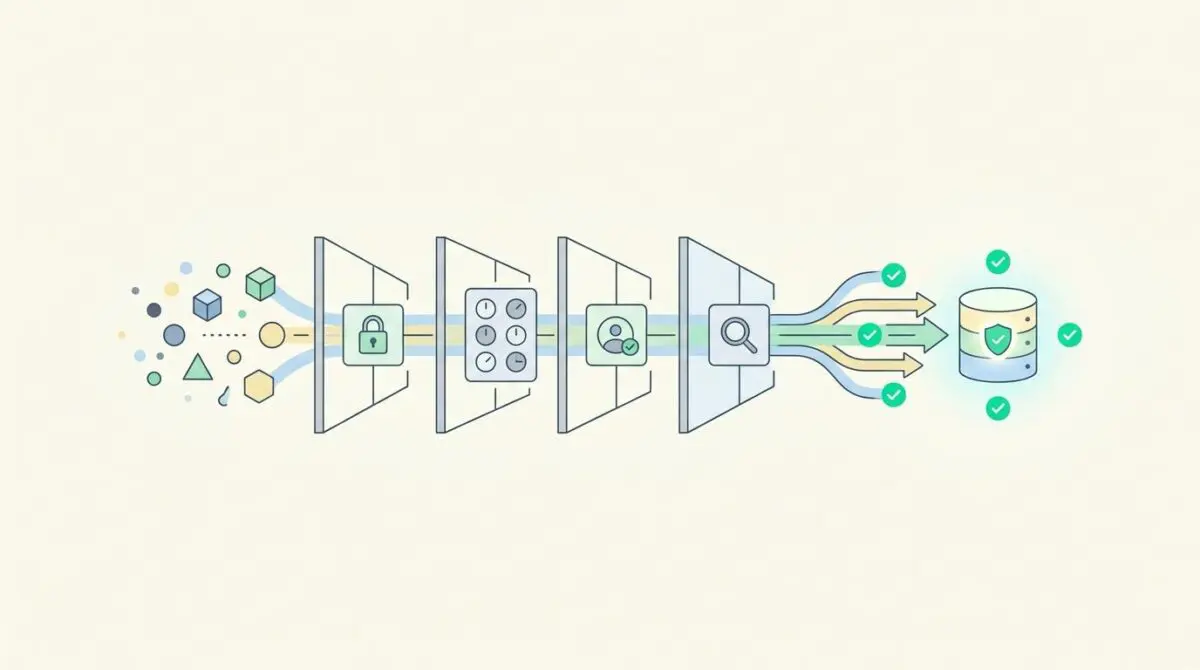
By replacing manual audits with autonomous systems, organizations can execute real-time data lineage tracking and automated risk assessments. This shifts compliance from a bottleneck to a competitive advantage.
In 2026, the regulatory landscape has shifted dramatically. The traditional methods of managing data privacy are no longer sufficient for the speed of generative AI.
Agentic governance introduces a paradigm where AI itself is used to police AI. This recursive governance model ensures that every prompt, retrieval, and generation is audited in milliseconds.
For Chief Information Security Officers, this represents a fundamental architectural pivot. The focus is no longer on post-incident remediation but on pre-generation authorization.
Agentic AI Privacy Governance embeds these authorizations directly into the neural pathways of enterprise models. It is the ultimate bridge between disruptive innovation and regulatory survival.
Market Intelligence and Capital Flow
Market Intelligence & Data
AI Governance Spend
Gartner projects that global enterprise spending on specialized AI governance platforms will reach $492 million by the end of 2026.
DSR Deletion Surge
Data subject requests for data deletion have surged 567% since 2021, hitting an all-time high in May 2026, according to DataGrail’s expansion study.
Strategic Investment
Cisco’s 2026 Data and Privacy Benchmark Study shows that 93% of organizations plan to increase their budget for privacy and data governance this year.
AI Data Debt
Gartner predicts that through 2030, 33% of all enterprise IT work will be spent remediating ‘AI data debt’ to ensure systems meet new security and privacy standards.
The data reveals a seismic shift in how smart money is capitalizing on regulatory friction. Venture capital is aggressively backing specialized disruptors that can automate compliance at the foundational model level.
In fact, specialized AI governance platforms will reach $492 million by the end of 2026 as enterprises scramble to avoid punitive fines. This capital influx is reshaping the entire privacy ecosystem.
Furthermore, 93% of organizations plan to increase their budget for data governance this year alone. This signals that boards are no longer viewing privacy as an IT issue, but as a critical pillar of enterprise valuation.
The market has realized that non-compliant AI is a toxic asset. Investors are demanding that privacy guardrails be built into the core infrastructure of any AI-driven product.
The staggering 567% surge in Data Subject Requests highlights a massive operational vulnerability. Manual processing of these requests within complex AI ecosystems is computationally and financially impossible.
Organizations are being forced to adopt agentic workflows simply to keep pace with consumer demands for data deletion. This operational strain is a primary driver behind the rapid adoption of automated governance platforms.
Simultaneously, the accumulation of AI data debt is threatening to cripple future IT initiatives. Remediating this debt requires a systematic overhaul of how data is ingested, processed, and forgotten by machine learning models.
The smart money is betting on platforms that can autonomously untangle this web of non-compliant data. The winners in this space will be the vendors who can offer seamless, invisible compliance layers.
The Strategic Deep Dive
The psychology of AI deployment has fundamentally changed since the EU AI Act became fully applicable in August 2026. Fear of catastrophic liability is driving a massive architectural pivot across the Fortune 500.
Executives are no longer asking what AI can do, but what it is legally permitted to do. This shift in mindset has elevated compliance officers to key strategic decision-makers.
Market leaders like OneTrust and BigID have entirely abandoned static frameworks. They are pivoting to agentic models that actively monitor data flows in real-time.
Meanwhile, tech giants are making aggressive M&A moves to consolidate their governance capabilities. Snowflake’s 2026 acquisition of Natoma highlights a major move to integrate AI-native access controls directly into the data cloud.
Compliance-as-Code and Sovereign AI
The leading architectural strategy dominating the enterprise landscape is Compliance-as-Code. This involves embedding regulatory guardrails directly into LLM weights and retrieval-augmented generation pipelines.
By hardcoding these rules, models become inherently compliant by design. This eliminates the latency introduced by external compliance checks and ensures that governance scales linearly with model usage.
To satisfy the strict requirements for high-risk systems under the EU AI Act, enterprises are deploying Sovereign AI clusters. These localized architectures guarantee that sensitive data never crosses jurisdictional boundaries.
This effectively neutralizes cross-border data transfer risks while allowing global organizations to maintain unified AI capabilities. Sovereign AI is rapidly becoming the gold standard for multinational corporations operating in highly regulated sectors.
Venture capital is also flowing heavily into Agentic Insurance startups like Klaimee. These innovative platforms provide liability coverage specifically for autonomous AI actions that are excluded by traditional cyber insurance policies.
The emergence of AI-specific underwriting demonstrates the maturation of the market. It provides a financial safety net that encourages further enterprise adoption of autonomous agents.
The Shadow AI Threat
Despite these advancements, the enterprise perimeter remains dangerously porous due to third-party integrations. DataGrail’s 2026 Privacy and AI Trends Report reveals that 63.6% of AI-powered vendors do not disclose third-party AI subprocessors in their legal documentation.
This creates massive ‘Shadow AI’ blind spots for 2,400 leading business systems. This hidden ecosystem of nested AI models represents the single greatest threat to corporate data sovereignty.
This lack of visibility exposes organizations to unauthorized model usage and catastrophic data leakage. When an employee inputs sensitive data into a seemingly benign SaaS application, that data may be routed through multiple undisclosed LLMs.
Agentic governance systems mitigate this by providing real-time visibility into the entire vendor ecosystem. They actively hunt down and map these shadow connections.
Specialized disruptors like DataGrail and LogosGuard are capturing smart money by automating this exact discovery process. By mapping these hidden subprocessors, autonomous agents can instantly sever API connections that violate internal data policies. This capability is non-negotiable for organizations trying to maintain a zero-trust architecture in an increasingly interconnected AI landscape.
The Executive Action Plan
Strategic Trajectory
- Implement ‘Self-Healing Privacy Layers’ to autonomously patch data vulnerabilities.
- Develop automated retraining protocols to excise prohibited information from models without human intervention.
- Transition to ‘Decentralized Sovereign Compute’ architectures for global agent operations.
- Deploy AI agents within local, zero-trust execution environments to ensure regulatory alignment.
- Scale governance infrastructure to meet the requirements of over 1,000 new global AI policies.
The next evolution of this space is defined by Self-Healing Privacy Layers. These autonomous protocols will continuously scan enterprise data lakes for compliance violations and patch vulnerabilities in real-time.
More importantly, they will trigger automated retraining protocols to excise prohibited information from live models. This entirely removes human intervention from the remediation process, drastically reducing the window of liability.
Founders and enterprise architects must immediately prepare for Decentralized Sovereign Compute. The future of AI is not a single monolithic model in the cloud, but a swarm of global AI agents operating entirely within local, zero-trust execution environments. This decentralized approach is the only mathematically viable way to meet the fragmented requirements of over 1,000 new AI policies enacted globally by 2026.
Executives who fail to build this infrastructure will find their AI initiatives permanently stalled by regulatory debt. The transition requires a fundamental restructuring of how data pipelines are engineered.
It demands a shift from centralized data hoarding to decentralized, purpose-built data processing. The organizations that master this transition will dominate the next decade of enterprise software.
Scaling this governance infrastructure requires a proactive alignment with legal, technical, and financial stakeholders. The deployment of AI agents within local execution environments must be rigorously tested against the specific regulatory frameworks of each jurisdiction. This is a complex engineering challenge, but the payoff is absolute market dominance and immunity to regulatory disruption.
Conclusion
Agentic AI Privacy Governance is the ultimate bridge between disruptive innovation and regulatory survival. The market has spoken, and the capital is flowing toward autonomous systems that can enforce compliance at the speed of thought. As the regulatory landscape continues to fracture, the ability to deploy self-healing, sovereign AI architectures will become the defining characteristic of successful technology companies.
The era of manual compliance is over, replaced by a new paradigm of Compliance-as-Code. Organizations that embrace this shift will not only avoid catastrophic fines but will unlock entirely new avenues for product development. They will operate with the confidence that their AI systems are inherently secure, legally compliant, and strategically aligned with global data privacy standards.
Navigating the intersection of technology, capital, and market psychology requires a sharp strategy. To future-proof your business architecture and scale with precision, connect with Andres at Andres SEO Expert.
Frequently Asked Questions
What is Agentic AI Privacy Governance?
Agentic AI Privacy Governance is an autonomous architectural pivot that replaces manual audits with AI-driven systems. These systems perform real-time data lineage tracking and millisecond-speed audits of prompts and generations to ensure continuous regulatory compliance without human intervention.
How does Compliance-as-Code improve AI deployment speed?
Compliance-as-Code embeds regulatory guardrails directly into LLM weights and retrieval-augmented generation (RAG) pipelines. By hardcoding compliance into the neural pathways of the models, enterprises eliminate the latency of external checks and ensure that governance scales linearly with AI usage.
What is the ‘Compliance Paradox’ in enterprise AI?
The compliance paradox refers to the situation where enterprises are desperate to innovate with generative AI but remain paralyzed by regulatory friction. Without automated governance, manual processes risk exposing 75% of regulated organizations to fines exceeding 5% of their global revenue.
What are Sovereign AI clusters and why are they necessary?
Sovereign AI clusters are localized localized compute architectures that guarantee sensitive data never crosses jurisdictional boundaries. They are essential for complying with the EU AI Act, particularly for high-risk systems that require strict data sovereignty and local execution environments.
How can organizations mitigate ‘Shadow AI’ security risks?
Organizations can mitigate Shadow AI risks by using agentic governance systems to map hidden third-party AI subprocessors in their SaaS ecosystem. These agents provide real-time visibility and can automatically sever API connections that violate internal data sovereignty policies.
What is the projected market growth for AI governance platforms?
Gartner projects that global enterprise spending on specialized AI governance platforms will reach $492 million by the end of 2026. This growth is driven by a 93% increase in organizational budgets as companies scramble to manage a 567% surge in Data Subject Requests.