




Key Points
- Eradicating the Context-Switching Tax: Agentic Email Orchestration reduces the cost-per-interaction from $7.00 to $0.50 by autonomously extracting action items and executing CRM workflows.
- The Rise of Agent-to-Agent Protocols: Modern multi-agent systems utilize a Contextual Memory Layer to negotiate schedules and draft responses that perfectly mimic executive tone without human input.
- Pivoting to Autonomous Relationship Management: Future-focused enterprises are transitioning to Agent Experience (AX), deploying sentiment analysis to proactively identify and mitigate client churn risks.
Table of Contents
The Core Friction: The Context-Switching Tax
According to data from Gartner, agentic AI systems will be embedded in 40% of all enterprise applications by the end of 2026. This represents a massive leap from less than 5% just 18 months ago. This seismic shift is not merely a software update, but a fundamental rewiring of how business operates.
At the epicenter of this transformation lies the automation of daily email management.
For decades, the inbox has been a necessary evil. It creates a massive bottleneck in executive productivity. We call this the “Context-Switching Tax.”
This psychological friction drains up to 28% of a knowledge worker’s day. Leaders are drowning in passive filters and manual triage. They are bleeding capital on low-leverage tasks.
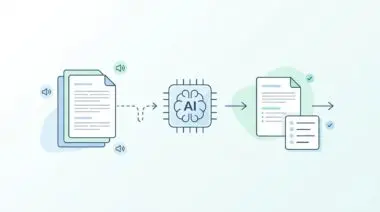
Enter Agentic Email Orchestration. This core business entity represents a profound leap from reactive sorting to proactive execution.
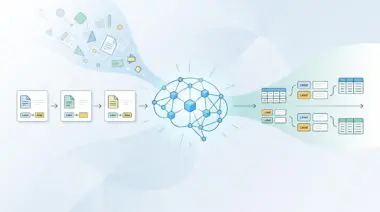
These systems automate the extraction of action items from threads and sync them with CRMs. This reduces the cost-per-interaction from an average of $7.00 for human handling to a mere $0.50.
Market Intelligence & Smart Capital Flow
Market Intelligence & Data
AI Automation Market Size
The global market for AI-driven automation has reached this milestone in 2026, maintaining a 31.4% CAGR as reported by Grand View Research.
Enterprise AI Adoption
Data from McKinsey reveals that nearly 9 out of 10 organizations have now integrated AI into at least one core business function such as communication management.
Weekly Time Recovered
The Q1 2026 Slack Workforce Index found that the median knowledge worker now saves over six hours weekly through agentic communication tools.
Cost-Per-Task Reduction
Forrester TEI studies indicate that AI agents have decimated the cost of routine administrative tasks compared to traditional human-handled workflows.
The numbers above paint a vivid picture of a market in hyper-growth. Smart capital is no longer chasing simple generative text tools.
Instead, venture capital is flowing heavily into specialized middleware. This technology bridges the gap between raw compute and daily operational workflows.
As we examine the broader automation landscape, it becomes clear that institutional money is betting on autonomous infrastructure.
In fact, Data from McKinsey confirms that enterprise adoption is reaching critical mass across nearly all core business functions. Communication management is no longer viewed as a soft skill, but as a hard, automatable asset.
Furthermore, the velocity of this deployment is staggering. Expanded data from Gartner highlights the rapid mainstreaming of task-specific agents.
The market is aggressively rewarding companies that eliminate the productivity plateau of the early 2020s.
The Agentic Big Three vs. Middleware Startups
The current landscape is dominated by the “Agentic Big Three”—Microsoft Copilot 3.0, Google Workspace Gemini 2.0, and Salesforce Agentforce.
These titans provide the foundational infrastructure for enterprise communication. However, the true disruptive innovation is happening at the edges.
Specialized “Middleware Agent” startups are capturing significant market share by offering hyper-niche automation workflows.
These agile entities act as the connective tissue between siloed enterprise applications. They allow a company’s internal data lake to seamlessly interact with external vendor systems.
The Strategic Deep Dive: Beyond Passive Filters
By 2026, the strategy for email management has shifted entirely away from passive keyword filters.
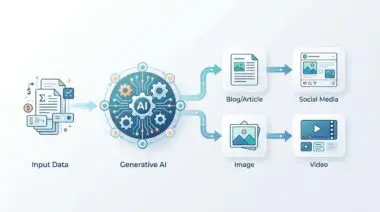
We have entered the era of multi-agent systems that autonomously triage, draft, and execute complex workflows. This is where artificial intelligence moves from an assistant to an autonomous operator.
The real-world business impact of this shift is measurable and profound. A 2026 joint study by NBER and Microsoft Research reveals that knowledge workers utilizing production-grade AI agents for email management have successfully reclaimed 3.6 hours per week.
This represents a 31% total reduction in time spent on manual communication tasks. This reclaimed time is immediately redirected toward high-leverage strategic growth.
Agent-to-Agent Protocols and the Contextual Memory Layer
The most fascinating real-world applications now feature “Agent-to-Agent” protocols.
In these scenarios, an executive’s inbox agent negotiates directly with a vendor’s scheduling agent. They finalize meetings, adjust timelines, and update calendars entirely without human intervention.
The killer strategy enabling this is the “Contextual Memory Layer.” This technology allows the AI to reference up to three years of previous communication history in milliseconds.
The result is an autonomous system that drafts responses perfectly mimicking a CEO’s distinct tone and strategic priorities.
Sovereign Mail Agents for High-Security Sectors
While cloud-based orchestration is sufficient for many, high-security sectors demand a different approach.
Institutional money is currently prioritizing “Sovereign Mail Agents” to mitigate data privacy risks. These systems offer local-first LLM processing, ensuring that sensitive negotiations never leave the corporate firewall.
This localized approach has driven the agentic AI market to a staggering $10.91 billion valuation in early 2026.
Financial institutions and healthcare providers can now achieve inbox automation without compromising compliance. It is the perfect marriage of disruptive innovation and enterprise-grade security.
The Executive Action Plan: Transitioning to AX
Strategic Trajectory
- Pivot from User Experience (UX) to Agent Experience (AX) by rearchitecting platforms for machine-readable efficiency.
- Implement ‘Autonomous Relationship Management’ to move beyond passive inbox monitoring to proactive growth strategies.
- Deploy sentiment analysis within AI agents to automatically detect ‘at-risk’ client interactions in real-time.
- Enable agentic proactive outreach to mitigate potential churn risks before they require human intervention.
- Redesign front-end architecture to serve autonomous agents as the primary interface for business communication.
The next evolution in digital strategy is the transition from User Experience to Agent Experience.
Founders must recognize that email platforms are being rearchitected primarily for machine-readable front ends. The interface of the future is designed for autonomous agents, not human eyes.
To capitalize on this, executives must prepare for Autonomous Relationship Management.
This means deploying AI agents that do not just passively manage the inbox, but actively hunt for growth opportunities. By utilizing advanced sentiment analysis, these systems can identify “at-risk” client relationships in real-time.
Once a risk is detected, the orchestration layer initiates proactive outreach.
It mitigates potential churn risks before a human account manager is even aware of the friction. This is the ultimate competitive advantage in a hyper-automated marketplace.
Conclusion: The Autonomous Future
Agentic Email Orchestration is no longer a futuristic concept; it is the baseline for modern enterprise efficiency.
By eliminating the context-switching tax and deploying autonomous protocols, businesses can drastically reduce operational friction. The era of manual inbox management is officially over.
Those who fail to adapt to the Agent Experience will find themselves outpaced by competitors running leaner, faster, and smarter operations.
The smart money has already placed its bets on autonomous relationship management and sovereign data processing.
Navigating the intersection of technology, capital, and market psychology requires a sharp strategy. To future-proof your business architecture and scale with precision, connect with Andres at Andres SEO Expert.
Frequently Asked Questions
What is Agentic Email Orchestration?
Agentic Email Orchestration is a shift from reactive sorting to proactive execution where AI agents autonomously extract action items, sync data with CRMs, and manage complex workflows. By 2026, these systems are expected to be embedded in 40% of enterprise applications, reducing interaction costs from $7.00 to roughly $0.50 per task.
How does the Context-Switching Tax impact executive productivity?
The Context-Switching Tax represents the psychological friction and administrative burden of manual email triage. This bottleneck can drain up to 28% of a knowledge worker’s daily capacity, leading to a productivity plateau that agentic systems aim to eliminate through autonomous inbox management.
What is the difference between the Agentic Big Three and middleware startups?
The Agentic Big Three (Microsoft, Google, and Salesforce) provide the foundational infrastructure for enterprise AI. Conversely, middleware startups offer hyper-niche automation workflows that act as connective tissue, allowing internal data lakes to interact seamlessly with external vendor systems.
How do Sovereign Mail Agents protect data in high-security sectors?
Sovereign Mail Agents utilize local-first LLM processing to ensure that sensitive data and negotiations never leave the corporate firewall. This approach allows highly regulated industries like healthcare and finance to adopt inbox automation while maintaining strict compliance and data privacy.
What does the transition from UX to AX mean for businesses?
Transitioning from User Experience (UX) to Agent Experience (AX) involves rearchitecting digital platforms to be machine-readable. This shift recognizes that autonomous agents, rather than human eyes, are becoming the primary interface for processing business communications and executing relationship management strategies.
How do Agent-to-Agent protocols facilitate autonomous scheduling?
Agent-to-Agent protocols allow an executive’s AI agent to communicate directly with a vendor’s agent. They can negotiate timelines, finalize meeting slots, and update calendars autonomously by referencing a Contextual Memory Layer that contains years of communication history and strategic priorities.