




Key Points
- Connecting live weather APIs directly to AI image generators eliminates the creative bottleneck of manual design iteration.
- Real-time dynamic creative optimization prevents ad fatigue by matching campaign visuals to the user’s immediate physical environment.
- Integrating human-in-the-loop approval gates via team communication hubs ensures brand safety while maintaining high-velocity deployment.
Table of Contents
- The Relevancy Gap in Local Advertising
- Validating the Environmental Data Shift
- Engineering Marketing Pipelines for Scale
- Triggering Assets with No-Code Workflows
- Syncing Live Conversions and Asset Swaps
- Deploying AI Agents for Creative Curation
- Safeguarding Brand Integrity in Real-Time
- Eliminating Daily Campaign Burnout
- Predictive Modeling and the Hyper-Local Future
The Relevancy Gap in Local Advertising
Imagine launching a high-budget digital campaign for iced coffee, only for a sudden localized thunderstorm to hit your target zip code.
Your audience is shivering under umbrellas while scrolling past ads featuring sun-drenched beaches and sweating glasses of cold brew.
This contextual dissonance is known as the relevancy gap, a massive driver of wasted ad spend and creative fatigue.
Historically, solving this required armies of designers manually churning out thousands of weather-specific variations.
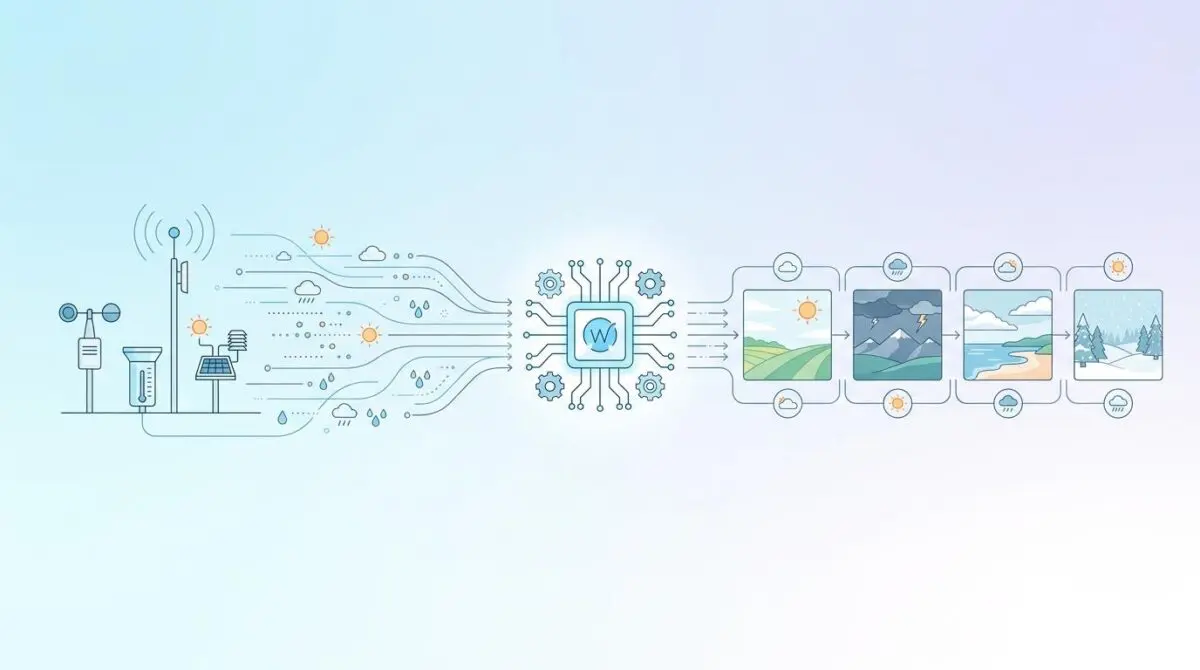
Today, Weather-Responsive Programmatic AI Creative Generation eliminates this friction entirely by syncing live meteorological data with automated design pipelines.
This architecture reclaims countless hours of manual labor and unlocks unprecedented operational freedom.
Validating the Environmental Data Shift
Market Intelligence & Data
Weather-Contextual Relevance
According to a 2025 HubSpot Global Marketing Trends report, ads that dynamically adjust visuals to match the viewer’s local weather see a 22% higher click-through rate.
Creative Production Efficiency
A 2026 Gartner study on Marketing Automation found that AI-driven programmatic asset generation reduces the time required to produce multi-regional ad variants by 85%.
Programmatic Creative Market
Statista projections for 2026 indicate the market for AI-driven programmatic creative automation will reach $12.4 billion as API-driven creative becomes the industry standard.
Enterprise Retail Integration
According to 2025 Deloitte research, 70% of the top 100 global retailers have integrated real-time environmental APIs into their social media advertising workflows.
The 22% increase in click-through rates reported by HubSpot highlights a fundamental truth about modern consumer psychology. When an ad reflects the immediate physical reality of the user, it bypasses banner blindness and feels like a personalized utility rather than a generic broadcast.
Achieving this level of personalization manually is impossible, which is why the 85% time savings identified by Gartner is so critical. Brands utilizing LoRA (Low-Rank Adaptation) fine-tuning within these automated pipelines maintain perfect brand consistency while shifting environments from desert heat to arctic cold in seconds.
The projected $12.4 billion market valuation by Statista proves that API-driven creative is no longer an experimental luxury. This rapid market expansion is heavily driven by the evolution of Dynamic Creative Optimization (DCO) engines that seamlessly swap these AI-generated assets based on real-time performance.
Deloitte’s finding that 70% of top global retailers have already adopted these integrations signals a permanent shift in social media advertising. Retailers are leveraging these environmental APIs to ensure their massive product catalogs remain contextually relevant across thousands of hyper-local markets simultaneously.
Engineering Marketing Pipelines for Scale
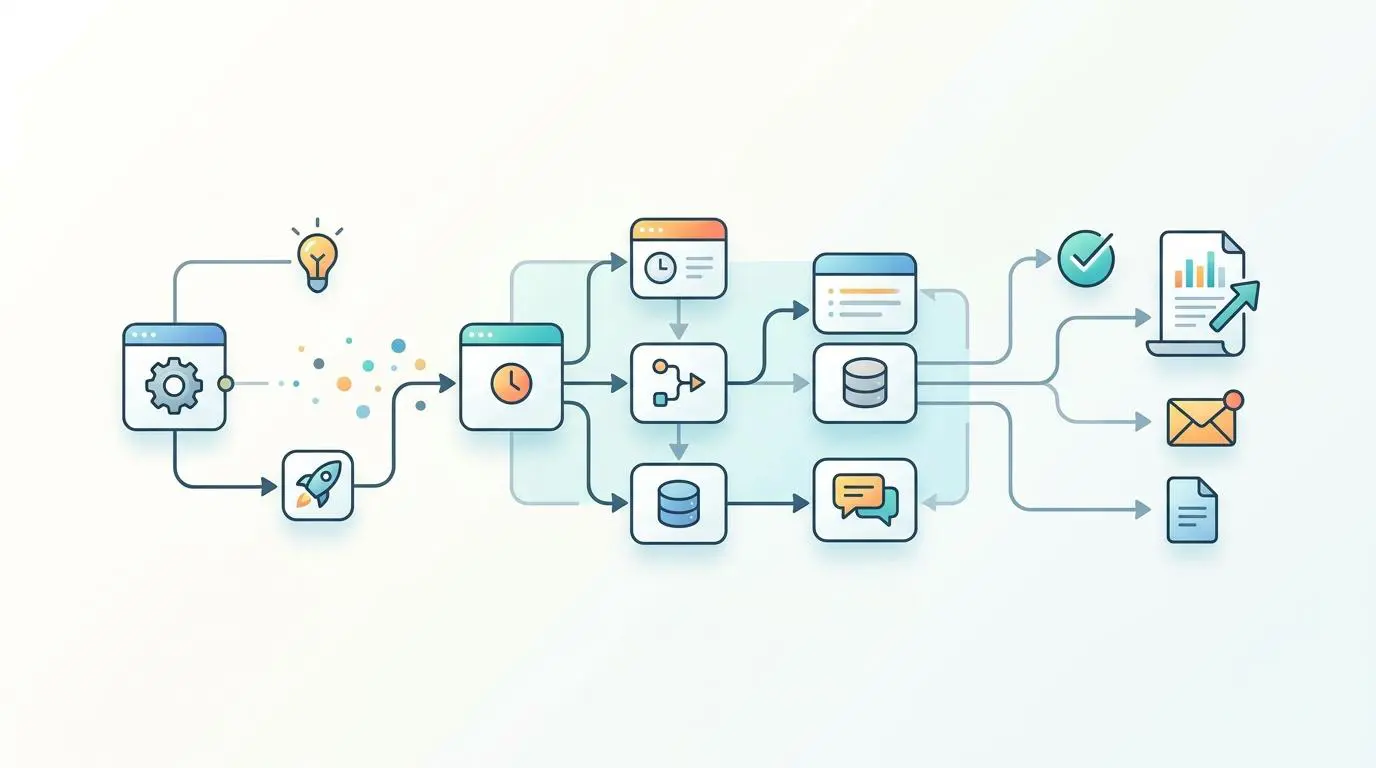
Modern enterprise stacks are leveraging platforms like Make.com and n8n to build robust bridges between live data and creative output.
These automation hubs pull real-time meteorological conditions from the OpenWeatherMap API and feed them directly into advanced image models like Flux.1 or Stable Diffusion 3.5.
To handle the complexity of these operations, workflows are typically broken down into specific operational stages.
- Trigger Layer: Webhooks from OpenWeatherMap monitor atmospheric shifts.
- Generation Layer: AI models process dynamic prompts based on the weather data.
- Rendering Layer: Tools like Cloudinary composite the final localized typography and brand logos.
This workflow directly solves the creative asset explosion that plagues ad operations teams.
It is physically impossible for humans to manually design and iterate thousands of variations for every possible weather and location combination.
Triggering Assets with No-Code Workflows
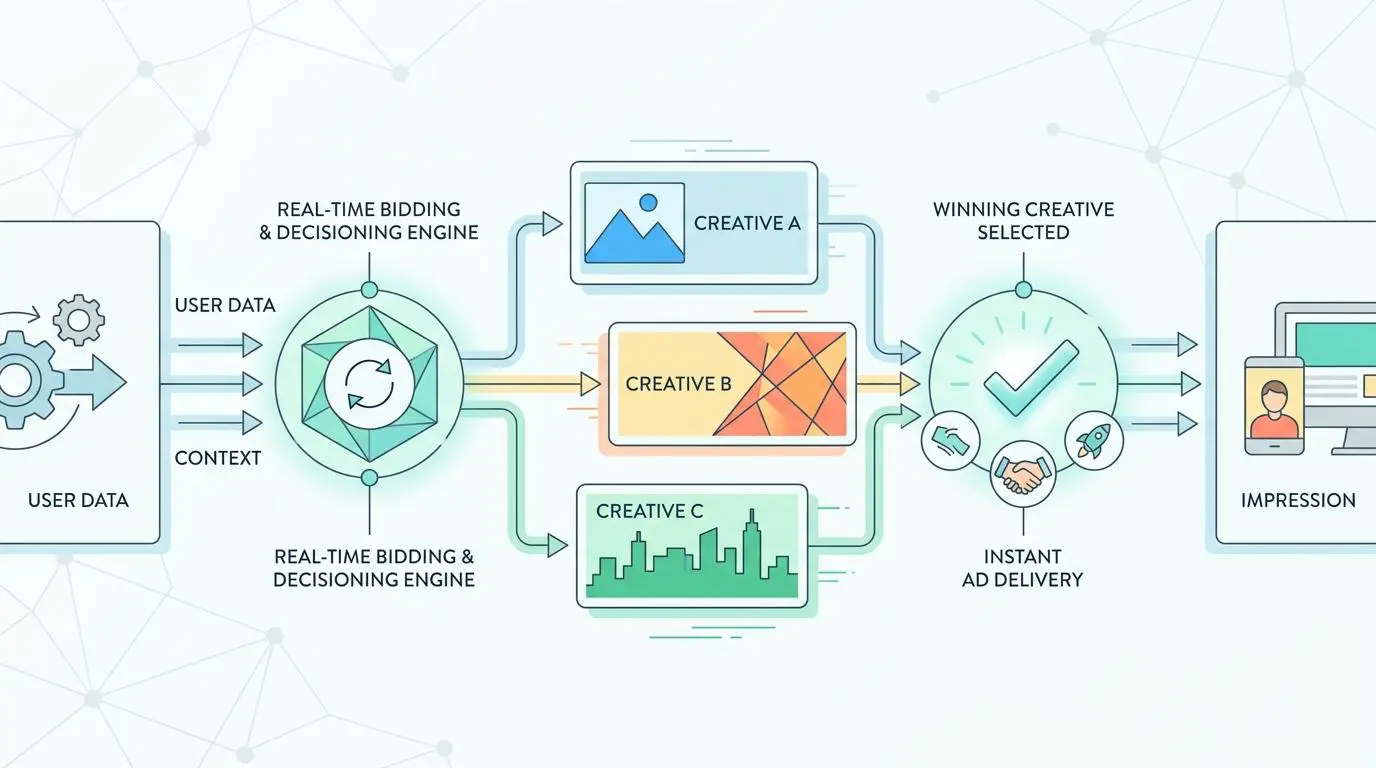
The landscape of automation shifted dramatically with the introduction of smart trigger nodes in platforms like Relay.app and Activepieces.
These nodes allow non-technical marketers to build complex logic flows based on localized environmental data.
For example, a sudden five-degree temperature drop in a specific zip code can instantly trigger a Large Language Model to rewrite an image prompt.
This system generates a brand-new ad variant for Meta or Google Ads in under sixty seconds.
This democratization of automation eliminates the need for expensive custom-coded scripts.
Marketing teams no longer rely on dedicated developer resources to maintain fragile API integrations with weather services.
Syncing Live Conversions and Asset Swaps

Generating the asset is only half the battle; deploying it without disrupting algorithmic learning is the real technical challenge.
Deep integrations with the Meta Conversions API and Google’s Live Asset API allow for real-time creative swapping without resetting the ad learning phase.
AI engines now weigh weather-specific images against real-time conversion rates.
This allows the system to push raincoat visuals during a downpour and immediately pivot to windbreakers as the storm clears.
This dynamic swapping prevents ad fatigue and the contextual dissonance that destroys campaign ROI.
Users are always served the most relevant product for their exact environmental reality.
Deploying AI Agents for Creative Curation

Standard conditional logic often falls short when evaluating the nuanced visual output of an image generator.
To solve this, cognitive agents powered by models like GPT-5 or Claude 4 are deployed as automated art directors.
These agents monitor the generated assets to ensure the depicted weather accurately reflects the severity of the real-time alert data.
If a local forecast predicts light flurries, the agent dynamically adjusts prompt tokens to prevent the generation of a massive blizzard.
This layer of cognitive oversight provides the nuanced creative judgment that standard workflows lack.
It ensures the visual intensity always matches the meteorological reality.
Safeguarding Brand Integrity in Real-Time
Even with advanced AI curation, high-stakes public campaigns require a final layer of human oversight.
Sophisticated pipelines now integrate a quality gate directly into communication hubs like Slack or Microsoft Teams.
When the AI generates a new weather-based asset, a high-resolution preview is instantly messaged to the creative director.
Interactive buttons within the chat allow for a one-click approval or an immediate regeneration command.
This human-in-the-loop architecture mitigates the risk of AI hallucinations.
It ensures brand safety without sacrificing the speed and agility of automated generation.
Eliminating Daily Campaign Burnout
The transition from static, manually updated campaigns to environmentally aware systems has profoundly impacted ad operations teams.
By automating the constant monitoring of forecasts and subsequent asset updates, teams are saving an average of twelve hours per week.
This massive reduction in manual workload addresses a critical industry friction point.
It eliminates the operational burnout historically caused by managing high-velocity, hyper-local ad campaigns.
Talent can now focus on high-level strategy rather than endlessly refreshing weather apps and uploading new graphics.
Predictive Modeling and the Hyper-Local Future
The next frontier of automated advertising is hyper-local predictive creative.
AI agents will soon leverage sub-kilometer meteorological modeling to anticipate environmental shifts before they happen.
These systems will generate and queue ad assets hours before a weather front arrives.
This allows brands to capture early intent windows, like ordering hot soup or booking a car wash, just as the sky begins to turn grey.
Navigating the intersection of technology, workflows, and operational efficiency requires a sharp strategy. To future-proof your business architecture and scale with precision, connect with Andres at Andres SEO Expert.
Frequently Asked Questions
What is the relevancy gap in local advertising?
The relevancy gap is the contextual dissonance between a digital advertisement and the consumer’s immediate physical environment, such as displaying ads for cold drinks during a thunderstorm. Weather-responsive programmatic AI eliminates this friction by syncing real-time meteorological data with automated design pipelines to ensure creative relevance.
How does weather-contextual relevance impact ad performance?
According to industry reports, ads that dynamically adjust visuals to match the viewer’s local weather see a 22% higher click-through rate (CTR). By reflecting the user’s immediate reality, these ads bypass banner blindness and function as personalized utilities rather than generic broadcasts.
Which AI models and tools are used for automated creative generation?
Modern pipelines utilize automation platforms like Make.com and n8n to bridge the OpenWeatherMap API with advanced image models like Flux.1 or Stable Diffusion 3.5. These workflows automate the trigger, generation, and rendering layers to produce thousands of hyper-local ad variants without manual design labor.
Can weather-responsive creative be swapped without resetting ad learning?
Yes, deep integrations with the Meta Conversions API and Google’s Live Asset API allow for real-time creative swapping. This ensures that the most relevant environmental visuals are served based on performance data without disrupting the platform’s algorithmic learning phase or hurting campaign ROI.
How do AI agents maintain brand integrity in automated workflows?
Cognitive agents powered by models like GPT-5 or Claude act as automated art directors, ensuring the visual intensity of generated assets matches meteorological severity. Additionally, human-in-the-loop quality gates integrated into tools like Slack allow for one-click approval, mitigating the risk of AI hallucinations and safeguarding brand safety.
What are the operational benefits of weather-triggered automation?
Implementing weather-responsive automation reduces the time required to produce multi-regional ad variants by up to 85%. By automating the monitoring of forecasts and asset updates, ad operations teams save an average of twelve hours per week, allowing talent to focus on high-level strategy instead of manual updates.