Key Points
- Intelligent Cloud Storage Tiering automates the migration of cold data to cheaper storage, eliminating the 10x premium organizations unknowingly pay for idle assets.
- Predictive AI agents forecast data re-hydration needs to proactively move data to hot tiers, preventing latency spikes during machine learning workloads.
- Automated lifecycle policies enforce compliance and defend against ransomware by routing sensitive information into immutable, logically air-gapped archives.
Table of Contents
The Silent Villain of Cloud Economics
Imagine paying penthouse rent to store a box of old tax receipts you haven’t looked at in a decade. That is exactly what happens when petabytes of untouched data sit in premium cloud tiers. Organizations unknowingly bleed capital every month by treating their cloud environments like endless storage lockers.
Intelligent Cloud Storage Tiering acts as the ruthless property manager for your digital assets. It monitors access frequency and automatically moves cold data to cheaper storage without human intervention. This real-time dynamic allocation eliminates the massive premiums paid for data that has not been accessed in over 90 days.
By shifting away from manual oversight, IT teams instantly reclaim lost hours and stop the bleeding of their infrastructure budgets. Automation transforms cloud storage from a financial liability into a highly optimized, self-governing ecosystem.
Decoding the Data Storage Crisis
Market Intelligence & Data
Rising Storage Costs
According to a 2025 Alphaus Cloud report, 94% of IT leaders have seen cloud storage expenses rise, with 60% facing significant bill increases.
Average Budget Waste
A 2026 industry analysis by Practical Logix indicates that up to 35% of overall cloud spend is wasted due to storage inefficiencies and unused resources.
Global Cloud Wastage
The 2026 State of FinOps findings by Softjourn estimate that enterprises will waste $44.5 billion in cloud infrastructure budgets due to underused resources in 2025.
Total Global Data Volume
Market intelligence from Amra & Elma confirms that global data volume is on track to exceed 200 Zettabytes by the end of 2026, driven primarily by AI and IoT expansion.
The reality of cloud infrastructure is that costs rarely plateau organically. The fact that 94% of IT leaders report surging expenses highlights a systemic flaw in how organizations govern their digital assets. Without automated lifecycle policies, companies are forced to manually audit millions of objects, which is a mathematically impossible task for human engineers.
This manual bottleneck directly fuels massive financial leaks across the industry. Current market analyses reveal that enterprises waste approximately USD 44.5 billion in unused cloud infrastructure every single year. A significant portion of this budget drain stems directly from orphaned snapshots and unattached volumes that sit idle.
Looking closer at this staggering waste, it becomes clear that outdated policies are the primary culprits. When engineers lack real-time visibility into data access patterns, they default to keeping everything in hot storage just in case. This defensive strategy bleeds budgets dry while providing zero operational benefits to the end-user.
The sheer scale of this problem is accelerating at an unprecedented pace globally. Market intelligence confirms that the total volume of global data is expected to hit 200 zettabytes by the end of 2026. As AI and IoT workloads generate massive datasets, deploying Intelligent Cloud Storage Tiering is no longer a luxury, but a survival necessity.
Optimizing Storage Workflows
Escaping the Daily Set-and-Forget Trap
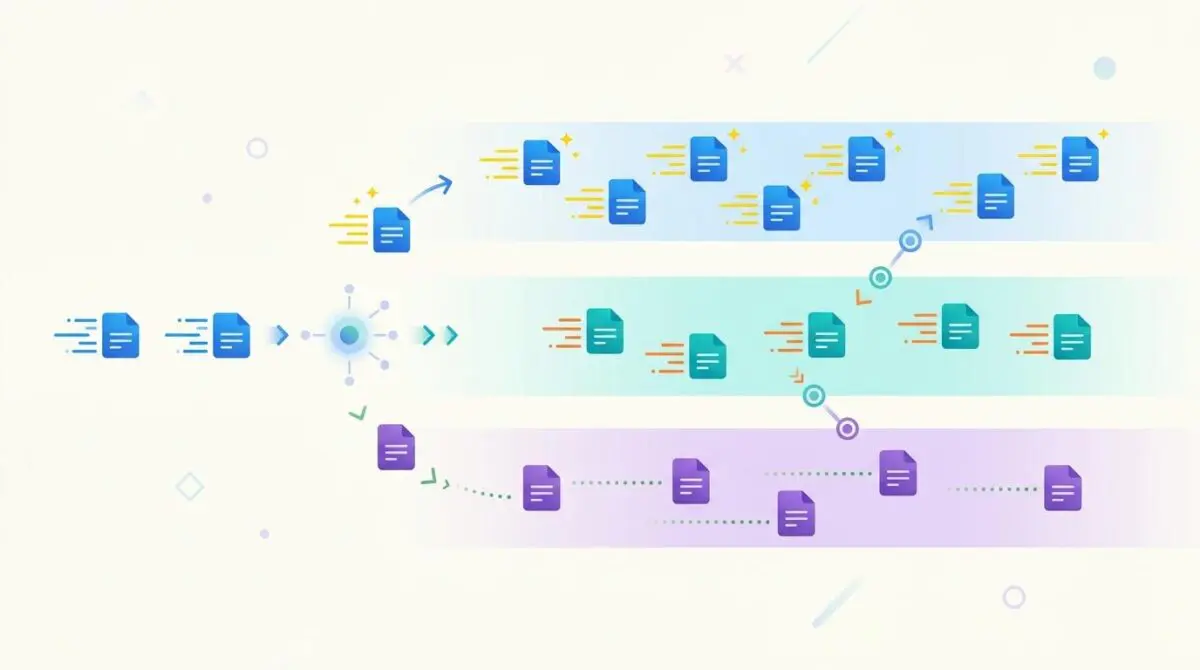
Managing petabyte-scale data manually is a losing battle for any modern IT team. Decision-makers increasingly cite cloud spend as their primary operational hurdle because human engineers simply cannot track access frequencies across millions of files.
Tools like AWS Storage Lens and Azure Advisor have evolved to provide granular, real-time visibility into orphaned snapshots. However, visibility alone does not solve the problem if the migration process remains manual and tedious.
Intelligent Cloud Storage Tiering steps in to bridge this gap by actively moving data based on live usage metrics. This automation completely eliminates the dangerous set-and-forget mentality that historically led to bloated monthly invoices.
Streamlining Data Pipelines Without Downtime
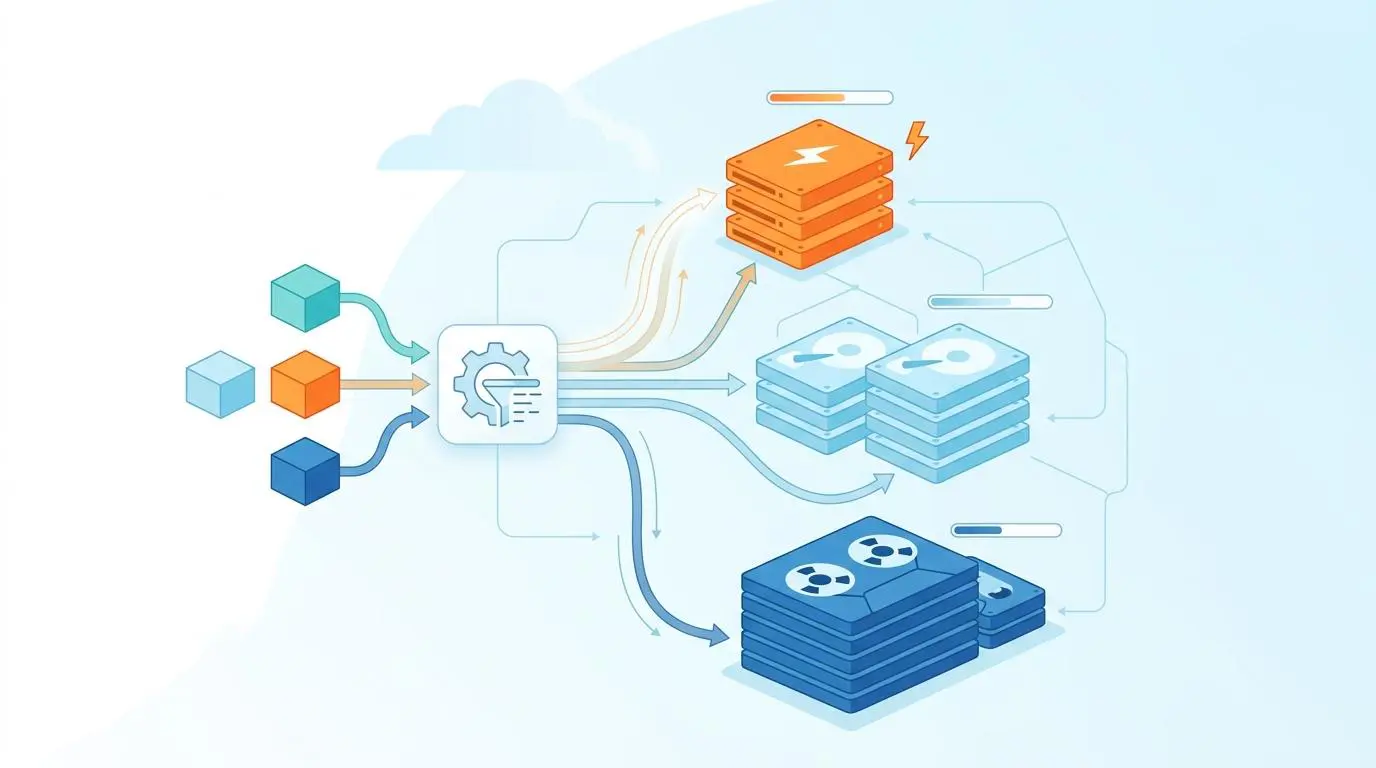
Historically, migrating data between storage classes required complex scripts and scheduled application downtime. This manual synchronization often resulted in metadata errors or broken dependencies for end-users relying on the system.
Today, automated lifecycle policies leverage machine learning through features like AWS S3 Intelligent-Tiering and Google Cloud Autoclass. These engines seamlessly transition data between Standard, Infrequent Access, and Archive tiers without requiring a single line of code changes.
A major breakthrough is the release of Amazon S3 Vectors, allowing vector data to be stored natively in S3 buckets. This innovation provides up to 90% cost savings over traditional vector databases for large-scale AI datasets.
By optimizing these pipelines, organizations can comfortably handle the expected 28.6% annual growth in cloud-stored data. They achieve massive scalability without breaking their backend architecture or increasing headcounts.
Predictive AI Agents for Proactive Hydration

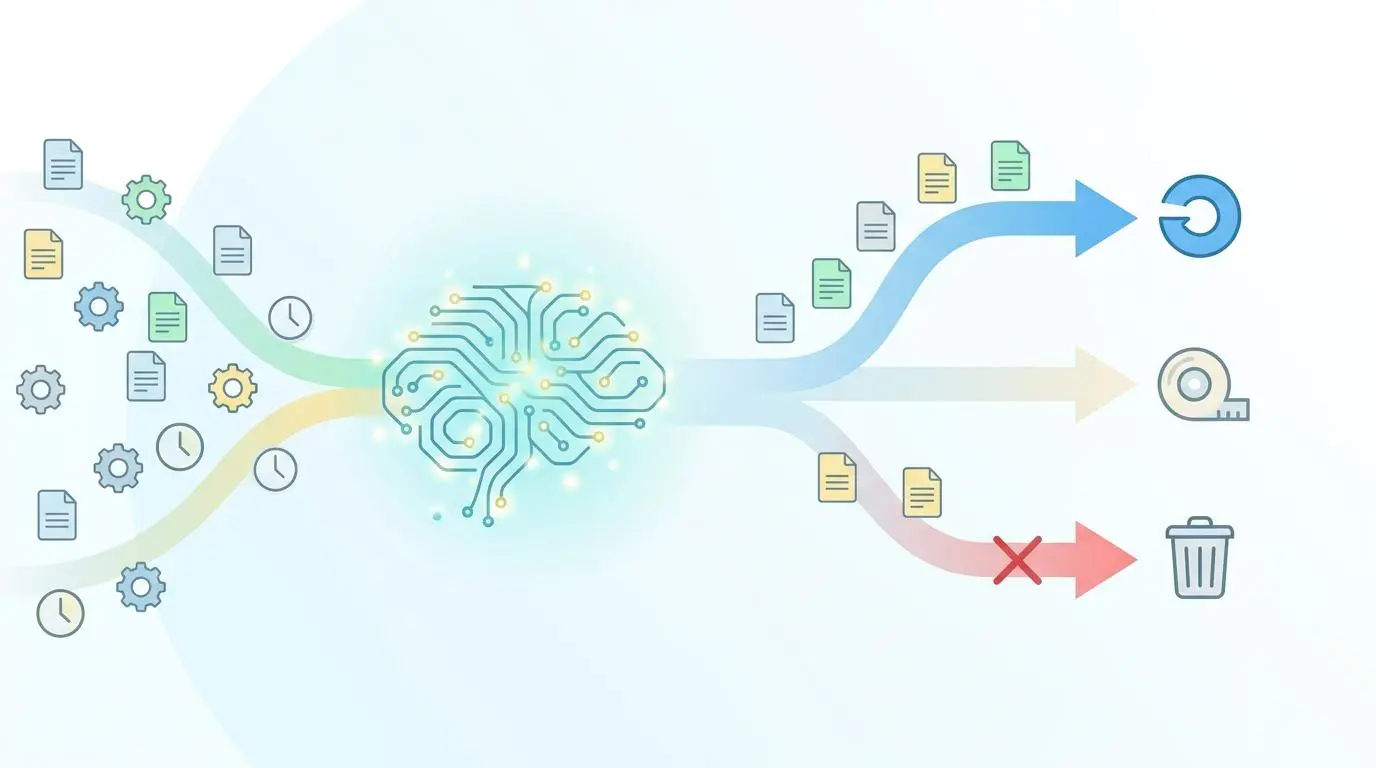
Reactive tiering is rapidly being replaced by predictive AI agents capable of forecasting data re-hydration needs. Instead of waiting for a user to request an archived file, these agents analyze historical access patterns to anticipate demand.
This means an AI agent can automatically move data from Deep Glacier to Hot storage 24 hours before a scheduled quarterly audit or massive machine learning training run. The data is ready and waiting exactly when the compute engines need it.
This proactive approach directly solves the dreaded latency spikes that occur when cold data is suddenly retrieved. High-stakes AI training and business intelligence workloads can now proceed smoothly without stalling.
Reclaiming Sysadmin Time and Sinking Costs
The financial impact of deploying automated storage analysis is undeniable, with organizations reporting up to a 35% reduction in total cloud spend. But the real victory lies in the reclamation of human capital and engineering focus.
Shifting from traditional HDD arrays to hybrid flash-enabled architectures governed by automation saves mid-sized enterprises an average of 14 hours of manual sysadmin work per week. That is nearly two full working days handed back to the IT department.
There is a massive opportunity cost when engineers spend 20% of their sprint time on cloud janitorial work. By automating tier allocation, those brilliant minds are freed up to focus entirely on feature development and revenue-generating projects.
Bulletproofing Compliance with Air-Gapped Tiers
Strict sovereign cloud mandates across Canada and the EU now demand that sensitive data be managed with flawless precision. Automated tiering effortlessly moves this regulated data into Deep Archive with immutable Write-Once-Read-Many locks.
This automation guarantees compliance with stringent 7-year retention laws without relying on human memory or manual scripts. It completely mitigates the risk of data leaks that occur when sensitive information is left in high-access, poorly governed tiers.
Furthermore, cold storage has evolved into a primary defense mechanism against ransomware. By creating logically air-gapped tiers, organizations can ensure their historical backups remain completely isolated from active network threats.
Sustainable Automation on the Horizon
As we look toward late 2026, the concept of Carbon-Aware Tiering is rapidly gaining traction. Automation engines are being programmed to migrate cold data to regions powered entirely by renewable energy during off-peak hours.
This shift directly addresses the rising pressure from stakeholders to report and reduce the carbon footprint associated with digital waste and idle data centers. Sustainability is becoming a core metric built directly into cloud architecture.
By the end of 2026, storage automation will transition from basic access-frequency logic to advanced context-aware logic. AI agents will interpret complex governance policies into machine-verifiable data contracts.
These intelligent contracts will automatically move data across hybrid-cloud boundaries. They will optimize storage locations for both financial cost and environmental impact simultaneously.
The Context-Aware Future of Cloud Architecture
The era of treating cloud storage as an endless, unmanaged dumping ground is officially over. Intelligent Cloud Storage Tiering represents a fundamental shift in how we value both our digital assets and our engineering hours.
By embracing real-time dynamic allocation, organizations are not just cutting costs; they are building resilient, self-optimizing infrastructures. These systems are uniquely capable of handling tomorrow’s zettabyte-scale workloads with ease.
Navigating the intersection of technology, workflows, and operational efficiency requires a sharp strategy. To future-proof your business architecture and scale with precision, connect with Andres at Andres SEO Expert.
Frequently Asked Questions
What is Intelligent Cloud Storage Tiering and how does it work?
Intelligent Cloud Storage Tiering is an automated system that monitors data access frequency and dynamically moves files between premium and low-cost storage tiers. It eliminates the need for manual oversight by automatically shifting cold data that has not been accessed in over 90 days to archive classes, reducing monthly infrastructure premiums.
How much of the average cloud budget is wasted on inefficient storage?
According to 2026 industry analysis, enterprises waste approximately 35% of their total cloud spend on inefficiencies like orphaned snapshots and unattached volumes. This contributes to a global cloud infrastructure wastage of $44.5 billion annually.
How does storage automation help IT teams reclaim engineering hours?
By automating the data lifecycle and migration process, mid-sized enterprises can save an average of 14 hours of manual sysadmin work per week. This allows engineering teams to shift their focus from “cloud janitorial work” to high-value feature development and revenue-generating projects.
What are the benefits of using Amazon S3 Vectors for AI datasets?
Amazon S3 Vectors allow vector data to be stored natively in S3 buckets, providing up to 90% cost savings compared to traditional vector databases. This innovation is critical for organizations managing the massive datasets required for large-scale AI and machine learning training.
How does predictive AI differ from reactive storage tiering?
While reactive tiering waits for a user request to move data, predictive AI agents forecast re-hydration needs by analyzing historical access patterns. This allows the system to proactively move data from Deep Glacier to Hot storage 24 hours before it is needed, eliminating latency spikes for audits or AI workloads.
Can automated cloud storage tiering improve data compliance and security?
Yes. Automated tiering supports compliance by moving sensitive data into Deep Archive tiers with immutable Write-Once-Read-Many (WORM) locks. It also acts as a ransomware defense by creating logically air-gapped tiers that isolate historical backups from active network threats.