Key Points
- Hyper-Personalized Credit Models: EduFin leverages alternative behavioral data to bypass traditional FICO scores, utilizing predictive analytics to accurately forecast the ROI of specific educational pathways.
- Decentralized Liquidity Pools: The integration of DeFi protocols enables the tokenization of Income Share Agreements, allowing institutional capital to deploy funding seamlessly into outcome-based assets.
- Embedded Corporate Upskilling: Direct-to-Provider payment APIs convert legacy tuition reimbursement programs into automated, smart-contract-driven talent retention tools for enterprise organizations.
Table of Contents
The Friction in Traditional Education Lending
According to the 2026 HolonIQ Global Education Finance Report, the total volume of ‘Outcome-Based’ education financing has reached $185 billion, representing a 40% year-over-year increase as students abandon traditional private student loans. This massive shift signals the end of an era for static, high-friction lending models.
The systemic mismatch between rising tuition costs and stagnant entry-level wages has reached a critical breaking point. Legacy financial institutions are struggling to underwrite modern vocational training.
Enter EduFin (Education Finance Technology), a disruptive financial architecture designed to realign the economics of learning. EduFin is not just an alternative loan product or a digital application portal.
It is a highly sophisticated, data-driven liquidity engine built to fund human potential. The technology fundamentally changes how risk is calculated for students entering the modern workforce.
By utilizing predictive analytics to forecast the ROI of specific degree paths or certifications, these technologies prevent students from over-leveraging for low-yield programs. For institutional investors, this represents a massive, untapped liquidity opportunity.
Capital is now actively seeking intelligent frameworks that tie funding directly to measurable human capital outcomes. The future belongs to platforms that can accurately price the future earning power of a learner.
Market Intelligence and Capital Flow
The transformation of education finance is being driven by unprecedented technological adoption across the lending sector. Traditional underwriting is rapidly being replaced by dynamic, real-time risk assessment models that utilize artificial intelligence.
The data below illustrates the sheer velocity of this market disruption.
Market Intelligence & Data
AI-Driven Credit Adoption
According to a 2026 Gartner FinTech survey, 72% of specialized education lenders now use non-traditional AI modeling to determine creditworthiness for vocational students.
LNPL Market Volume
Data from Juniper Research 2026 indicates that the ‘Learn-Now-Pay-Later’ sector for professional certifications has grown into a $32.5 billion global industry.
ROI Precision Improvement
Bloomberg Intelligence reports that AI-based tuition-to-salary forecasting is now 1.8x more accurate than 2023 baseline models, significantly reducing default risks for EduFin providers.
DeFi Integration Growth
The 2026 State of Crypto Finance report highlights that 45% of new Income Share Agreements are now tokenized to allow for fractional institutional investment.
This intelligence reveals a clear divergence between legacy banking institutions and agile FinTech disruptors. The smart money is no longer betting on generalized, unsecured student debt that traps borrowers for decades.
Instead, institutional capital is flowing toward precision-engineered financial instruments that actively mitigate default risks through AI-based tuition-to-salary forecasting.
Market leadership has definitively shifted toward platforms like Stride, Meritize, and new AI-native disruptors like EduQuant. These entities secured massive Series C rounds in early 2026 by proving their models can drastically outperform traditional FICO-based underwriting.
The financial industry is witnessing a structural rotation from debt-trapping mechanisms to success-as-a-service ecosystems. This shift is creating a more resilient and equitable credit market for the next generation of workers.
The Deep Dive into EduFin Infrastructure
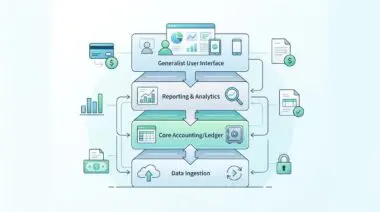
Understanding the EduFin revolution requires examining the underlying technological stack that powers these new financial products. The sector has evolved far beyond simple digital loan applications and basic online portals.
Today, it relies on complex data pipelines, decentralized networks, and embedded payment rails to function at scale.
AI-Driven Credit and Alternative Data
In 2026, EduFin has evolved from static lending to AI-driven ‘Success-as-a-Service’ models. The landscape is dominated by hyper-personalized credit scoring that completely bypasses outdated consumer credit metrics.
Algorithms now analyze vast arrays of alternative data points in real-time to determine a borrower’s true earning potential. This shift is critical for funding non-traditional educational pathways like coding bootcamps and specialized technical certifications.
These advanced AI models evaluate real-time coding repository contributions, micro-credential completion rates, and even engagement metrics within digital learning platforms. This granular, behavioral analysis allows lenders to underwrite vocational students who would otherwise be entirely invisible to traditional credit bureaus.
It is a brilliant execution of risk mitigation through behavioral data analysis.
Furthermore, these predictive models continuously learn and adapt to macroeconomic shifts. If a specific programming language or technical skill sees a drop in market demand, the underwriting algorithm adjusts the credit terms for those specific programs instantly.
This dynamic pricing model protects both the lender’s capital and the student’s financial future by preventing over-investment in obsolete skills.
Tokenized Income Share Agreements
The integration of blockchain technology has solved one of the largest liquidity bottlenecks in outcome-based financing. Decentralized finance (DeFi) protocols are now being used to create robust, transparent liquidity pools for student Income Share Agreements (ISAs).
This allows for instant capital deployment without relying on the rigid, centralized balance sheets of legacy banks.
Institutional capital from giants like BlackRock and SoftBank is increasingly flowing into ‘Outcome-Based Financing’ funds. These disruptors are bypassing traditional banks entirely by partnering directly with bootcamps and corporate upskilling platforms.
They provide automated, payroll-linked repayment systems that adjust dynamically based on the borrower’s real-time salary fluctuations.
While regulatory frameworks surrounding tokenized assets remain complex and require careful navigation, early compliance protocols have successfully standardized these fractional investments. This allows global investors to participate in human capital markets with unprecedented transparency.
Smart contracts ensure that as soon as a student hits a specific salary threshold, a micro-percentage of their income is automatically routed back to the liquidity pool.
Embedded Finance and Corporate Upskilling
Embedded finance allows Learning Management Systems (LMS) to offer instant financing options at the exact moment of user intent. This frictionless experience is fueling the rapid expansion of the ‘Learn-Now-Pay-Later’ sector directly at the point of course registration.
It seamlessly integrates credit into the educational journey without forcing the user to leave the platform to secure funding.
A 2026 study by the Burn Glass Institute reveals that 54% of Fortune 500 companies have now integrated ‘Direct-to-Provider’ payment APIs, allowing them to fund employee education instantly via smart contracts, bypassing traditional reimbursement cycles entirely.
For enterprise businesses, this technology automates the management of complex tuition reimbursement programs. It converts these programs from a tax-heavy administrative burden into a highly strategic talent retention tool powered by automated smart contracts.
Companies can now directly invest in their workforce’s capabilities with zero administrative friction.
This embedded architecture also provides corporations with real-time analytics on the ROI of their educational investments. Human Resources departments can track skill acquisition and directly correlate it with internal promotion rates and productivity metrics.
EduFin has essentially merged corporate finance, human resources, and educational technology into a single, unified data stream.
The Strategic Trajectory for Smart Capital
The next 18 months will dictate the market leaders of the next decade in the education finance sector. FinTech founders, product architects, and institutional investors must aggressively adopt these decentralized and AI-driven frameworks to remain competitive.
The roadmap requires a fundamental shift in how financial identities are structured and deployed.
Strategic Trajectory
- Develop and deploy ‘Lifelong Learning Wallets’ to provide students with portable, blockchain-based financial identities.
- Bridge the gap between education and finance by storing both credentials and pre-approved credit lines for upskilling.
- Integrate AI-agent-led financial coaching directly into educational interfaces to provide proactive fiscal guidance.
- Implement real-time debt-to-income ratio optimization tools to assist students in navigating the gig economy.
- Prepare for the AI-driven job market by aligning institutional credit offerings with continuous, lifelong learning paths.
Executing this trajectory requires robust backend engineering and a deep understanding of market psychology. The rise of ‘Lifelong Learning Wallets’ will create entirely portable, blockchain-based financial identities for users.
These wallets will securely store both verified educational credentials and pre-approved lines of credit tailored for continuous upskilling.
We expect a massive surge in AI-agent-led financial coaching integrated directly into the educational interface. This will help students proactively optimize their debt-to-income ratio in real-time as they navigate the shifting gig economy and the AI-driven job market.
The institutions that build these seamless, proactive interfaces will capture the majority of the market share and dictate the future of human capital financing.
Conclusion
The transformation of EduFin is redefining the core relationship between institutional capital, education, and human potential. By leveraging AI-driven credit models, alternative data, and decentralized liquidity pools, the industry is finally aligning financial incentives with actual student success.
The era of static, high-interest student debt is effectively over, replaced by dynamic, outcome-based investments that empower the modern workforce.
Navigating the intersection of financial technology, institutional capital, and market psychology requires a sharp strategy. To future-proof your FinTech architecture and scale with precision, connect with Andres at Andres SEO Expert.
Frequently Asked Questions
What is EduFin and how does it differ from traditional student loans?
EduFin, or Education Finance Technology, is a data-driven financial architecture that uses predictive analytics to fund education based on a student’s future earning potential. Unlike traditional loans that rely on static credit scores and high-friction lending models, EduFin aligns financing directly with measurable human capital outcomes and actual career ROI.
How does AI improve credit risk assessment in education lending?
AI-driven credit models analyze alternative data points such as coding repository contributions, engagement metrics within learning platforms, and real-time labor market trends. According to 2026 data, these models are 1.8x more accurate than 2023 baseline models, allowing lenders to underwrite vocational students who lack traditional credit histories.
What is the ‘Learn-Now-Pay-Later’ (LNPL) sector?
LNPL is a rapidly expanding sector of the education finance market, reaching $32.5 billion in volume by 2026. It provides frictionless, point-of-sale financing for professional certifications and specialized skills, integrating credit directly into the registration process of Learning Management Systems.
How do tokenized Income Share Agreements (ISAs) work?
Tokenized ISAs use blockchain technology and DeFi protocols to create fractional investment opportunities for institutional capital. These agreements use smart contracts to automate payroll-linked repayments that adjust dynamically based on the borrower’s real-time salary, ensuring transparent and efficient liquidity for student funding.
What are Lifelong Learning Wallets?
Lifelong Learning Wallets are portable, blockchain-based financial identities that store both verified educational credentials and pre-approved credit lines. They are designed to support continuous upskilling by providing students with a secure, persistent link between their skills and their ability to secure funding throughout their career.
How is embedded finance changing corporate upskilling?
Embedded finance enables ‘Direct-to-Provider’ payment APIs that allow corporations to fund employee education instantly via smart contracts. This bypasses traditional reimbursement cycles, reduces administrative friction, and provides HR departments with real-time analytics on the ROI of their workforce development investments.