Key Points
- Agentic AI Integration: The shift from passive generative AI to autonomous systems allows for real-time portfolio rebalancing and self-executing cross-border tax optimization.
- Decentralized Physical Infrastructure: Utilizing DePIN networks ensures off-grid connectivity and hardware-level verification to eliminate connectivity risks for global nomads.
- Eradicating the Latency Tax: Real-time payment bridges and stablecoin-native rails bypass traditional correspondent banking to reduce foreign exchange spreads and accelerate global liquidity.
Table of Contents
The Financial Tech Friction
According to research from Emapta, the global fintech market is on track to hit $460.76 billion in 2026. It is growing at a 16.2% CAGR as digital-first consumers in emerging markets drive nearly 30% of new revenue growth. This staggering capital velocity represents a fundamental shift in how global liquidity operates across borders.
For the adventurous global citizen, traditional banking is a fragmented labyrinth of frozen accounts and exorbitant foreign exchange fees. The modern digital nomad requires more than just a multi-currency debit card to survive in a hyper-connected world. They need a financial ecosystem that moves as fluidly and aggressively as their own lifestyle.
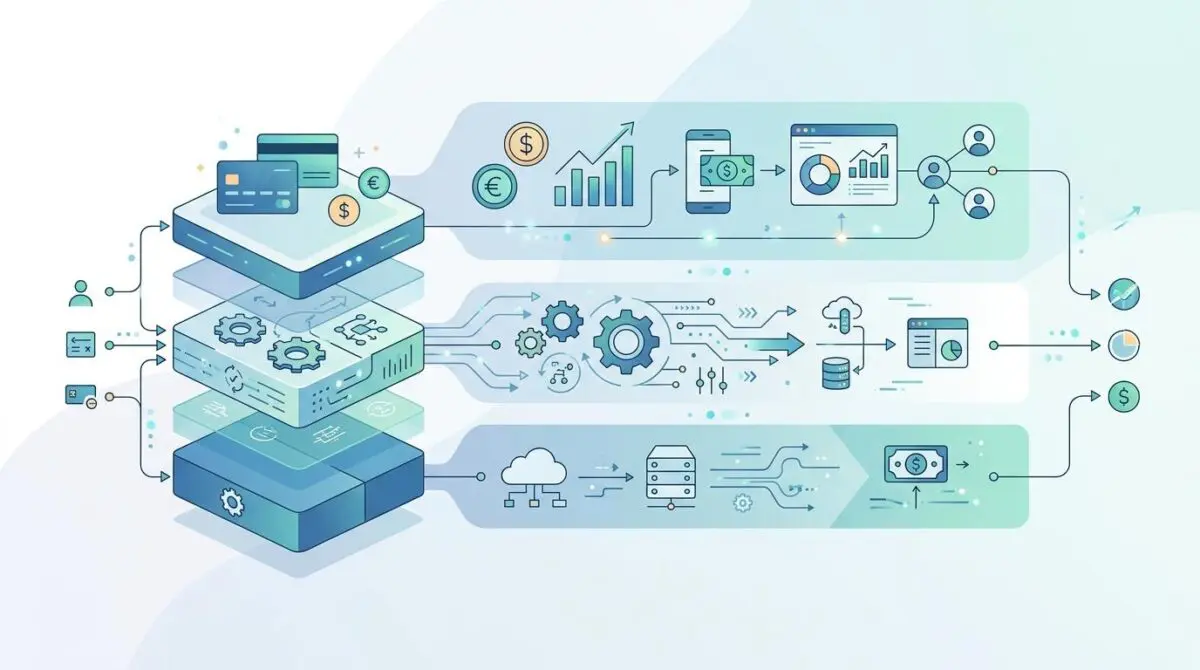
The true disruption lies in the Autonomous Borderless Financial Stack. This is not merely a digital wallet but a self-executing wealth engine designed for absolute mobility. It operates invisibly in the background to ensure capital moves freely without human friction.
Historically, moving money across sovereign lines meant paying a heavy toll to legacy correspondent banks. Today, the technology exists to bypass these archaic gatekeepers entirely. The financial tech friction of the past decade is being systematically dismantled by autonomous code and decentralized hardware.
Market Intelligence and Capital Flow
Market Intelligence & Data
Cross-Border Market Velocity
The global cross-border payments market is projected to reach this value in 2026, driven by a surge in instant-settlement rails and digital wallet adoption according to The Business Research Company.
DePIN Active Devices
Data from DePINScan in late March 2026 shows nearly 9 million active hardware devices globally are now providing decentralized infrastructure services for the Web3 and AI economy.
AI VC Concentration
OECD reports that AI-focused firms accounted for over 60% of all global venture capital investment value in 2025, signaling a massive pivot toward autonomous tech infrastructure.
Agentic Software Market
The dedicated market for autonomous AI and agent software is expected to hit this multi-billion dollar milestone by the end of 2026, as per data from Second Talent.
The data above paints a clear picture of where institutional capital is moving in the current cycle. We are witnessing a massive pivot away from legacy banking infrastructure toward self-sustaining digital ecosystems. Smart money recognizes that the future of finance belongs to systems that eliminate human intervention entirely.
Venture capital is currently concentrating aggressively in sovereign wealth AI startups. These are the engines that will power the next generation of borderless wealth management. When massive global capital flows through cross-border rails, the latency tax of old correspondent banking becomes an unacceptable drag on liquidity.
Furthermore, major disruptors like Revolut and BlackRock are integrating institutional-grade private market access for the mass affluent. This democratization of high-tier financial instruments is a direct result of improved technological infrastructure. The barrier to entry for complex financial strategies has effectively dropped to zero.
Significant capital is also flowing into horizontal fintechs like Convera and Stripe. These software firms provide the underlying real-time settlement rails powered by ISO 20022 messaging standards. By standardizing the communication between global financial institutions, these firms are quietly rebuilding the plumbing of the global economy.
The FinTech Deep Dive
Agentic AI and the Client Brain
The 2026 fintech landscape has transitioned rapidly from generative AI assistants to fully autonomous systems. We are now entering the era of the unified client brain architecture. Fragmented customer relationship management systems are being replaced by a single, omnipotent intelligence layer.
This intelligence layer consolidates behavioral signals and market sentiment to predict liquidity needs. It can actually anticipate when an adventurous traveler will need capital before the user even initiates a transfer.
The Cambridge Centre for Alternative Finance reports that 52% of financial services firms have actively adopted agentic AI for autonomous operations. Fintechs are rapidly outpacing traditional incumbents in transforming back-office functions into self-executing systems.
This massive shift is exactly why the dedicated market for autonomous AI and agent software has become the critical backbone of modern wealth generation. These systems can execute multi-step workflows like real-time portfolio rebalancing without any human oversight. They also handle complex cross-border tax optimization in milliseconds.
By removing the human element from portfolio management, these autonomous systems eliminate emotional trading and operational lag. The client brain operates continuously in the background to ensure every asset is perfectly positioned for maximum yield. It is the ultimate invisible wealth manager for the global citizen.
Decentralized Infrastructure and Latency Tax
For the adventurous global nomad, connectivity and capital access are entirely synonymous. If you cannot connect to the network, your capital is effectively frozen. This is where Decentralized Physical Infrastructure Networks step in to permanently bridge the global connectivity gap.
By providing decentralized infrastructure services, leaders like Aethir and Helium ensure global, off-grid connectivity. They provide hardware-level verification for financial transactions in regions where traditional cell towers fail. This infrastructure completely solves the connectivity risk that plagues global travelers navigating remote jurisdictions.
Users can now earn and spend tokens on these networks for their autonomous data and compute needs. This creates a self-sustaining loop where the user is both a consumer and a provider of network infrastructure. It is a brilliant financial model that subsidizes the cost of global mobility.
The stack also solves the latency tax of global movement by utilizing real-time payment bridges like the UPI-PayNow link. Combined with stablecoin-native rails, these innovations reduce foreign exchange spreads by up to 60 basis points. Capital moves at the speed of light rather than the speed of a bank teller.
For the adventurous traveler, this technology eliminates manual insurance headaches through straight-through processing pipelines. These pipelines automate over 50% of travel and property claims instantly. Incidents that used to take weeks of bureaucratic wrangling are now resolved in minutes.
The Strategic Action Plan
Strategic Trajectory
- Pivot the financial stack into a holistic ‘Life Management’ engine over the next 12–24 months.
- Drive the democratization of ‘Alts’ to establish private equity and credit as standard components for mid-tier portfolios.
- Architect ‘Biometric-Only’ payment rails to simplify global transaction identity.
- Orchestrate AI-led wealth management to automatically rebalance assets based on real-time geopolitical risk signals.
- Implement predictive tax-harvesting algorithms to optimize asset placement across multiple jurisdictions.
The roadmap above outlines the necessary evolution for founders and institutional investors who wish to remain relevant. The goal is to build a holistic life management engine that anticipates the complex needs of a borderless user base. This requires a profound shift in how we view digital identity and asset allocation.
We will soon see the rise of biometric-only payment rails that completely eliminate the need for physical cards or mobile devices. Your biological signature will become the ultimate key to unlocking global liquidity. This simplifies transaction identity while drastically reducing the attack surface for financial fraud.
Simultaneously, AI-led wealth orchestration will automatically shift assets between jurisdictions based on real-time geopolitical risk signals. If political instability arises in one region, the autonomous stack will seamlessly migrate capital to a safer haven. This level of predictive security was previously reserved for sovereign wealth funds.
To stay ahead of the curve, executives must implement predictive tax-harvesting algorithms immediately. These tools optimize asset placement across multiple jurisdictions to maximize yield and minimize regulatory friction. The future belongs to those who build systems that manage wealth autonomously.
Conclusion
The global financial ecosystem is no longer a static repository for capital waiting to be deployed by human hands. It is a living, breathing network of autonomous agents and decentralized nodes operating in perfect harmony. The Autonomous Borderless Financial Stack is the ultimate vehicle for those who demand absolute financial sovereignty.
As smart money continues to build the infrastructure of tomorrow, the only true risk is remaining tethered to the legacy systems of yesterday. Embracing decentralized infrastructure and agentic AI is not just a technological upgrade. It is a fundamental requirement for thriving in the modern borderless economy.
Navigating the intersection of financial technology, institutional capital, and market psychology requires a sharp strategy. To future-proof your FinTech architecture and scale with precision, connect with Andres at Andres SEO Expert.
Frequently Asked Questions
What is an Autonomous Borderless Financial Stack?
An Autonomous Borderless Financial Stack is a self-executing wealth engine designed for absolute global mobility. It functions as a digital ecosystem that moves capital freely across sovereign lines without human friction, bypassing legacy correspondent banks through autonomous code and decentralized hardware.
How does Agentic AI transform modern wealth management?
Agentic AI transitions from simple assistants to fully autonomous ‘client brain’ architectures. These systems anticipate liquidity needs, execute real-time portfolio rebalancing, and handle complex cross-border tax optimization without human oversight, effectively eliminating emotional trading and operational lag.
What is the role of DePIN in the global fintech ecosystem?
Decentralized Physical Infrastructure Networks (DePIN) bridge the global connectivity gap by providing hardware-level verification for financial transactions. This ensures capital access in remote regions where traditional infrastructure fails, effectively eliminating connectivity risks for global nomads.
How are cross-border payment costs being reduced in 2026?
Costs are being reduced through real-time payment bridges like the UPI-PayNow link and stablecoin-native rails. These innovations, powered by ISO 20022 messaging standards, can reduce foreign exchange spreads by up to 60 basis points compared to traditional banking methods.
What are biometric-only payment rails?
Biometric-only payment rails are transaction systems that use a biological signature as the primary key to unlock global liquidity. This eliminates the need for physical cards or mobile devices, simplifying transaction identity and reducing the attack surface for financial fraud.
How does AI-led orchestration manage geopolitical financial risk?
AI-led wealth orchestration utilizes real-time geopolitical risk signals to automatically shift assets between jurisdictions. If instability is detected in one region, the autonomous stack migrates capital to safer havens, providing a level of predictive security previously reserved for sovereign wealth funds.