

Key Points
- Real-time WMS triggers eliminate the 10% to 15% inventory drift gap by deploying robotic swarms instantly upon pick failures.
- AI-agent platforms now coordinate mixed-vendor robot fleets to audit high-density 50-foot racking zones in under 15 minutes.
- Transitioning to Robotics-as-a-Service models replaces heavy CAPEX with usage-based OPEX while delivering an average ROI exceeding 250%.
Table of Contents
The Reality of the Inventory Drift Gap
Picture this: It is the middle of peak fulfillment hours, and a picker just scanned an empty slot. Your digital system insists that slot holds fifty high-velocity SKUs.
Immediately, a manual audit team is dispatched. They block active aisles, halt outbound shipments, and create a massive operational bottleneck.
This frustrating reality is known as the Inventory Drift Gap. It represents the persistent 10% to 15% discrepancy between digital records and physical shelf reality that plagues modern logistics.
For decades, warehouses have relied on manual cycle counting to bridge this gap. However, human audits are inherently slow, error-prone, and highly disruptive to active fulfillment workflows.
When operations are forced to pause for emergency counts, the entire supply chain suffers from delayed shipments and wasted labor hours. The traditional approach to inventory management is simply no longer viable for high-density facilities.
To solve this critical friction, forward-thinking operations are adopting Event-Driven Swarm Robotics Orchestration (EDSRO). This advanced automation framework replaces reactive manual counts with instant automated deployment of swarm robotics.
These robotic fleets handle warehouse inventory counting triggered by real-time system audits. By allowing the system to self-correct in real-time, warehouses can finally reclaim their time, eliminate costly disruptions, and scale operations with absolute precision.
Quantifying the Cost of Inaccuracy
Market Intelligence & Data
Revenue Shrinkage Cost
According to a 2025 GoRamp report, inventory shrinkage and accuracy issues cost warehouses an average of 1.4% of their annual revenue.
AMR Deployment ROI
Verified data from SellersCommerce in 2026 indicates that Autonomous Mobile Robot fleets now deliver an average ROI exceeding 250% in live logistics environments.
Inventory Error Reduction
A 2026 industry study by The Network Installers found that integrating WMS with automated swarm robotics results in a 99% reduction in manual inventory errors.
Global Robot Fleet
By the end of 2026, industry forecasts from SellersCommerce predict that 4.7 million commercial robots will be operational across 50,000 global warehouses.
The financial bleed from inaccurate stock levels is staggering when viewed at scale. Operations lose an average of 1.4% of their annual revenue simply because physical shelves do not match digital databases.
This revenue shrinkage cost forces businesses to maintain bloated buffer stocks. They also overpay for emergency cycle counts just to keep orders flowing.
Transitioning away from manual counting completely changes the financial trajectory of modern logistics. Verified data indicates that Autonomous Mobile Robot fleets now deliver an average ROI exceeding 250% in live logistics environments.
This massive return is driven by uninterrupted fulfillment. It is further bolstered by the total elimination of costly emergency audits during peak hours.
Human intervention in high-volume environments is inherently prone to mistakes and data entry fatigue. Studies confirm that integrating a Warehouse Management System (WMS) with automated swarm robotics results in an incredible 99% reduction in manual inventory errors.
In fact, industry data indicates that manual inventory management is responsible for up to 71% of all supply chain errors. This makes automated audits a critical necessity for survival.
The sheer scale of robotic adoption proves that manual cycle counting is rapidly becoming an obsolete practice. By the end of 2026, industry forecasts from SellersCommerce predict that 4.7 million commercial robots will be operational across global logistics hubs.
This global fleet expansion underscores a definitive industry shift. The future clearly points toward continuous, automated inventory reconciliation.
The Mechanics of Automated Orchestration
Eliminating Peak Hour Disruptions
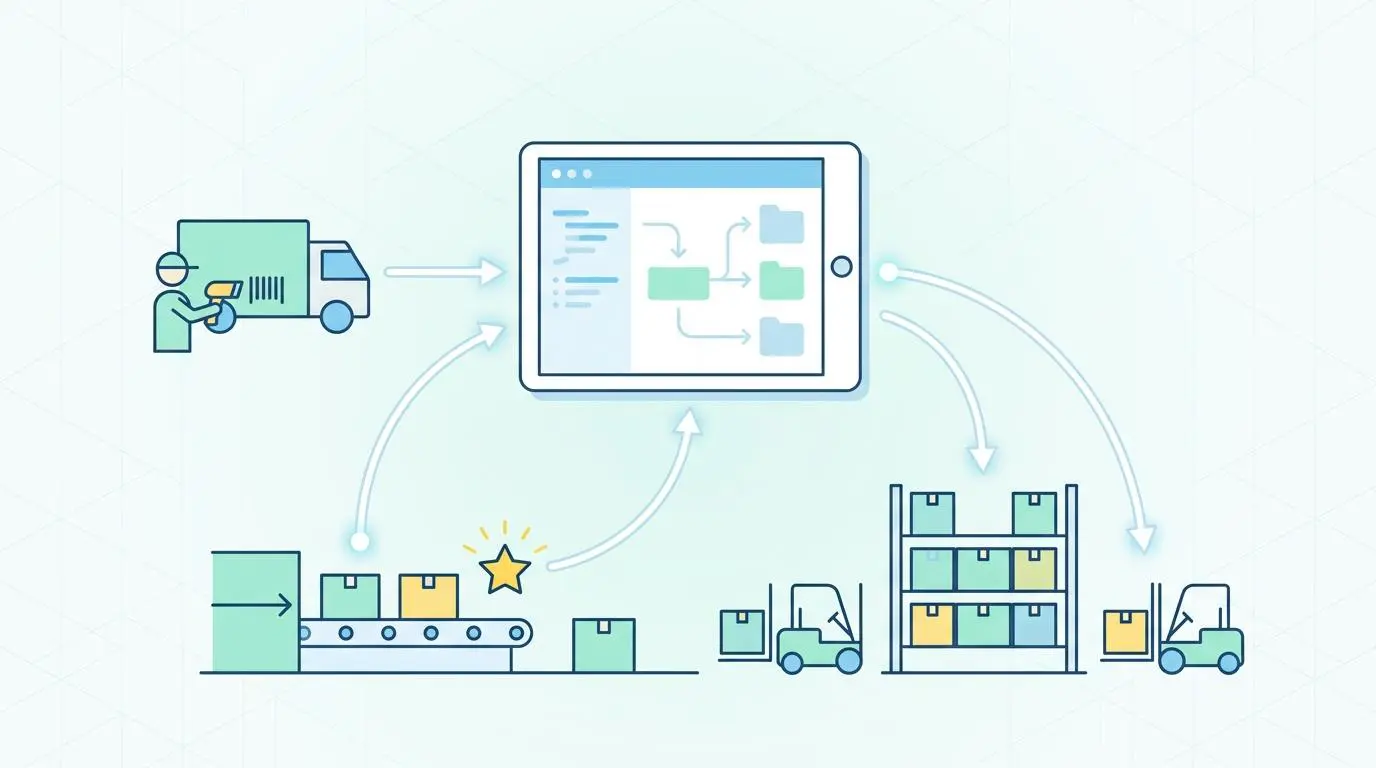
Manual cycle counts in high-density facilities typically achieve only 85-90% accuracy, leaving a massive margin for error. When these inaccuracies surface during peak fulfillment hours, operations often experience severe 30% productivity drops.
Manual audit teams must physically clear active aisles. This forces pickers to reroute and delays critical outbound shipments.
To combat this daily friction, enterprise platforms like Manhattan Active WM now utilize real-time event triggers. The moment a pick-failure occurs on the floor, the WMS fires an automated webhook to the robotics orchestration layer.
This eliminates the need for human managers to manually schedule an audit. It completely removes the friction of dispatching a manual team.
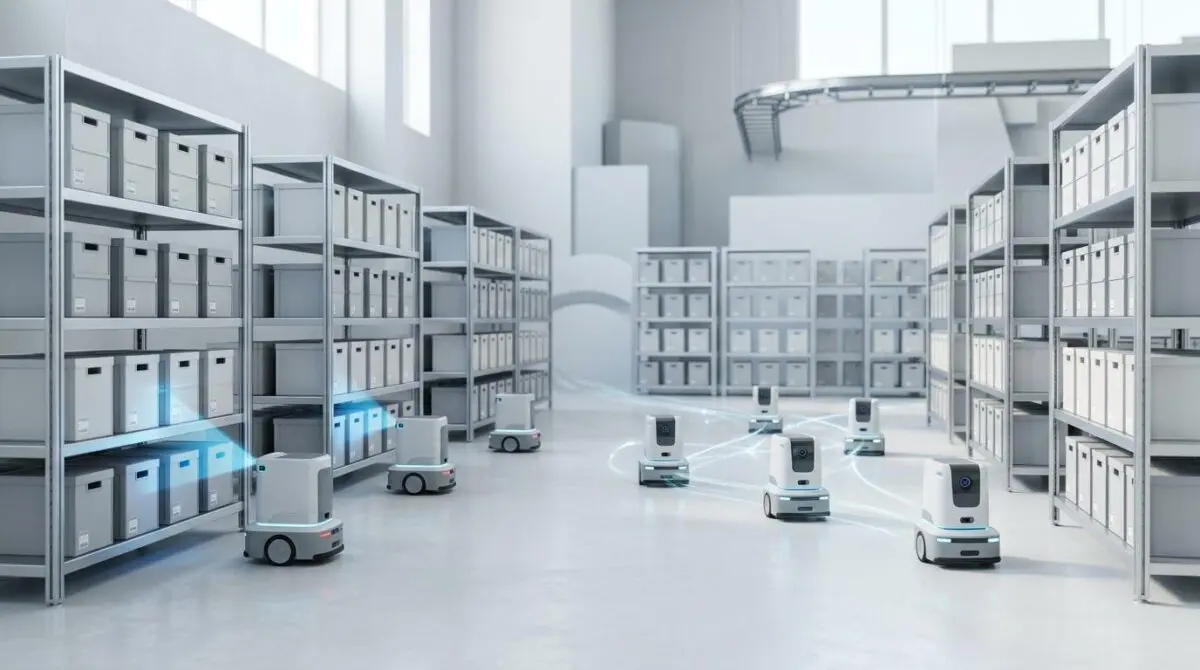
Once triggered, the orchestration layer instantly deploys a targeted swarm of robots directly to the problematic aisle. The swarm scans the entire section in minutes without disrupting the surrounding workflow.
This seamless, event-driven approach ensures that inventory discrepancies are resolved instantly. It keeps peak hour operations running at maximum velocity.
Coordinating Multi-Agent Fleets
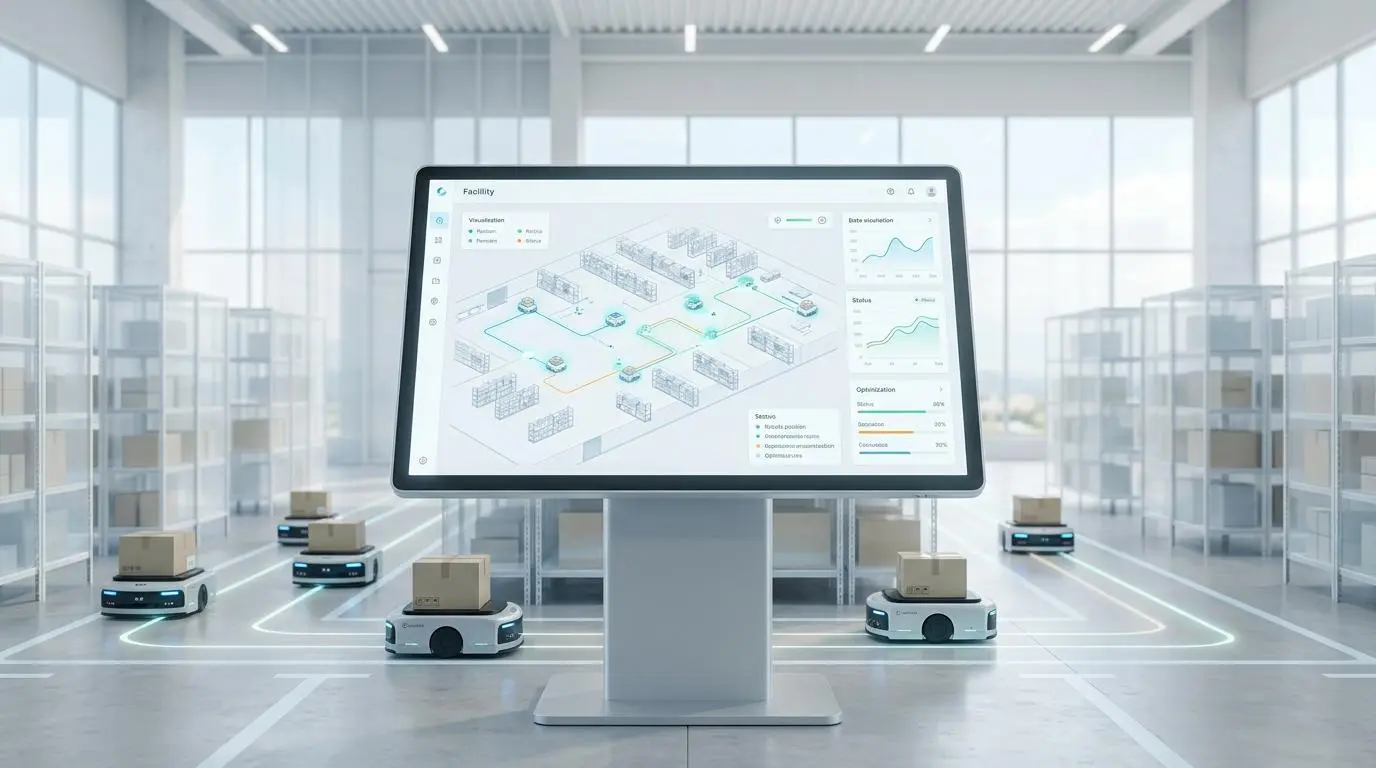
Historical single-robot systems simply cannot handle the demands of high-density audits alone. Attempting to scan massive warehouse footprints with isolated units requires too much time and battery life.
Modern logistics require multi-agent coordination. This is the only way to effectively cover 50-foot racking systems in a matter of minutes.
Agentic AI platforms have emerged to solve this complex logistical puzzle. In early 2026, Dematic launched an AI-powered orchestration platform that allows a single WMS trigger to coordinate mixed-vendor robot fleets.
This effectively ends the era of proprietary hardware silos. It means operations can now mix and match hardware based on specific aisle requirements.
When a discrepancy is detected, the WMS uses AI to prescribe specific robot sub-swarms based on SKU velocity and physical location. The orchestration logic relies on several critical parameters:
- Velocity Tracking: AI agents instantly prioritize fast-moving SKUs to prevent stockouts.
- Spatial Allocation: Swarms are mathematically divided to cover specific 50-foot racking zones simultaneously.
- Vendor Agnostic Sync: Mixed-vendor fleets communicate through a centralized API gateway without conflict.
Eradicating Manual Data Entry Errors

The hidden costs of manual warehouse work extend far beyond the time spent walking the aisles. A 2025 analysis shows that fixing a single manual data entry error costs a business between $50 and $200.
When multiplied across thousands of daily transactions, these minor mistakes add up quickly. They create a massive drain on operational liquidity.
Labor dependency has reached a breaking point in traditional facilities. Human resources now account for up to 70% of total warehousing budgets in manual operations.
Paying premium wages for employees to perform repetitive data entry tasks is an inefficient use of capital. It ultimately stifles long-term business growth.
Event-Driven Swarm Robotics Orchestration entirely removes the human element from data entry. As the robots scan the shelves, they push real-time telemetry directly into the WMS database via secure APIs.
This automated data pipeline ensures absolute accuracy. It also frees up human workers to focus on high-value cognitive tasks.
Securing High-Density Telemetry
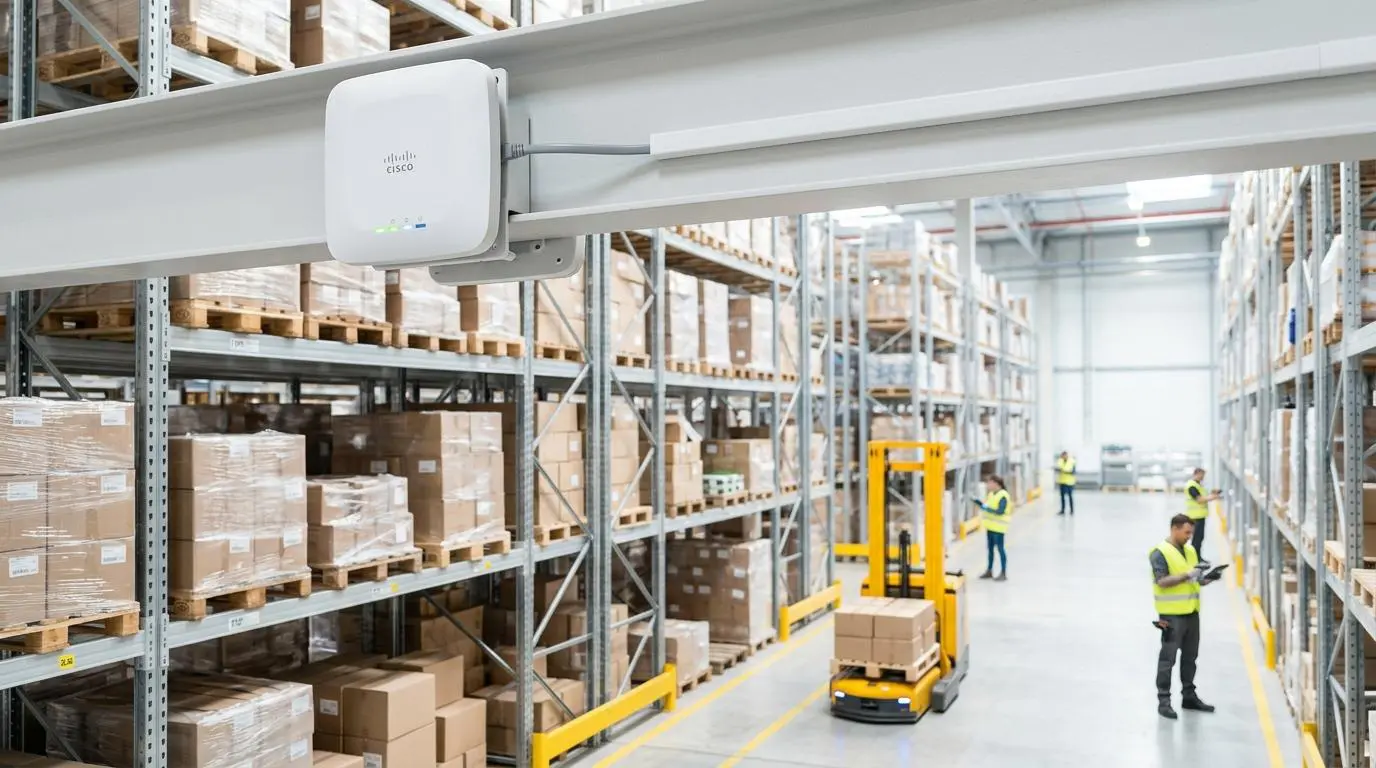
Deploying hundreds of autonomous robots requires a robust, enterprise-grade network infrastructure. Modern swarm deployments generate massive amounts of continuous data that must be processed in real-time.
To handle this extreme telemetry density, facilities must adapt. They are now required to upgrade to Wi-Fi 6E or Wi-Fi 7 standards.
Legacy Cat5e infrastructure and outdated routers simply cannot maintain the sub-millisecond synchronization needed for 200+ robots. When network latency spikes, operations experience dangerous robotic gridlock and catastrophic data sync failures.
Unplanned network downtime in a fully automated warehouse is incredibly expensive. It can now cost up to $100,000 per hour based on recent industry data.
Securing this high-density telemetry also involves strict compliance and data privacy protocols. Orchestration platforms utilize end-to-end encryption to protect inventory data as it travels from the swarm to the cloud.
By building a resilient, high-bandwidth network, operations protect their assets. They ensure that their automated audits run flawlessly without security breaches.
Shifting to Robotics-as-a-Service
Historically, the barrier to entry for warehouse automation was the massive upfront capital expenditure. Purchasing a fleet of autonomous robots required millions of dollars, making it inaccessible for mid-market logistics providers.
Today, the financial model has fundamentally shifted. This new approach empowers businesses of all sizes to adopt advanced automation.
Robotics-as-a-Service (RaaS) models allow warehouses to swap heavy CAPEX for predictable, usage-based OPEX. Facilities can scale their swarm sizes up or down based on seasonal demand without holding depreciating assets.
This flexible financial architecture drastically accelerates the time-to-value for new deployments. It makes advanced robotics accessible to a wider range of operations.
The operational time savings delivered by RaaS deployments are undeniable. Traditional cycle counting is typically three times slower than automated swarm audits.
A robotic swarm can seamlessly reconcile an entire warehouse zone in under 15 minutes. This is a task that would often take human teams several days to complete.
The Human-Optional Warehouse of 2030
The trajectory of supply chain automation is moving rapidly toward complete autonomy. By late 2026, the Self-Correcting WMS will become the industry standard across global logistics hubs.
In this ecosystem, AI agents autonomously deploy robotic swarms to fix inventory discrepancies. They accomplish this without any human initiation whatsoever.
This seamless integration of software and hardware is paving the way for the projected human-optional warehouse model by 2030. Operations will no longer rely on manual oversight to maintain inventory integrity.
Instead, facilities will operate as living, breathing data ecosystems. They will heal their own inefficiencies in real-time.
Navigating the intersection of technology, workflows, and operational efficiency requires a sharp strategy. To future-proof your business architecture and scale with precision, connect with Andres at Andres SEO Expert.
Frequently Asked Questions
What is the Inventory Drift Gap in warehouse logistics?
The Inventory Drift Gap is the 10% to 15% discrepancy that occurs between digital records and physical shelf reality. This gap leads to operational bottlenecks and revenue shrinkage that costs warehouses an average of 1.4% of their annual revenue.
How does Event-Driven Swarm Robotics Orchestration (EDSRO) function?
EDSRO uses real-time event triggers from a Warehouse Management System (WMS) to automate inventory audits. When a pick-failure or discrepancy is detected, the system instantly deploys a swarm of robots to scan the specific area, reducing manual inventory errors by 99%.
What is the ROI for deploying Autonomous Mobile Robots (AMRs)?
Recent data indicates that AMR fleets deliver an average ROI exceeding 250% in live logistics environments. This return is driven by the elimination of manual cycle counting, uninterrupted fulfillment during peak hours, and the prevention of costly emergency audits.
Can warehouses use mixed-vendor robot fleets for inventory audits?
Yes, modern orchestration platforms use AI and centralized API gateways to coordinate mixed-vendor fleets. This vendor-agnostic synchronization allows different robotic systems to work together based on SKU velocity and spatial allocation without proprietary hardware silos.
Why is Wi-Fi 6E or Wi-Fi 7 necessary for automated warehouses?
High-density robotic deployments generate massive telemetry data that requires sub-millisecond synchronization. Legacy networks often fail under this load, leading to robotic gridlock and data sync failures that can cost operations up to $100,000 per hour.
How does the Robotics-as-a-Service (RaaS) model benefit logistics?
The RaaS model allows warehouses to transition from heavy upfront capital expenditure (CAPEX) to predictable, usage-based operational expenditure (OPEX). This financial flexibility allows facilities to scale their robot swarms according to seasonal demand without owning depreciating assets.