Key Points
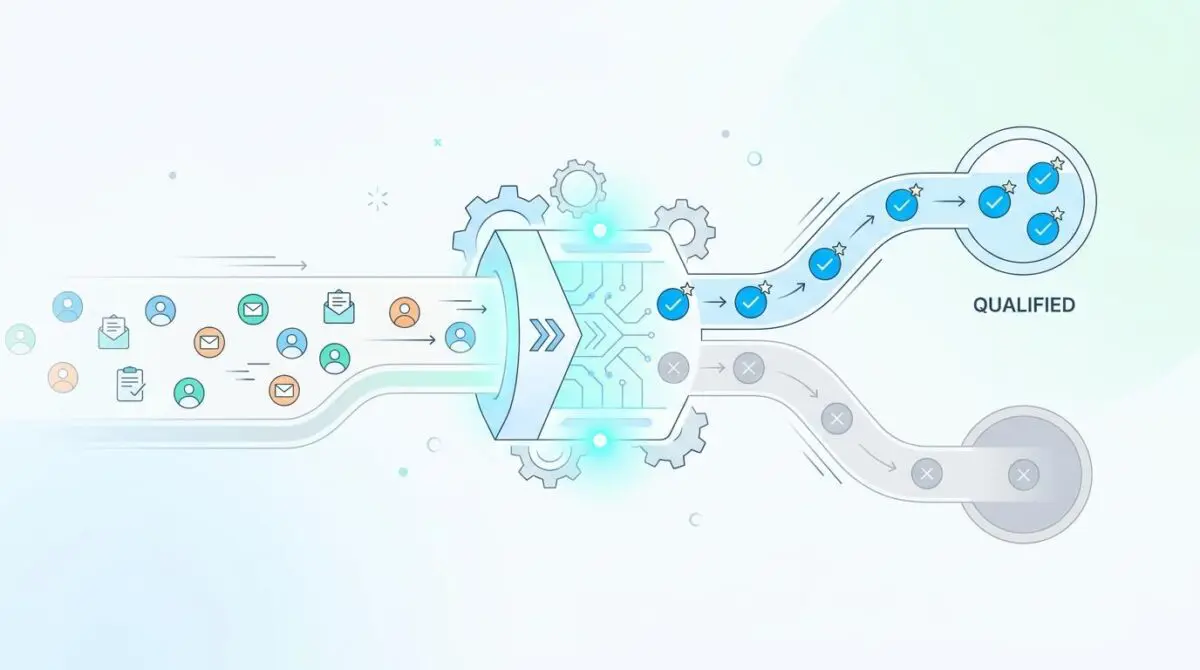
- Instant Semantic Triage: Autonomous AI agents now analyze unstructured form data to score and route leads with 90% accuracy in under 60 seconds.
- Waterfall Data Enrichment: Low-code workflows seamlessly transform minimal web submissions into 50-field CRM profiles without introducing form friction.
- Human-in-the-Loop Safeguards: Advanced scoring architectures route ambiguous or non-standard entries to dedicated Slack channels to prevent AI hallucinations and lost opportunities.
Table of Contents
- The Invisible Cost of Waiting
- The Economics of Instant Triage
- Beating the 60-Second Countdown
- Enriching Sparse Forms Behind the Scenes
- Aligning Volume with Quality
- Deploying Autonomous SDRs for Semantic Triage
- Preventing AI Hallucinations with Human Fallbacks
- Transforming Lead Economics and Cycle Times
- The End of the Waiting Period
The Invisible Cost of Waiting
The most expensive leak in your revenue pipeline is rarely a poorly optimized advertising campaign. Instead, it is the silent hours ticking by while a highly motivated prospect waits for an email reply. Every time a potential buyer submits a web form, they experience a peak moment of commercial intent.
Forcing them to wait while a human sales representative manually checks a customer relationship management dashboard completely shatters that momentum. In modern business-to-business environments, manual triage creates a massive operational bottleneck. Sales development representatives waste countless hours researching company backgrounds and verifying email domains.
Attempting to score leads based on incomplete data leaves them with less time for actual selling, directly impacting your bottom line. Implementing AI-driven real-time lead qualification and autonomous scoring completely eliminates this friction. By allowing artificial intelligence to instantly analyze, enrich, and route incoming submissions, businesses can reclaim thousands of lost hours.
This shift transforms a sluggish, error-prone manual workflow into an automated engine. It empowers your team to engage prospects the very second they express interest.
The Economics of Instant Triage
Market Intelligence & Data
The First-Minute Bonus
According to 2025 research published by Kixie, responding to a lead within 60 seconds of form submission increases conversion rates by 391% compared to waiting even two minutes.
Median Cost Per Lead
The 2026 Martal Group Lead Generation Benchmarks report identifies that the median B2B cost-per-lead has risen to $213, making high-speed automated qualification a financial necessity to avoid waste.
Response Time Compression
A 2025 SuperAGI automation guide confirms that organizations implementing automated lead routing and AI triage see an 82% average reduction in their lead response times.
Signal-Based Conversion Lift
According to a 2025 Landbase analysis of B2B intent data, organizations using AI to qualify leads based on real-time signals see a 47% better conversion rate than those using traditional static scoring.
The reality of modern B2B sales is that speed directly dictates revenue generation. When reviewing the data, it becomes clear why capturing a prospect’s attention immediately is non-negotiable. This urgency is perfectly highlighted by Kixie’s research on speed-to-lead conversions.
Responding within that critical first minute leverages the prospect’s peak intent before they navigate away to a competitor. Acquiring a potential customer has never been more expensive for marketing departments across the globe. With the median cost-per-lead soaring to $213, every unworked or delayed form submission represents a direct financial hemorrhage.
Automated qualification acts as an insurance policy against this waste by ensuring high-value prospects are engaged instantly. Traditional routing methods relied on manual database checks that bottlenecked the entire sales floor and created massive delays. By implementing intelligent triage systems, companies are bypassing these human delays and fundamentally altering their engagement timelines.
This rapid compression of wait times reflects the core principles originally outlined in the foundational Lead Response Management study. It proves that automated routing is now a mandatory baseline for success. Static scoring models based on simple job titles are no longer sufficient for modern revenue teams looking to scale.
Analyzing real-time behavioral signals allows artificial intelligence to prioritize prospects who are actively exhibiting buying intent. This dynamic prioritization yields a massive lift in conversion rates. Ultimately, it ensures your sales teams are speaking to the right people at the exact right moment.
Beating the 60-Second Countdown
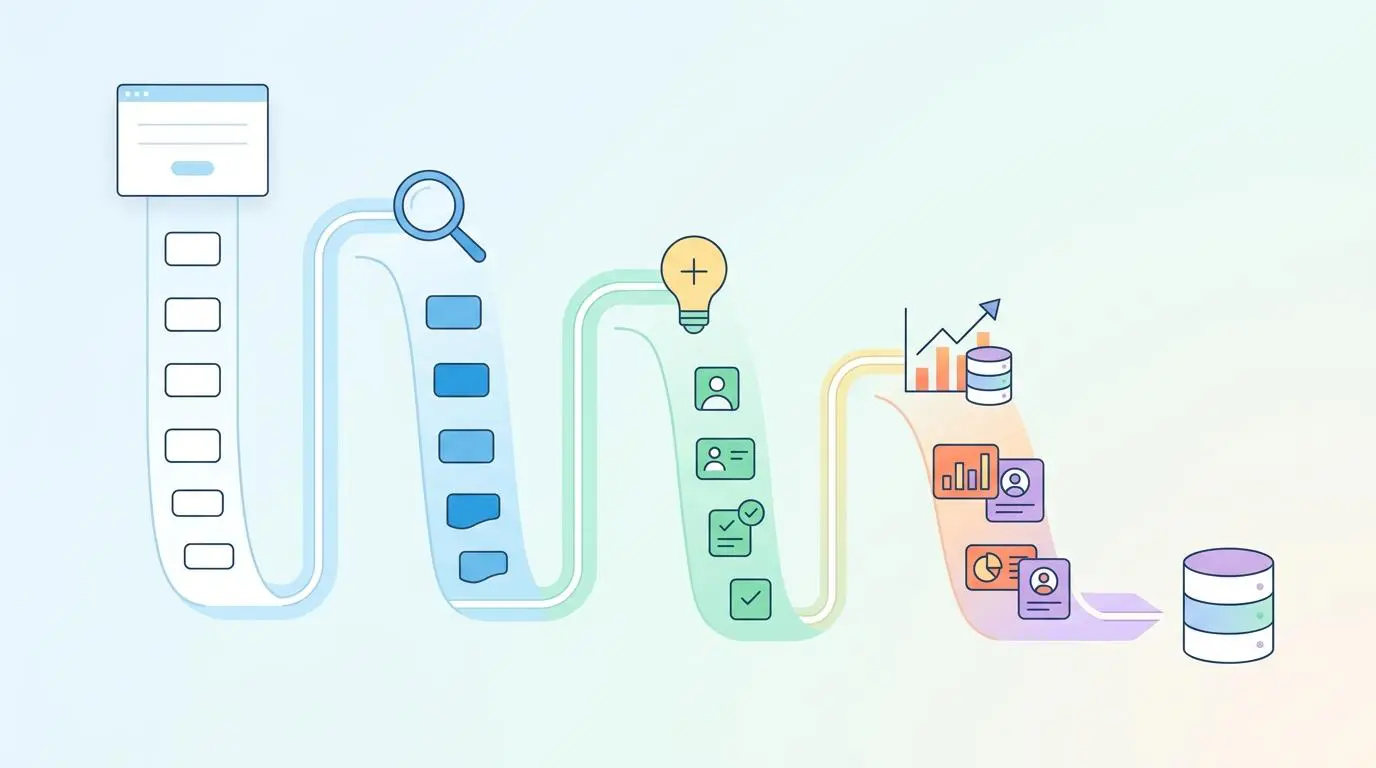
The window of opportunity for engaging a new prospect has aggressively shrunk over the last few years. What used to be considered the golden five minutes has now contracted to a strict 60-second threshold in 2026. If a business fails to initiate contact within this brief window, the chances of successfully qualifying that prospect plummet drastically.
This phenomenon is commonly known as lead decay. It occurs when a potential buyer simply loses interest or is intercepted by a faster competitor. Manual triage guarantees that this decay will occur.
It is physically impossible for a human representative to receive a notification, review the data, and craft a personalized response in under a minute. By the time an email is drafted, the prospect has already moved on. To combat this daily friction, forward-thinking teams are deploying advanced routing tools like 11x.ai and Chili Piper.
These platforms instantly process web-form data the moment the submit button is clicked, bypassing human delays entirely. By automating the initial touchpoint, businesses ensure they consistently beat the countdown and secure the prospect’s attention.
Enriching Sparse Forms Behind the Scenes
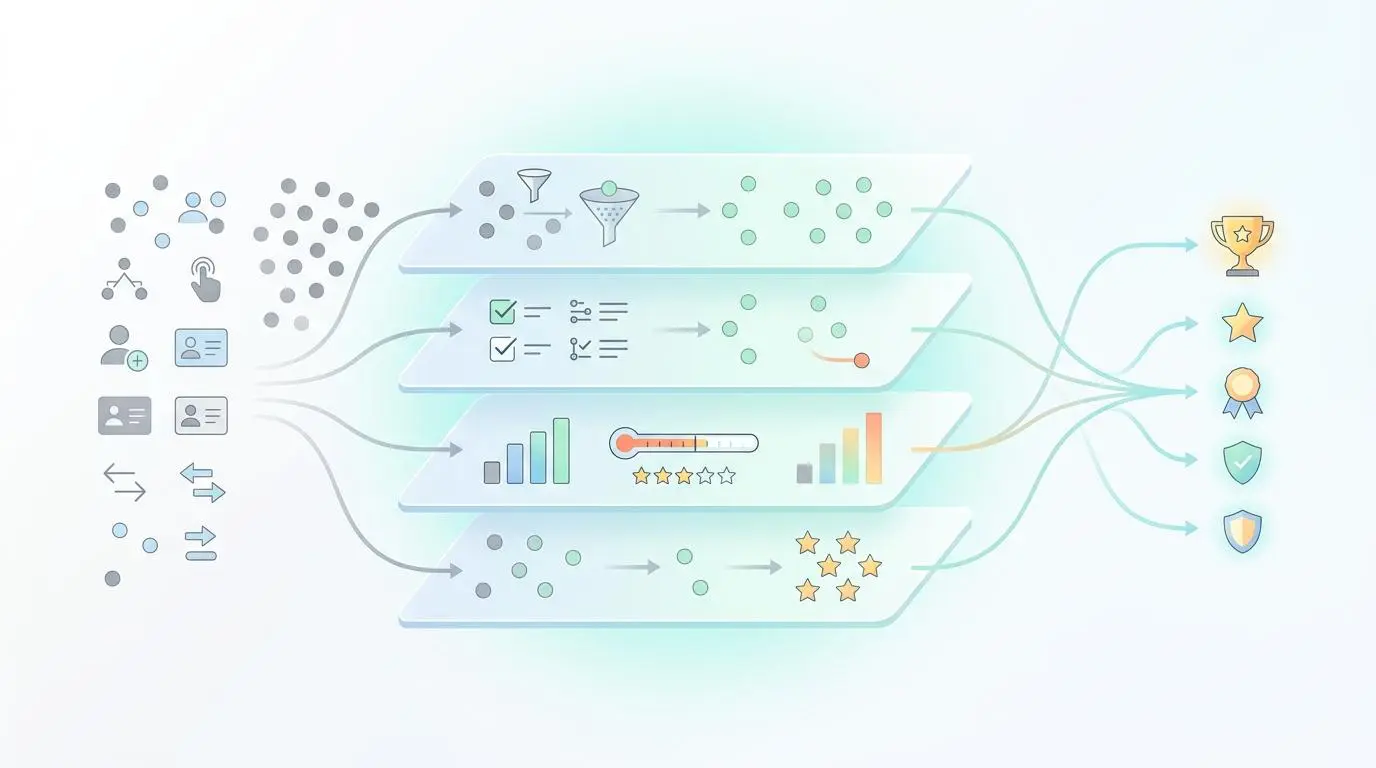
Marketing and sales departments have historically been trapped in what industry experts call the form friction paradox. Marketing teams demand short, three-field forms to maximize conversion rates and keep the top of the funnel full. Conversely, sales teams require ten or more fields of detailed firmographic data to properly qualify and prioritize their outreach efforts.
The no-code and low-code revolution has completely resolved this tension through a technique known as waterfall enrichment. Automation architects are utilizing platforms like Make, Zapier, and Relay.app to chain together dozens of external data sources immediately upon form submission.
When an email address is captured, it triggers a cascade of background requests to specialized databases. This hidden workflow constructs a comprehensive profile without ever inconveniencing the prospect. The architecture relies on several critical mechanisms to function flawlessly at scale:
- Waterfall Enrichment: Chaining multiple data providers like Clay, Clearbit, and Apollo to guarantee a high match rate for incoming emails.
- The Form Friction Paradox: Balancing the marketing need for high conversion rates against the sales need for deep qualification data.
- Silent Profiling: Transforming a simple three-field web submission into a comprehensive fifty-field CRM record instantly.
By the time the AI scoring agent begins its analysis, it has access to a 360-degree view of the prospect. This eliminates the need for human representatives to manually search LinkedIn or corporate websites to fill in the blanks.
Aligning Volume with Quality

The traditional approach of merely counting marketing qualified leads is rapidly becoming obsolete in high-performing organizations. Modern revenue operations are shifting their focus toward sales-accepted lead velocity. This critical metric prioritizes the speed and quality of pipeline generation over sheer volume.
This shift requires a much deeper level of analytical rigor than simply tracking ebook downloads or webinar registrations. Platforms like HubSpot and Salesforce are now utilizing signal-layered qualification to bridge the historical gap between marketing and sales. This advanced methodology assigns heavier weights to high-intent actions.
Prolonged visits to a pricing page or signals indicating a competitor’s contract is nearing expiration are prime examples. These nuanced data points provide a far more accurate picture of a prospect’s true buying readiness. Without this automated alignment, organizations often suffer from a staggering 79% lead-to-sale failure rate due to weak and inconsistent qualification criteria.
By automating the scoring process based on deep behavioral signals, marketing can continue to focus on volume. Meanwhile, sales receives a curated list of highly qualified targets. This harmony ensures that expensive human resources are only deployed when the probability of closing is exceptionally high.
Deploying Autonomous SDRs for Semantic Triage
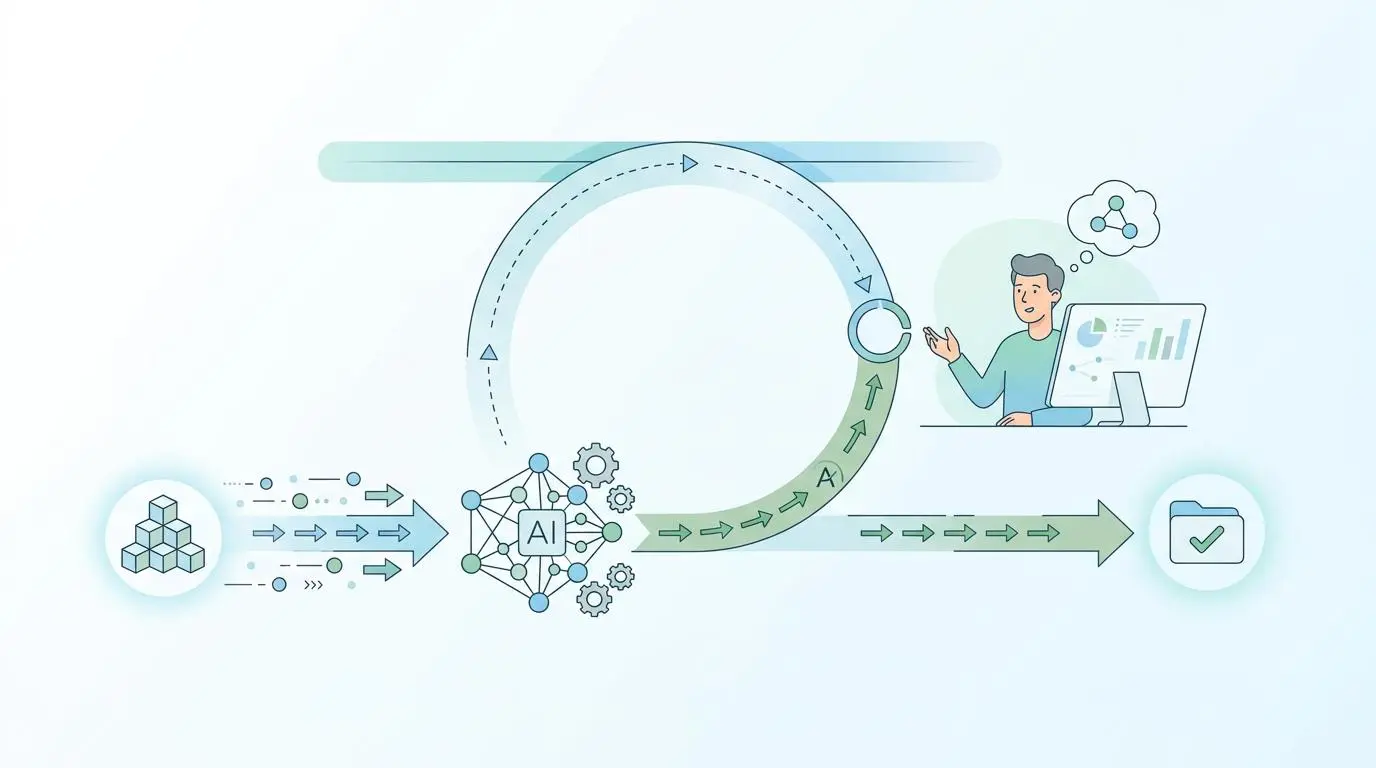
The integration of autonomous AI agents has completely redefined the initial stages of the sales cycle. Virtual representatives, such as Julian by 11x or Air, are now capable of handling complex conversational qualification without any human oversight. These agents do not simply look at checkboxes; they analyze unstructured text submitted in open-ended form fields.
When a prospect answers a question about their biggest operational challenge, the AI performs semantic sentiment analysis in milliseconds. It understands context, urgency, and specific pain points. This allows the system to score the lead with an unprecedented 90% accuracy.
This is a massive leap forward compared to legacy rule-based systems that historically hovered around a 60% accuracy rate. This level of autonomous triage is a massive relief for human sales teams. Previously, representatives spent up to 72% of their day on administrative research and follow-up tasks.
By offloading the initial qualification to an AI agent, human representatives can reclaim their schedules. They are now free to dedicate the vast majority of their day to high-value selling, relationship building, and closing complex deals.
Preventing AI Hallucinations with Human Fallbacks
While autonomous scoring is incredibly powerful, relying on it blindly without structural guardrails can lead to disastrous pipeline leaks. A critical failure point in modern automation architectures is scoring hallucination. This occurs when an artificial intelligence model misinterprets sarcasm, regional slang, or poor grammar in a form entry.
As a result, the system might incorrectly flag a hot prospect as low-intent. To prevent these costly errors, leading automation architects implement strict human-in-the-loop fallback protocols. When a lead’s score falls into a marginal or ambiguous threshold, the system pauses the autonomous workflow.
Instead of instantly rejecting the prospect, the data is routed to a dedicated Slack channel for a ten-second human sanity check. This hybrid approach protects the business from losing high-value opportunities due to rigid algorithmic rules. The safety mechanisms address several common edge cases:
- Scoring Hallucination: When an AI agent misinterprets poor grammar or sarcasm as low intent.
- Human-in-the-Loop: Routing marginal or confusing submissions to a dedicated messaging channel for a quick human review.
- Diamond in the Rough: High-value prospects using non-standard email domains who might be unfairly disqualified by rigid rules.
By blending the raw speed of artificial intelligence with the contextual intuition of a human operator, organizations can achieve perfect routing accuracy. This ensures that no legitimate revenue opportunity ever slips through the cracks of an automated workflow.
Transforming Lead Economics and Cycle Times
The financial impact of deploying AI for real-time triage extends far beyond simply saving a few minutes of administrative work. Organizations that have fully embraced this architecture are seeing dramatic improvements in their fundamental unit economics. According to the 2025 Salesforce State of Sales report, companies utilizing AI lead triage achieved a 2.3x higher lead-to-deal conversion rate.
A recent case study involving Unitech in 2026 perfectly illustrates this transformative power. The company revealed that an AI-driven sales assistant responding in under 20 seconds generated 35% of their total sales pipeline in just 90 days. This single automated workflow completely outperformed a team of 20 human representatives in terms of initial response consistency and engagement.
For mid-market segments where profit margins are notoriously thin, the operational cost of manual qualification often exceeds the actual value of the lead itself. Early adopters of autonomous scoring are reporting a 25% reduction in total sales cycle time simply by eliminating the initial 42-hour response delay.
This acceleration allows businesses to close deals faster and lower their customer acquisition costs. Ultimately, it empowers them to scale their operations without linearly increasing their headcount.
The End of the Waiting Period
As we look toward the immediate future, the traditional methodology of capturing a lead and slowly nurturing it is coming to an abrupt end. By late 2026, the dominant workflow will shift entirely to a model of identify and accelerate. Artificial intelligence agents will no longer just score incoming data.
Instead, they will autonomously initiate custom research, draft hyper-personalized messaging, and schedule discovery calls in under 20 seconds. This technological leap effectively makes the concept of a waiting period for prospects completely obsolete. Buyers will expect instantaneous, intelligent engagement the moment they raise their hand.
Businesses that fail to adapt their infrastructure to meet this expectation will quickly find themselves outpaced by competitors who have embraced autonomous velocity. Navigating the intersection of technology, workflows, and operational efficiency requires a sharp strategy. To future-proof your business architecture and scale with precision, connect with Andres at Andres SEO Expert.
Frequently Asked Questions
Why is response time critical for B2B lead conversion?
Responding to a lead within 60 seconds of submission can increase conversion rates by up to 391% compared to waiting even two minutes. Rapid engagement leverages the prospect’s peak intent before lead decay occurs or they are intercepted by a faster competitor.
What is the average B2B cost-per-lead in 2026?
According to 2026 benchmarks from the Martal Group, the median B2B cost-per-lead has risen to $213. This high acquisition cost makes automated qualification a financial necessity to ensure marketing budgets are not wasted on delayed or unworked submissions.
How does AI solve the “form friction paradox”?
AI resolves the tension between marketing’s need for short forms and sales’ need for data through waterfall enrichment. By using tools like Clay, Apollo, or Clearbit, businesses can instantly transform a simple three-field form into a comprehensive 50-field CRM record without inconveniencing the prospect.
What are autonomous SDRs and semantic triage?
Autonomous SDRs are AI agents that handle initial outreach and lead scoring. Semantic triage uses sentiment analysis to analyze unstructured text in form fields, understanding context and urgency with up to 90% accuracy, far exceeding legacy rule-based qualification systems.
How do you prevent AI hallucinations in lead scoring?
To prevent scoring hallucinations where AI misinterprets sarcasm or grammar, organizations implement human-in-the-loop (HITL) fallback protocols. If a lead score is ambiguous, the system pauses the automation and routes the data to a human representative via Slack for a quick sanity check.
What tools are best for automated lead routing and triage?
Modern revenue teams utilize advanced platforms like 11x.ai, Chili Piper, and Air for autonomous triage. These are often integrated with automation engines like Make, Zapier, or Relay.app to orchestrate real-time data enrichment and CRM routing.