Key Points
- Entity Hardcoding: Resolve LLM perception drift by injecting a robust Organization and Brand JSON-LD payload with a canonical Knowledge Graph @id URI.
- RAG Optimization: Reclaim branded citations from competitors by deploying Answer-First architecture and llms.txt mapping to feed Googlebot-Sidekick clean extraction signals.
- Cache Invalidation: Force immediate AI crawler re-evaluation by purging Edge and Object caches, ensuring stale vector embeddings are overwritten.
Table of Contents
The Core Conflict: Generative Entity-Source Misattribution
According to recent industry reports, over sixty percent of enterprise brands are effectively invisible to generative search models. This happens due to a failure to implement valid Organization Schema linked to a specific Knowledge Graph ID. This staggering statistic underscores a critical vulnerability in modern search architecture.
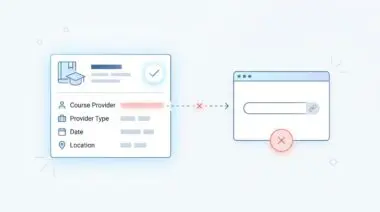
When an enterprise fails to strictly define its entity parameters, Large Language Models are forced to guess the authoritative source. This error is known as Generative Entity-Source Misattribution. It occurs when an LLM like Google Gemini fails to semantically map a proprietary brand entity to its authoritative domain.
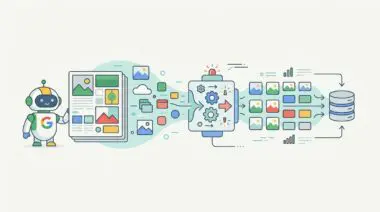
The breakdown happens deep within the Retrieval-Augmented Generation pipeline. The model begins prioritizing third-party comparison content over the brand’s own origin source. This usually happens because the LLM detects stronger semantic markup on the competitor’s page.
This severe degradation of brand integrity results in leaked citations. Traffic intended for a proprietary branded search is actively funneled to a competitor. In the modern search landscape, this is often caused by LLM Perception Drift.
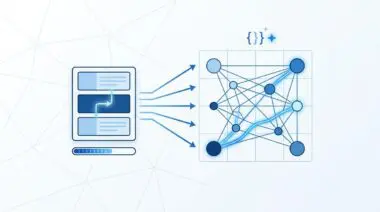
The vector embeddings representing your brand become diluted by high-volume third-party mentions. The model hallucinates the competitor as the primary knowledge authority for your proprietary features or pricing. The symptoms are glaringly obvious in your server and analytics data.
You will see a sharp decline in click-through rates for branded query filters in Google Search Console. This happens even while AI Overview impressions remain high. Manual Gemini prompts for your brand name will also show competitor URLs in the citation carousel.
Furthermore, raw server logs will reveal a troubling pattern. You will see Googlebot-Sidekick hitting comparison pages far more frequently than your own branded product pages.
Diagnostic Checkpoints
Before executing a fix, you must isolate where the desynchronization is occurring within your stack. The issue typically resides at the semantic layer, the vector embedding layer, or the caching layer.
Diagnostic Checkpoints
Knowledge Graph Fragmentation
Lacks machine-readable Entity Home with canonical @id URI.
Third-Party Semantic Domination
Competitors use extractable GEO techniques on comparison pages.
Semantic Ambiguity & Token Collisions
Brand tokens cluster with competitor domains in vector space.
Stale RAG Vector Embeddings
Stale server-side rendering delivers outdated entity mapping versions.
At the WordPress layer, sites often rely on SEO plugins that generate generic Organization schema. These automated outputs frequently lack the critical identifier URI. They fail to link the site to established entities like LinkedIn or Wikipedia.
Meanwhile, WordPress theme-based pricing blocks often use heavy JavaScript. This dynamic rendering is notoriously difficult for AI engines to parse efficiently. If your brand name shares tokens with a broader industry category, further complications arise.
The vector space of the LLM may cluster your brand too closely to a dominant competitor’s domain. Additionally, aggressive edge-caching can serve stale sitemaps or JSON-LD scripts. This prevents the AI crawler from re-evaluating the brand-source connection.
The Engineering Resolution Roadmap
Reclaiming your branded AI Overviews requires a multi-layered approach. You must correct the entity signals and optimize the extraction architecture. Finally, you must force the AI crawler to process the updates immediately.
Engineering Resolution Roadmap
Hardcode an Authoritative Entity Home
Inject a robust Organization and Brand JSON-LD into the header of the homepage. Ensure the ‘@id’ field uses the global Knowledge Graph URI (obtained via the Google Knowledge Graph API) to anchor the site as the definitive source for the brand name.
Implement ‘Preferred Source’ Signal Buffers
Update your ‘About Us’ and ‘Product’ pages with ‘Answer-First’ architecture: place a 50-word authoritative definition of the brand and its core USP immediately under the H1 to facilitate easy extraction by Gemini’s retrieval layer.
Update robots.txt and llms.txt
Ensure ‘Googlebot-Sidekick’ and other AI user-agents are not being throttled. Create an ‘/llms.txt’ file (the 2026 standard for AI instruction) that explicitly maps proprietary brand terms to their canonical URLs for training and retrieval.
Flush Edge and Object Caches
Perform a ‘Purge All’ on Cloudflare and flush WP-level Object Cache to ensure the new Schema signals are immediately available to the next AI crawler pass. Validate the headers using ‘curl -I’ to check for ‘cf-cache-status: MISS’ or ‘EXPIRED’.
Implementing an Answer-First architecture is critical for overriding third-party semantic domination. The AI crawler is constantly looking for high-density, structured facts. By placing a definitive authoritative definition immediately under the primary heading, you create a highly extractable signal buffer.
Furthermore, the introduction of the specialized text file for LLMs is a non-negotiable standard for AI instruction. This plain-text file explicitly maps your proprietary brand terms to their canonical URLs. It acts as a direct retrieval map for modern AI crawlers.
Resolution Execution: Hardcoding the Entity Home
To establish an unshakeable entity home, you cannot rely on automated plugin outputs. You must manually inject a precise, interconnected JSON-LD payload into the header of your homepage.
Fixing via JSON-LD Header Injection
Construct your JSON-LD script using the exact Knowledge Graph URI for your identifier parameter. This anchors your domain as the definitive source for the brand entity. Insert the following code directly into your header environment, ensuring it renders server-side.
{ "@context": "https://schema.org", "@type": "Organization", "@id": "https://www.yourbrand.com/#organization", "name": "Your Brand Name", "url": "https://www.yourbrand.com", "logo": "https://www.yourbrand.com/logo.png", "sameAs": [ "https://twitter.com/yourbrand", "https://www.linkedin.com/company/yourbrand", "https://en.wikipedia.org/wiki/Your_Brand" ], "brand": { "@type": "Brand", "name": "Your Brand Name", "description": "The definitive source for [Proprietary Service Name] technology." }, "mainEntityOfPage": "https://www.yourbrand.com/about-us"}Ensure that the array in the same-as property contains only your officially verified profiles. Any discrepancy here can cause further token collisions in the LLM vector space. Once injected, bypass your content delivery network to verify the raw HTML output.
Validation Protocol & Edge Cases
Execution without validation is a massive liability. You must confirm that the AI-specific crawler can parse your new entity signals accurately. This must happen without interference from JavaScript rendering delays or aggressive caching rules.
Validation Protocol
- Run URL through Google Rich Result Test for @id validation.
- Use GSC Live Test to verify AI-specific rendering of JSON-LD.
- Verify JSON-LD script presence in DevTools via Googlebot User-Agent.
- Manually verify Gemini citation carousel for official source status.
Be highly vigilant of edge cases, particularly in Headless WordPress setups. A severe desynchronization can occur where the frontend framework strips the JSON-LD from the DOM. This happens before the AI crawler can parse the metadata.
Meanwhile, the backend API might continue to serve a restrictive indexing tag. This headless desynchronization results in the AI relying entirely on cached third-party comparison sites for information retrieval.
Always use browser developer tools to emulate the exact crawler experience. Inspect the exact DOM state that the search engine bot encounters during its crawl.
Autonomous Monitoring & Prevention
Fixing the misattribution is only the first phase of the process. Preventing perception drift from recurring requires continuous, automated oversight. You must establish a monthly audit to track citation frequency across generative engines.
To achieve this at an enterprise scale, implement advanced GEO monitoring tools that analyze log files. These tools will help you track crawler behavior effectively. You need real-time alerts if your branded queries begin surfacing competitor URLs in the citation carousel.
Furthermore, establish a strict content governance pipeline for all future product pages. Require your editorial team to integrate Generative Engine Optimization (GEO) techniques natively.
All new content must include statistical additions and specific citations within the first few paragraphs. This practice is essential to maintain high extractability scores for AI models.
At Andres SEO Expert, we architect automated pipelines using custom API alerts to monitor entity integrity autonomously. This ensures that your brand remains the indisputable source of truth in the vector space, regardless of competitor actions.
Conclusion
Generative Entity-Source Misattribution is a severe architectural failure, not a simple content issue. By hardcoding a definitive Entity Home, you can force the LLM to recalibrate its vector embeddings.
Deploying Answer-First extraction buffers and optimizing your text files for AI agents will further solidify your brand authority.
Navigating the intersection of technical SEO, server architecture, and generative search requires a precise roadmap. If you need to future-proof your enterprise stack, resolve deep-level crawl anomalies, or implement AI-driven SEO automation, connect with Andres at Andres SEO Expert.
Frequently Asked Questions
What is Generative Entity-Source Misattribution?
Generative Entity-Source Misattribution occurs when an LLM fails to semantically map a proprietary brand entity to its authoritative domain, often causing the model to prioritize third-party comparison content over the brand’s original source in AI Overviews.
How do I fix competitor URLs appearing in my branded AI Overview citations?
To reclaim citations, you must hardcode a definitive Entity Home using JSON-LD with a specific Knowledge Graph @id, implement Answer-First content blocks, and deploy an llms.txt file to provide a direct retrieval map for AI crawlers like Googlebot-Sidekick.
What is the role of an llms.txt file in modern search architecture?
The llms.txt file serves as a standardized instruction set for AI agents, explicitly mapping proprietary brand tokens to their canonical URLs to prevent LLM Perception Drift and ensure accurate source attribution during the Retrieval-Augmented Generation (RAG) process.
How can I identify LLM Perception Drift in my site analytics?
Signs of LLM Perception Drift include a sharp decline in CTR for branded queries in Google Search Console despite high AI Overview impressions, and the presence of competitor URLs in Gemini citation carousels for searches regarding your specific brand or pricing.
Why is JSON-LD @id injection critical for enterprise brands?
Injecting a global Knowledge Graph URI into the @id field of your Organization Schema anchors your domain as the definitive source of truth, preventing AI models from guessing authoritative sources and clustering your brand with competitor domains in vector space.
What is Answer-First architecture in the context of GEO?
Answer-First architecture involves placing a high-density, 50-word authoritative definition or USP immediately under the H1 tag. This creates an easily extractable signal buffer that helps AI models prioritize your content for information retrieval.