
Key Points
- Eliminate Data Latency: Transitioning from 24-hour batch processing to event-driven architecture ensures relationship managers act on millisecond-fresh ledger data.
- Deploy Autonomous Agents: Integrating real-time core data enables reasoning-capable AI agents to autonomously resolve complex transaction disputes and collections.
- Automate Compliance Trails: Utilizing TLS 1.3 encryption and automated interaction outcomes guarantees immutable audit logs for strict SOC2 and GLBA regulatory adherence.
Table of Contents
- The 24-Hour Reality Check
- The Cost of Fragmented Banking Data
- Eliminating the Multi-Screen Toggle Tax
- Deploying Autonomous Reasoning Agents
- Shifting to Sub-Second Event-Driven Pipelines
- Fortifying Cross-Cloud Audit Trails
- Triggering Agentic Onboarding Workflows
- Liveness Syncing and the Active Ledger
- The Era of Millisecond Banking
The 24-Hour Reality Check
Imagine a high-stakes corporate wire transfer where a relationship manager must suddenly pause the client conversation. They are forced to toggle between five disconnected green-screens, desperately trying to cross-reference yesterday’s batch ledger just to confirm a current account balance. This is the hidden tax of the data latency gap, where front-office teams act on stale information.
When relationship managers rely on outdated ledgers, they risk approving transactions that exceed actual account balances. This creates a cascade of compliance flags, manual overrides, and frustrated clients. It is a massive drain on operational resources that ultimately destroys client trust.
The ultimate solution to reclaim this lost time is real-time event-driven integration between legacy core banking systems and Salesforce Financial Services Cloud. By connecting these massive systems instantly, financial institutions can finally achieve a true 360-degree customer view. It transforms the CRM from a static historical record into a live, breathing ecosystem.
The Cost of Fragmented Banking Data
Market Intelligence & Data
Cost of Banking Data Breaches
According to the IBM Cost of a Data Breach Report 2025, the financial sector reached a record high average cost for breaches, second only to healthcare.
ROI on Integrated FSC
Financial firms adopting integrated Salesforce Financial Services Cloud with Data Cloud and AI agents reported an average 188% ROI in 2025 according to Salesforce industry benchmarks.
AI Adoption in Banking
As of 2025, 78% of financial organizations have implemented AI in at least one business function, up from 72% in 2024, per McKinsey’s Global Survey on AI.
Annual Efficiency Gains
Intelligent automation in the banking industry is projected to deliver up to $340 billion in annual value globally by 2026 through operational efficiency, according to Gitnux market data.
The financial sector is facing unprecedented security challenges, as highlighted by the IBM Cost of a Data Breach Report 2025. When banking data breaches average over five million dollars, the vulnerabilities often stem from fragmented, outdated systems. Manual data extraction and cross-cloud syncing without proper encryption leave personally identifiable information highly exposed.
Financial firms adopting an integrated Salesforce Financial Services Cloud paired with Data Cloud are seeing massive financial returns. Achieving an average 188% ROI proves that eliminating manual dual-data entry is no longer just an operational luxury. It is a fundamental driver of revenue and scalable growth.
The rapid surge to 78% AI adoption in banking indicates a massive shift toward cognitive automation and predictive analytics. This momentum paves the way for the deployment of Salesforce Agentforce for Financial Services. Financial institutions are aggressively moving away from rigid, scripted chatbots toward autonomous, reasoning-capable agents.
The projected global value of up to $340 billion in annual efficiency gains relies entirely on modernizing legacy infrastructure. Intelligent automation simply cannot scale if it is bottlenecked by 24-hour batch processing delays. True operational efficiency happens when every deposit, withdrawal, and credit adjustment is instantly mirrored in the CRM.
Eliminating the Multi-Screen Toggle Tax

Relationship managers at Tier-2 banks currently navigate a chaotic and deeply fragmented digital workspace. They toggle between an average of five to eight disconnected screens to verify real-time balances before approving simple wire transfers. This manual context-switching between legacy green-screens and modern CRMs destroys productivity and increases cognitive load.
To solve this massive bottleneck, institutions are deploying specialized integration tools like MuleSoft Accelerator for Financial Services and nCino. These integration layers consolidate disparate core banking data feeds directly into a single Salesforce Financial Services Cloud console. MuleSoft acts as the intelligent nervous system, translating legacy mainframe protocols into modern, readable APIs.
The result is a unified, single-pane-of-glass interface where relationship managers can make instant, accurate decisions. They no longer have to leave their primary workspace to hunt for critical ledger data. This seamless integration reclaims thousands of hours previously lost to manual data retrieval.
Deploying Autonomous Reasoning Agents

The operational costs of manual customer outreach for simple banking disputes and late payments are staggering. Traditional scripted chatbots consistently fail to resolve these issues because they lack access to real-time ledger data. Customers are inevitably routed to human agents, defeating the purpose of the automation entirely.
The highly anticipated rollout of advanced autonomous agents changes this paradigm entirely. These agents pull millisecond-fresh data directly from Data Cloud to autonomously handle complex tasks like collections assistance and transaction disputes. They do not rely on rigid decision trees; instead, they understand intent and context.
By embedding reasoning-capable agents directly into the workflow, banks can resolve the majority of tier-one inquiries without human intervention. An AI agent can cross-reference a disputed charge against real-time ledger data and issue a provisional credit instantly. This drastically reduces call center volume and elevates the customer experience.
Shifting to Sub-Second Event-Driven Pipelines
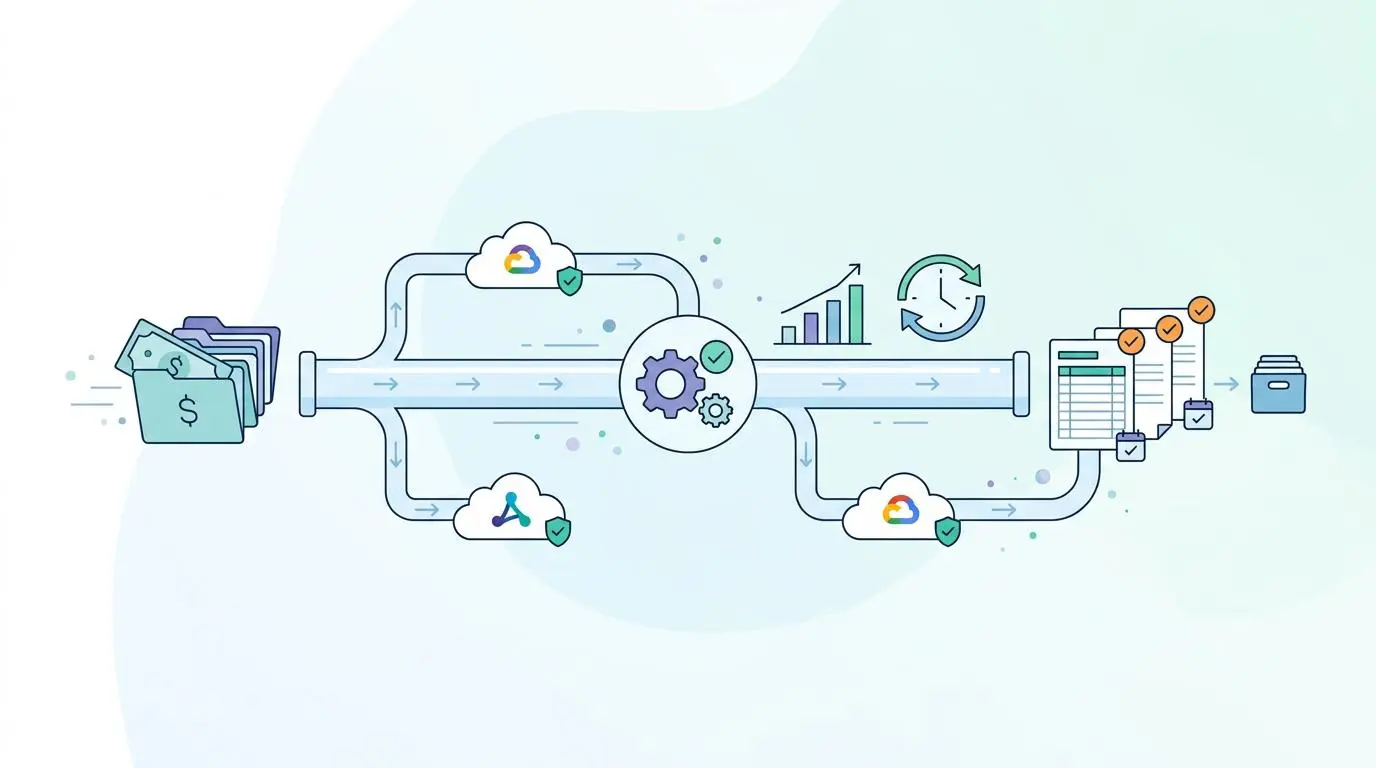
The traditional 24-hour batch-processing delay renders CRM data practically useless for high-frequency fraud detection. When front-office teams act on yesterday’s data, they cannot proactively protect client assets. To close this dangerous data latency gap, banks are aggressively shifting away from scheduled ETL processes.
They are adopting event-driven architecture using powerful event streaming platforms. This architectural pivot enables sub-second updates to customer profiles the exact moment a transaction hits the core system. Front-office teams finally have access to a live, breathing data ecosystem instead of a static historical snapshot.
This transformation relies on several critical technologies:
- Event-Driven Architecture: Replaces rigid batch processing with continuous, fluid data streams.
- Apache Kafka: Handles massive volumes of transactional banking data with zero latency.
- Salesforce Platform Events: Ingests external core banking signals directly into the CRM interface.
By leveraging these tools, a massive corporate deposit instantly triggers a workflow in Salesforce. The relationship manager is notified in real-time, allowing them to immediately advise the client on capital allocation. This is the power of sub-second data synchronization.
Fortifying Cross-Cloud Audit Trails
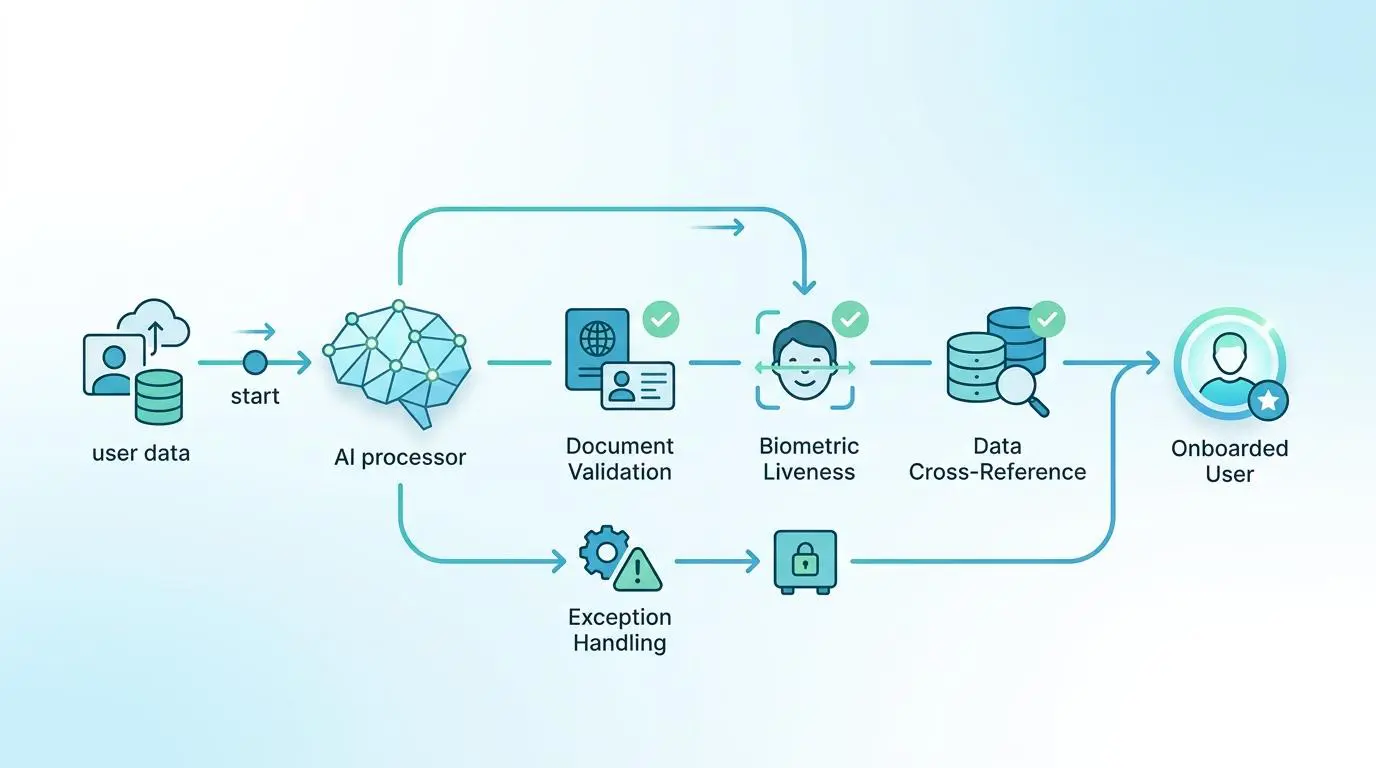
The risk of personally identifiable information exposure during cross-cloud data synchronization is a massive compliance hurdle. Legacy systems often lack the immutable audit logs required by modern regulatory frameworks. Moving data securely between an on-premise core and a cloud CRM requires absolute precision.
Recent updates have introduced TLS 1.3 for all outbound HTTPS callouts from Salesforce to core banking APIs. This ensures military-grade encryption for all data in transit, protecting sensitive financial records from interception. Furthermore, compliance is actively maintained through automated interaction outcomes built into the platform.
These mechanisms log every single instance of data access, creating flawless, immutable audit trails. Meeting stringent regulatory standards requires absolute transparency into who accessed what data and when. This automated logging ensures continuous SOC2 and GLBA compliance without manual oversight.
Triggering Agentic Onboarding Workflows
Fragmented onboarding journeys frustrate corporate clients who are forced to re-verify their identity at every single touchpoint. Know Your Customer protocols are notoriously tedious and often delay account funding. Integrated systems now support seamless agentic onboarding workflows that eliminate this friction entirely.
When an identity verification clears in the core system, it instantly triggers automated workflows within the CRM. A client’s risk profile is dynamically updated across all banking channels simultaneously. This eliminates the need for redundant paperwork and manual data entry by the compliance team.
Furthermore, this real-time verification automatically triggers personalized next best action prompts for the relationship manager. They can immediately offer tailored credit products the moment a client is officially onboarded. This transforms a tedious compliance hurdle into an immediate revenue-generating opportunity.
Liveness Syncing and the Active Ledger
Static customer profiles consistently fail to reflect the immediate liquidity status of high-value corporate clients. A business may receive a massive wire transfer, but if the CRM does not reflect it until tomorrow, the bank misses a critical advisory window. By late 2026, liveness syncing will become the industry standard for financial institutions.
The CRM will evolve from a passive system of record into an active, real-time mirror of the core ledger. This active mirror concept means the CRM can trigger automated liquidity alerts instantly. If a major corporate client receives a massive incoming wire, the system prompts the relationship manager to offer sweep account options.
This capability enables micro-second, proactive credit limit adjustments based entirely on incoming deposits and real-time cash flow. It ensures that credit decisions are based on the absolute reality of a client’s financial health. It is the ultimate convergence of data, automation, and proactive client service.
The Era of Millisecond Banking
The evolution from merely connected systems to fully agentic banking is actively rewriting the rules of financial services. Autonomous AI agents using millisecond-fresh core data will soon resolve the vast majority of customer service inquiries without human intervention. Reclaiming thousands of hours previously lost to manual data entry empowers financial teams to focus entirely on high-value relationship building.
Navigating the intersection of technology, workflows, and operational efficiency requires a sharp strategy. To future-proof your business architecture and scale with precision, connect with Andres at Andres SEO Expert.
Frequently Asked Questions
What is the data latency gap in traditional banking?
The data latency gap refers to the 24-hour delay caused by legacy batch processing. This forces front-office teams to rely on stale information, which leads to high-risk credit decisions, manual overrides, and fragmented customer experiences.
How does integrating Salesforce Financial Services Cloud with Legacy Core Banking systems benefit banks?
Integration enables a true 360-degree customer view by syncing real-time data between systems. It eliminates the "multi-screen toggle tax" for relationship managers, reduces manual data entry errors, and transforms the CRM into a live ecosystem for proactive financial advising.
What role does Salesforce Agentforce play in modern financial services?
Salesforce Agentforce for Financial Services uses autonomous reasoning agents to handle complex tasks like transaction disputes and late payments. These agents pull sub-second data from Data Cloud to resolve inquiries without human intervention, significantly reducing call center volume.
How does event-driven architecture improve banking fraud detection?
Event-driven architecture replaces rigid batch processing with continuous data streams using tools like Apache Kafka and Salesforce Platform Events. This enables sub-second updates, allowing fraud detection systems to act on live transactions rather than waiting for 24-hour ledger cycles.
Are real-time banking integrations secure and compliant?
Yes, modern integrations use military-grade TLS 1.3 encryption for all data in transit. Furthermore, these systems create immutable audit trails that log every instance of data access, ensuring continuous compliance with SOC2 and GLBA standards without manual oversight.
What is the projected ROI for integrated banking automation?
Financial firms adopting integrated Salesforce Financial Services Cloud with AI and Data Cloud reported an average 188% ROI in 2025. Additionally, intelligent automation is projected to deliver up to $340 billion in annual efficiency gains globally by 2026.