





Key Points
- Eliminate the reactive maintenance gap by connecting raw IoT sensor data directly to field service management tools.
- Deploy AI agents to filter false-positive hardware alerts and prevent expensive phantom dispatches to remote cell sites.
- Utilize low-code automation platforms to orchestrate human-in-the-loop approvals and offline-first data synchronization.
Table of Contents
- The Silent Drain of Reactive Maintenance
- Quantifying the Cost of Delayed Diagnostics
- Overcoming the Sensor-to-Dispatch Bottleneck
- Filtering Noise with Telecom-GPT Agents
- Bridging Hardware and Software Without Custom Code
- Retaining Control with One-Click Approvals
- Navigating Dead Zones and API Rate Limits
- Slashing Repair Times and Overhead Costs
- The Dawn of Self-Healing Infrastructure
The Silent Drain of Reactive Maintenance
Consider the last time a critical cell tower went offline during peak usage hours, leaving thousands without service while a dispatcher scrambled to locate the nearest technician. The reality is that telecom providers hemorrhage thousands of dollars every hour a site remains down due to manual diagnostic delays. This reactive maintenance gap is a massive operational failure that drains resources and destroys customer trust.
The solution is engineering a seamless IoT-to-Field-Service-Management (FSM) Predictive Dispatch Loop. By connecting real-time sensor data directly to automated routing logic, organizations can reclaim their time and eliminate manual scheduling errors entirely. This workflow transforms unpredictable hardware failures into highly orchestrated, proactive maintenance events.
Quantifying the Cost of Delayed Diagnostics
Market Intelligence & Data
Reduction in Truck Rolls
According to the 2025 Global Telecom Infrastructure Survey, automated predictive filtering has decreased unnecessary physical site visits by nearly one-third.
Predictive Maintenance Market Size
The specific market for AI-driven telecom maintenance is projected to reach this value by the end of 2026 according to IDC’s 2025 Worldwide IoT Spending Guide.
Average Dispatch Speed
Leading carriers using automated IoT-to-FSM pipelines have reduced the time from ‘Critical Alert’ to ‘Crew En Route’ to under 20 minutes in 2026, per Gartner’s Infrastructure Operations Report.
Hardware Lifespan Increase
Proactive automated cooling adjustments and vibration damping, triggered by real-time IoT, have extended tower component life by 15% as of 2025 data from Ericsson’s Sustainability Review.
A massive reduction in unnecessary truck rolls directly translates to higher operational efficiency and lower carbon emissions. By filtering out false alarms before they reach human dispatchers, telecom companies are saving millions in fuel and labor costs. This shift is critical, especially when you consider that the predictive maintenance market is expected to reach $23.79 billion globally across multiple sectors.
Smarter routing logic ensures that technicians only travel when a physical repair is absolutely necessary. The financial scale of this technological shift is staggering for infrastructure providers. Investing in automated dispatch systems is no longer a luxury, but a baseline requirement for staying competitive in the telecommunications space.
However, leaders must also navigate the inherent challenges of implementing predictive maintenance across legacy hardware systems. Bridging the gap between old sensors and modern cloud platforms remains a highly lucrative hurdle to overcome.
Accelerating dispatch speeds to under twenty minutes completely redefines the standard for network reliability. When a critical threshold is breached, automated systems instantly cross-reference technician availability, skill sets, and proximity. This rapid response prevents minor component degradation from cascading into full-scale regional blackouts.
Extending the lifespan of expensive tower hardware by fifteen percent offers an incredible return on initial automation investments. Proactive adjustments to cooling systems and power loads happen autonomously, mitigating wear and tear before a human even reviews the logs. This continuous, invisible optimization protects capital expenditures while ensuring uninterrupted service delivery.
Overcoming the Sensor-to-Dispatch Bottleneck

Industrial sensors mounted on cell towers constantly monitor vital metrics like physical tilt, internal temperature, and backup battery health. These devices typically communicate via lightweight protocols, firing off continuous streams of telemetry data. The problem arises when this raw data hits a manual workflow.
Traditionally, a human dispatcher must manually review incoming alerts, verify the severity, and cross-reference technician schedules. This creates a massive bottleneck, often resulting in delays stretching up to four hours. During this waiting period, minor hardware issues frequently escalate into critical service blackouts.
The delay between a sensor hitting a critical threshold and a technician receiving a work order is entirely preventable. By routing MQTT protocol data directly into a centralized field service management tool, organizations bypass the manual review phase entirely. This ensures that actionable alerts instantly trigger the creation of prioritized work orders.
Filtering Noise with Telecom-GPT Agents
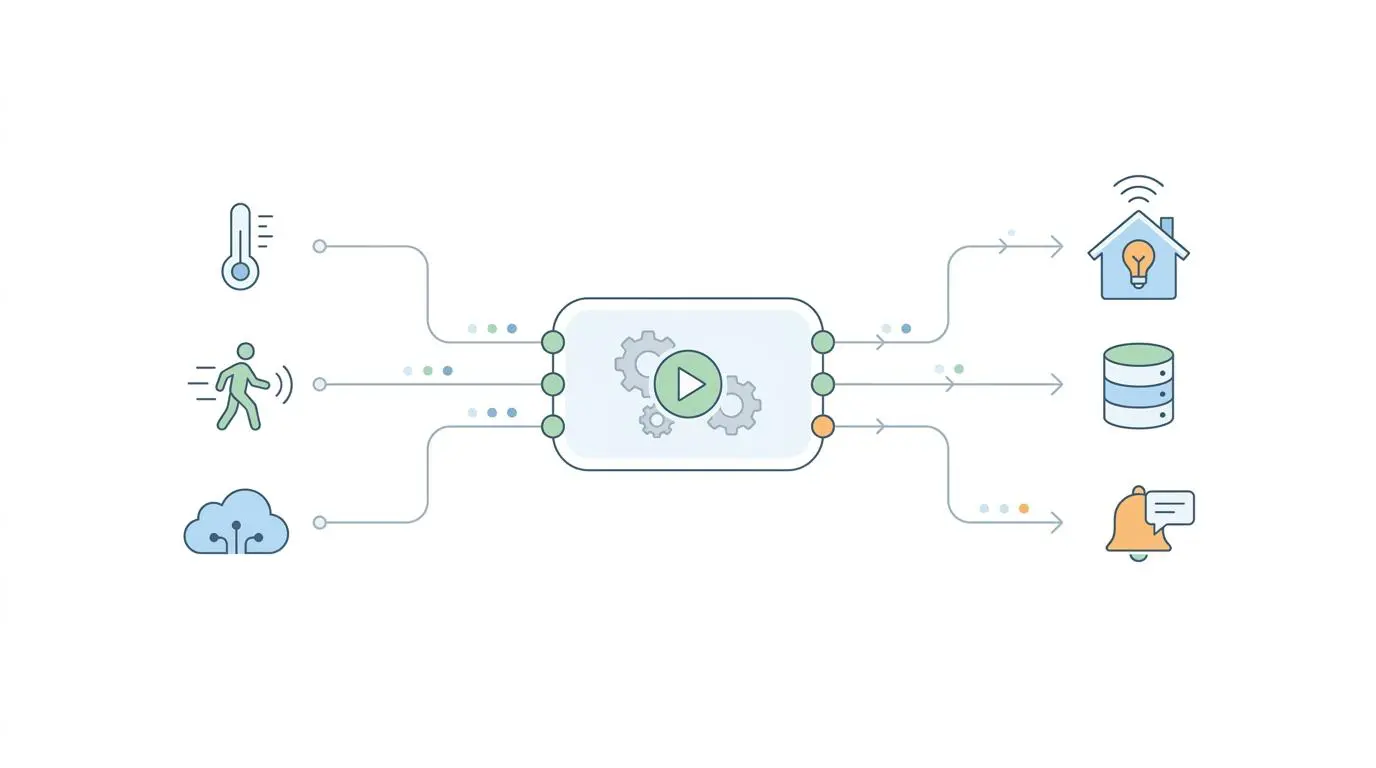
Traditional threshold-based alerts are notoriously sensitive to minor environmental fluctuations. A sudden gust of wind or a temporary spike in ambient heat can easily trigger a cascade of false alarms. These phantom dispatches waste immense amounts of time and fuel.
To combat this, forward-thinking operations are deploying autonomous agents powered by advanced language models. These specialized AI models ingest unstructured sensor logs and historical maintenance data to analyze the true context of an alert. They can successfully filter out the vast majority of false-positive alarms before a human ever sees them.
By integrating these intelligent agents into the workflow, the system only triggers a physical dispatch when mechanical failure is highly probable. This drastically improves the signal-to-noise ratio for field teams. Technicians can trust that when they receive an automated work order, the problem is real and requires their specific expertise.
Bridging Hardware and Software Without Custom Code

Connecting legacy industrial hardware to modern cloud software used to require months of expensive custom backend development. Enterprise organizations simply cannot afford these massive lead times in today’s fast-paced infrastructure landscape. The high cost of maintaining custom-coded integrations often crippled automation initiatives before they even launched.
The rise of low-code and no-code platforms has completely revolutionized this integration process. Teams are now utilizing visual workflow builders to bridge robust IoT platforms with enterprise field service tools seamlessly. This allows operations managers to design complex, logic-heavy routing rules without writing a single line of traditional code.
A fascinating development in edge-native automation allows these visual nodes to run directly on local gateway hardware. This means local micro-dispatch triggers can function perfectly even if the primary cloud controller temporarily loses connectivity. This resilient architecture ensures that critical maintenance loops remain active regardless of broader network conditions.
Retaining Control with One-Click Approvals

Fully autonomous systems are incredibly powerful, but certain high-cost operations still demand a layer of human accountability. Sending a technician to a remote mountain peak via helicopter is an expensive decision that algorithms cannot yet authorize legally or financially. Organizations need a way to keep humans in the loop without slowing down the core process.
This is achieved by injecting interactive notification blocks directly into team communication platforms. When the AI agent determines a remote site visit is necessary, it instantly sends a detailed summary to the regional manager’s chat interface. All the necessary diagnostic data and cost projections are presented in a clean, digestible format.
The manager simply clicks a single approval button embedded within the message to authorize the operation. That single click instantly triggers the downstream automated sequence, handling GPS routing, parts inventory reservation, and technician notification. It is the perfect balance between automated speed and executive financial oversight.
Navigating Dead Zones and API Rate Limits
Building a robust automation loop requires anticipating the inevitable points of failure inherent in remote field work. Automated dispatches frequently stall when technicians arrive at isolated sites and cannot access their digital work orders. Lack of cellular connectivity in these dead zones can completely derail a perfectly scheduled maintenance task.
To prevent this, systems must be engineered with offline-first data synchronization capabilities. Work orders, diagnostic logs, and historical site data must be preemptively downloaded to the technician’s mobile device before they lose their signal. Once the repair is complete and the technician returns to a connected area, the system automatically syncs the completion data back to the central database.
Additionally, architects must implement multi-layered error handling to manage strict API rate limits. Satellite-linked IoT devices often have severe bandwidth constraints that can easily be overwhelmed by aggressive data polling. Smart queuing systems ensure that critical telemetry data is prioritized and transmitted reliably without crashing the connection.
Slashing Repair Times and Overhead Costs
Maintaining dedicated manual dispatching desks operating around the clock represents a massive overhead cost for nationwide network providers. The sheer volume of administrative scheduling required to keep infrastructure running is financially unsustainable. Automating this layer fundamentally changes the economic model of field service operations.
By eliminating the manual scheduling bottleneck, organizations drastically reduce their mean time to repair. Automated systems instantly optimize crew proximity logic, ensuring the closest qualified technician is always dispatched first. This level of logistical precision is impossible for a human team to replicate at scale.
The resulting operational efficiency directly boosts the bottom line while simultaneously improving network uptime. Reallocating human capital away from tedious dispatching tasks allows teams to focus on complex, high-value engineering challenges. It is a strategic shift that transforms maintenance from a cost center into a competitive advantage.
The Dawn of Self-Healing Infrastructure
The transition toward fully self-healing infrastructure is rapidly approaching reality for the telecommunications industry. As edge computing capabilities expand, we will see automated dispatch loops evolve beyond human technicians entirely. The integration of drone-deployed modular repair kits will soon handle common tower issues like firmware resets or component cooling without human intervention.
This future relies heavily on the foundational automation architectures being built today. Mastering the predictive dispatch loop is the critical first step toward building a truly resilient, autonomous network. Organizations that refuse to adapt will simply be outpaced by competitors operating with a fraction of the overhead.
Navigating the intersection of technology, workflows, and operational efficiency requires a sharp strategy. To future-proof your business architecture and scale with precision, connect with Andres at Andres SEO Expert.
Frequently Asked Questions
What is an IoT-to-FSM Predictive Dispatch Loop?
An IoT-to-FSM Predictive Dispatch Loop is an automated workflow that connects real-time industrial sensor data directly to Field Service Management tools. By connecting telemetry to automated routing logic, organizations can eliminate manual scheduling bottlenecks and reduce dispatch times to under 20 minutes.
How does predictive maintenance reduce unnecessary truck rolls?
Predictive maintenance uses automated filtering to analyze sensor data before a technician is assigned. According to industry data, this process can reduce unnecessary physical site visits, or truck rolls, by approximately 32% by identifying false alarms and resolving minor issues through autonomous cooling or power adjustments.
How do AI agents improve the accuracy of hardware alerts?
Autonomous AI agents, such as specialized Telecom-GPT models, ingest unstructured sensor logs and historical data to distinguish between environmental noise and genuine mechanical failure. This improves the signal-to-noise ratio, ensuring that technicians are only dispatched when a physical repair is highly probable.
Can automated dispatch systems work in remote areas with no connectivity?
Yes, robust automation systems are engineered with offline-first data synchronization. This allows technicians to download critical work orders and diagnostic logs before entering cellular dead zones, with completion data automatically syncing back to the central database once a signal is re-established.
What are the benefits of using low-code platforms for telecom integration?
Low-code platforms allow infrastructure providers to bridge legacy hardware with modern cloud software without expensive custom development. Visual workflow builders enable operations managers to design resilient routing rules that can run locally on gateway hardware, ensuring stability even during network outages.
Why is human-in-the-loop approval necessary for automated workflows?
While automation handles speed, a human-in-the-loop layer provides essential financial and legal oversight for high-cost operations. Interactive notification blocks allow managers to review diagnostic summaries and authorize expensive dispatches, like helicopter-assisted repairs, with a single click.