Key Points
- Transitioning from periodic batch processing to a real-time continuous close drastically reduces operational delays and unlocks immediate strategic visibility.
- Deploying composable finance architectures and agentic AI allows enterprises to automate the vast majority of manual data entry and reconciliation tasks.
- The evolution of autonomous finance operations shifts the CFO’s primary function from historical reporting to predictive scenario modeling and yield optimization.
Table of Contents
- The Heavy Toll of Retrospective Reporting
- Quantifying the Shift to Algorithmic Accounting
- Escaping Fragmented Data Silos
- Deploying Agentic Anomaly Detection
- The Rise of Composable Finance Architecture
- Driving Down Operational Costs
- Elevating the Strategic Finance Role
- The Era of Zero-Touch Auditing
- Embracing the Predictive Compliance Standard
The Heavy Toll of Retrospective Reporting
Picture this: It is the first week of the new month, and your entire accounting team is locked in a conference room. They are manually hunting down a minor discrepancy across three different software platforms. This is the harsh reality of the periodic close bottleneck.
Traditional finance departments are trapped in a cycle of retrospective reporting. They rely on manual data reconciliation that acts as a massive speed bump for business agility.
This outdated approach leads to a crippling delay in financial visibility. When executives make decisions looking through the rearview mirror of last month’s data, real-time strategic pivoting becomes impossible. The speed of modern business simply outpaces legacy accounting.
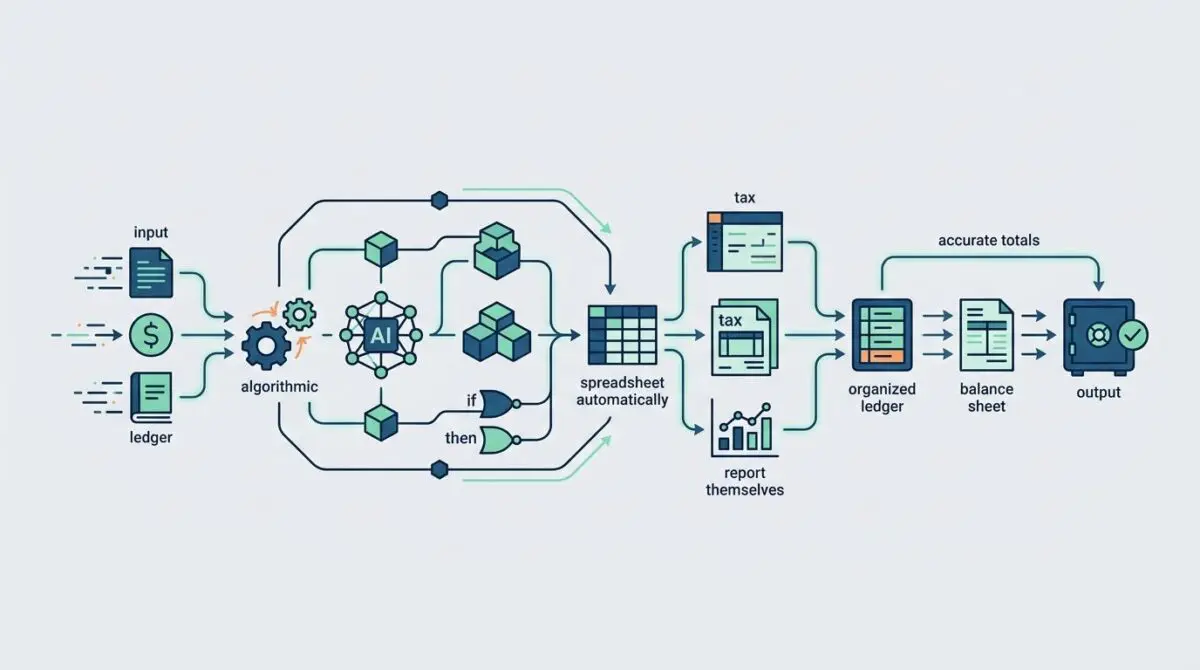
The ultimate solution to this operational friction is the deployment of autonomous finance operations. By replacing manual spreadsheets with intelligent workflows, companies transform their finance departments into proactive growth engines. This shift fundamentally redefines how capital is tracked, managed, and deployed.
Quantifying the Shift to Algorithmic Accounting
Market Intelligence & Data
CFO AI Investment
According to the Gartner 2025 CFO Perspective Report, 92% of finance leaders are increasing their GenAI budget specifically for autonomous accounting workflows.
Reduction in Close Time
Deloitte’s 2026 Finance Trends analysis found that ‘self-driving’ finance adopters reduced their monthly closing cycle from 8 days to less than 48 hours.
Economic Value Unlocked
PwC Global’s 2026 economic outlook estimates that AI-driven efficiency in corporate finance departments will add $1.4 trillion in global productivity gains by year-end.
Finance Task Automation
Research from the McKinsey Global Institute in 2025 indicates that 65% of all finance department tasks are now fully automatable with currently available 2026 technology.
The staggering reality that 92% of finance leaders are ramping up their GenAI budgets proves that autonomous accounting is no longer an experimental luxury. It is a baseline requirement for survival. Executives realize that relying on human capital for basic ledger maintenance is an operational liability.
This aligns perfectly with the recent McKinsey survey on finance teams putting AI to work, highlighting that the primary goal is no longer just cost-cutting, but true operational agility.
Furthermore, a massive reduction in close time fundamentally changes the rhythm of corporate strategy. Shrinking the monthly closing cycle to less than 48 hours means leadership teams access verified financial truths instantly. This rapid turnaround transforms the finance department into a real-time nervous system.
The projected economic value unlocked represents far more than just saved labor hours. It signifies dormant capital being deployed faster and smarter across global markets. We see aggressive market validation in real-time, such as Ramp’s push into AI-powered autonomous finance, underscoring how investors back platforms that eradicate manual reconciliation.
The fact that most finance tasks are now fully automatable serves as a wake-up call for the industry. When data entry and compliance checks are handled by algorithms, the human workforce is liberated. The modern finance department transitions into a strategic advisory hub focused purely on market expansion.
Escaping Fragmented Data Silos

Many finance teams still struggle with the chaos of fragmented data silos. Invoice processing, expense management, and payroll often live in completely disconnected systems that refuse to communicate. This lack of integration creates a massive operational bottleneck.
The result is a hidden tax of manual data entry that consumes a huge portion of the workweek. Highly educated accountants are reduced to copying and pasting numbers between screens to make the math work. This manual bridging of data gaps is expensive and highly prone to human error.
To combat this, modern financial tools have evolved from simple corporate cards into autonomous controllers. These platforms actively eliminate the manual matching of receipts to bank statements. They capture and categorize spend at the exact point of transaction, letting data flow seamlessly into the general ledger.
Deploying Agentic Anomaly Detection

Legacy software systems have a fatal flaw when it comes to modern business operations. They possess a complete inability to interpret unstructured data, such as complex PDF contracts or messy email threads. This blind spot requires constant human intervention to translate text into structured ledger entries.
Generative AI agents have stepped in to bridge this gap with advanced anomaly detection. These systems can read, understand, and extract financial data from virtually any document format instantly. They act as tireless digital auditors that monitor the financial bloodstream around the clock.
Agentic AI in finance has moved beyond simple automation into autonomous negotiation. Software agents are successfully renegotiating payment terms with suppliers based on real-time liquidity positions. They proactively communicate with external vendors to resolve price discrepancies without any human oversight.
The Rise of Composable Finance Architecture

For decades, massive enterprises relied on monolithic ERPs that required expensive implementation cycles. These rigid systems offered zero flexibility for rapid global scale. Upgrading or pivoting these legacy monoliths was a logistical nightmare that forced companies to adapt to the software.
The industry is now experiencing a massive shift from traditional systems of record to dynamic systems of intelligence. Modern tech stacks utilize composable finance architectures that act like digital building blocks. Companies can plug and play the exact tools they need without overhauling their entire infrastructure.
In this composable ecosystem, micro-services for specific functions operate in perfect harmony. Tax compliance engines and global payment gateways sync via real-time APIs rather than clunky batch processing. This creates a fluid, instantly up-to-date financial ecosystem that scales effortlessly across borders.
Driving Down Operational Costs

Stagnant, unoptimized cash reserves are a silent killer of corporate profitability. High operational overhead and lost interest revenue plague companies that cannot move their money fast enough. When cash sits idle during lengthy reconciliation processes, the business loses out on significant financial leverage.
Autonomous systems have directly attacked this inefficiency, drastically driving down the cost-per-invoice processed. This massive reduction in processing costs immediately boosts the bottom line. It frees up capital that was previously burned on administrative friction.
Companies utilizing AI-driven treasury management are seeing incredible returns on their liquidity. By leveraging automated sweep accounts that dynamically move funds, these enterprises capture significantly more yield on idle cash. The software essentially acts as an algorithmic hedge fund manager for operational capital.
Elevating the Strategic Finance Role
The human cost of legacy accounting is often overlooked, manifesting in high turnover and severe burnout rates. Junior accountants are routinely tasked with repetitive, low-value reconciliation work that drains their morale. Staring at spreadsheets to find missing pennies is not why these professionals entered the industry.
As AI steps in to handle continuous ledger maintenance, the nature of finance work is fundamentally transforming. Robotic tasks are given to the robots, leaving complex problem-solving to the humans. This marks the dawn of the true strategic finance role.
Unburdened by manual data entry, modern CFOs have shifted their focus toward predictive scenario modeling and aggressive growth strategies. Supported by advanced visualization tools, finance professionals are now the primary architects of business expansion. They are no longer just historical scorekeepers.
The Era of Zero-Touch Auditing
Anyone who has worked in corporate finance dreads the annual audit season. It is a massive resource drain caused by traditional retrospective audit sampling. This disruptive process halts normal business operations and creates immense stress for the entire team.
The emergence of zero-touch auditing is poised to end this chaotic era entirely. Because autonomous finance operations rely on continuous reconciliation, the data is inherently pre-verified. The system checks its own math in real-time, every single second of the day.
External auditors are rapidly moving toward continuous verification models. Instead of requesting file samples, auditors are granted real-time access to a company’s immutable digital ledger. This transparent approach ensures compliance without ever interrupting the daily workflow of the finance team.
Embracing the Predictive Compliance Standard
The continuous close is firmly establishing itself as the industry standard for modern enterprises. Financial statements will no longer be monthly events, but living documents updated in real-time. This permanent state of financial clarity allows businesses to navigate market volatility with unprecedented confidence.
The strategic focus will inevitably shift toward predictive compliance. As global regulations become more complex, AI systems will automatically adjust regulatory filings based on real-time legislative changes. The self-driving finance department will not just report the past; it will actively secure the future.
Navigating the intersection of modern technology, software architecture, and business growth requires a sharp strategy. To future-proof your tech stack and scale with precision, connect with Andres at Andres SEO Expert.
Frequently Asked Questions
What is autonomous finance operations?
Autonomous finance operations, often referred to as self-driving finance, involves using AI and intelligent workflows to automate manual accounting tasks. This shift transforms finance departments from reactive record-keepers into proactive growth engines by eliminating manual data reconciliation and periodic close bottlenecks.
How much can AI reduce the monthly financial closing cycle?
According to 2026 industry trends, adopters of autonomous finance can reduce their monthly closing cycle by 70%, shrinking the process from an average of eight days to less than 48 hours. This allows leadership teams to access verified financial data almost instantly for real-time strategic pivoting.
What are the benefits of agentic anomaly detection in accounting?
Agentic anomaly detection uses generative AI agents to interpret unstructured data like PDF contracts and emails. These systems act as digital auditors that monitor financial streams 24/7, proactively resolving price discrepancies and renegotiating supplier terms without human oversight.
What is a composable finance architecture?
A composable finance architecture is a modular tech stack that uses micro-services and real-time APIs instead of rigid, monolithic ERPs. It allows companies to “plug and play” specific tools for tax compliance and global payments, creating a fluid ecosystem that scales effortlessly across borders.
How does autonomous finance lower operational costs per invoice?
Autonomous systems can drive the cost-per-invoice processed down from an average of $15.00 to under $2.00. By eliminating administrative friction and manual entry, businesses can significantly boost their bottom line and capture higher yields on idle cash through automated treasury management.
What is zero-touch auditing in corporate finance?
Zero-touch auditing is a continuous verification model where data is inherently pre-verified by algorithmic reconciliation. Instead of traditional year-end sampling, auditors are granted real-time, read-only access to an immutable digital ledger, ensuring compliance without interrupting daily business operations.