Executive Summary
- AI image generation utilizes latent diffusion models and generative adversarial networks (GANs) to synthesize visual data from high-dimensional noise.
- Multimodal Large Language Models (LLMs) increasingly rely on visual assets to establish entity authority and contextual relevance in search results.
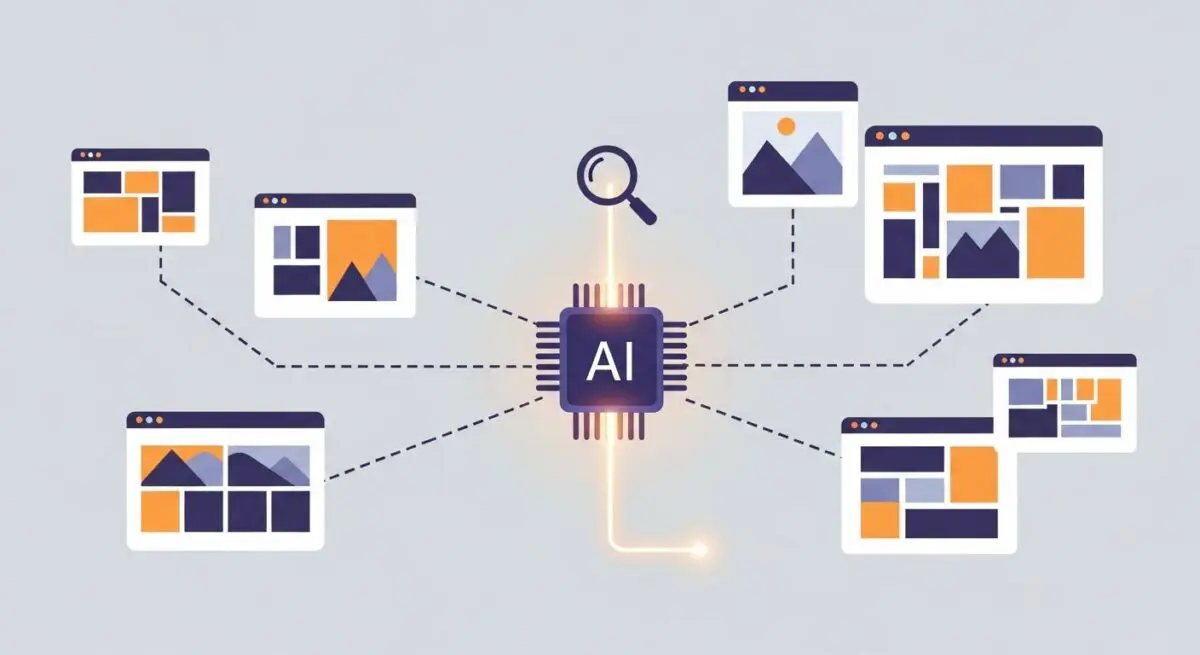
- Optimization for AI-driven visual search requires precise alignment between textual embeddings and synthesized visual features.
What is AI Image Generation?
AI image generation refers to the computational process of synthesizing novel visual content using deep learning architectures. At its core, this technology typically leverages Latent Diffusion Models (LDMs) or Generative Adversarial Networks (GANs). In diffusion-based systems, the model is trained to reverse a process of adding Gaussian noise to an image, effectively learning to construct coherent structures from a state of pure entropy. This synthesis is guided by textual embeddings—mathematical representations of language—that map specific concepts to coordinates within a high-dimensional latent space.
From a technical perspective, the process involves a transformer-based text encoder (such as CLIP) that translates user prompts into a latent vector. This vector then influences the U-Net architecture during the denoising steps, ensuring the final pixel output aligns with the semantic intent of the input. This allows for the creation of hyper-realistic or stylized imagery that did not previously exist in the training dataset, providing a scalable solution for unique asset production in digital ecosystems.
The Real-World Analogy
Imagine a master sculptor tasked with carving a statue from a block of marble, but the sculptor is blindfolded and must work in a room filled with thick fog. The “fog” represents the initial noise or randomness. The sculptor has a mental blueprint (the text prompt) and a set of refined instincts (the trained model) that allow them to feel the surface and gradually chip away the marble that does not belong. Step by step, the sculptor removes the unnecessary material until a clear, detailed figure emerges from the haze. AI image generation functions similarly, iteratively refining a chaotic field of pixels until they coalesce into a structured, meaningful image based on a predefined conceptual guide.
Why is AI Image Generation Important for GEO and LLMs?
In the era of Generative Engine Optimization (GEO), AI image generation serves as a critical component for establishing multimodal relevance. Search engines like Google and Perplexity are evolving into multimodal agents that process text, images, and video simultaneously. High-quality, unique visual assets generated with specific semantic targets can significantly improve an entity’s visibility within AI-generated overviews. When an LLM synthesizes a response, it prioritizes sources that provide comprehensive, high-fidelity data; unique imagery acts as a distinct signal of authority and original content creation.
Furthermore, AI-generated images that are properly tagged and contextually aligned help bridge the gap between textual queries and visual intent. By populating the Knowledge Graph with relevant visual entities, brands can ensure their assets are retrieved during RAG (Retrieval-Augmented Generation) processes, where the AI looks for the most relevant “chunks” of data to satisfy a user’s complex, multi-layered query.
Best Practices & Implementation
- Semantic Prompt Engineering: Utilize highly specific, technical descriptors in prompts to ensure the generated output aligns with the brand’s established visual entities and industry-specific terminology.
- Metadata Enrichment: Embed descriptive XMP and IPTC metadata within generated files to provide AI crawlers with explicit context regarding the image’s subject matter and relationship to the primary content.
- Resolution and Compression Management: Ensure all generated assets are upscaled using neural super-resolution techniques to maintain high pixel density, which prevents feature degradation during AI vision processing.
- Consistency in Latent Space: Use fixed seeds or consistent stylistic embeddings (LoRAs) to maintain a unified visual identity across all generated assets, reinforcing brand recognition for multimodal LLMs.
Common Mistakes to Avoid
One frequent error is the deployment of generic, “uncanny” AI visuals that lack specific semantic alignment with the surrounding text, which can confuse AI vision algorithms and lower trust scores. Another mistake is neglecting the integration of traditional SEO elements like alt-text and structured data (Schema.org) for generated images, assuming the AI will interpret the image perfectly without assistance. Finally, many organizations fail to account for provenance standards, such as C2PA, which are increasingly used by AI engines to verify the origin and authenticity of visual content.
Conclusion
AI image generation is no longer a mere creative tool but a fundamental technical requirement for multimodal GEO. By synthesizing high-relevance visual data, brands can secure a competitive advantage in the evolving landscape of AI-driven search and retrieval.