Executive Summary
- GANs operate on a zero-sum game framework where a Generator and a Discriminator compete to reach a Nash equilibrium in data synthesis.
- In the context of GEO, GANs are instrumental in data augmentation, allowing for the creation of robust training sets that improve LLM performance and entity recognition.
- The architecture is a cornerstone for synthetic media generation and the development of sophisticated detection algorithms used by AI search engines to verify content authenticity.
What is Generative Adversarial Network?
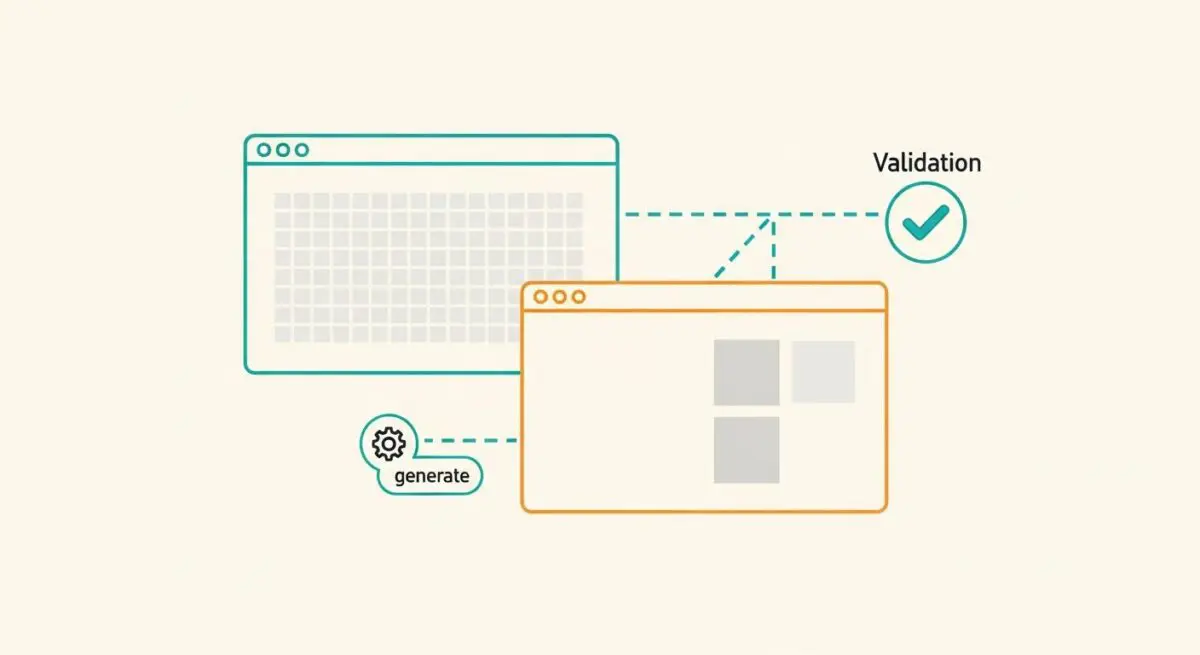
A Generative Adversarial Network (GAN) is a class of machine learning frameworks designed by Ian Goodfellow and his colleagues in 2014. The architecture consists of two neural networks—the Generator and the Discriminator—that are trained simultaneously through adversarial competition. The Generator’s objective is to produce synthetic data that is indistinguishable from real-world data, while the Discriminator’s objective is to accurately differentiate between the authentic data and the synthetic samples produced by its counterpart.
Technically, this process is modeled as a minimax game in game theory. As training progresses, the Generator becomes increasingly adept at capturing the underlying distribution of the training data, while the Discriminator becomes more proficient at identifying subtle anomalies. This iterative feedback loop continues until the Discriminator can no longer distinguish between the two sets with more than 50% accuracy, signifying that the Generator has successfully synthesized high-fidelity data. This framework is foundational for tasks involving image synthesis, style transfer, and the enhancement of low-resolution datasets.
The Real-World Analogy
To understand a Generative Adversarial Network, imagine a relationship between a professional art forger and an elite art detective. The forger (the Generator) is constantly attempting to create a painting that looks exactly like a genuine Rembrandt. Initially, the forger is unskilled, and the detective (the Discriminator) easily identifies the fake. However, every time the detective points out a flaw—such as the wrong brushstroke or an incorrect pigment—the forger learns and improves their technique. Over time, the forger becomes so skilled that the detective can no longer tell the difference between the original masterpiece and the forgery. In the AI world, this competition results in the creation of highly realistic digital assets.
Why is Generative Adversarial Network Important for GEO and LLMs?
Generative Adversarial Networks play a critical role in the evolution of Generative Engine Optimization (GEO) and the training of Large Language Models (LLMs). By utilizing GANs for data augmentation, developers can generate vast amounts of high-quality synthetic training data, which is essential for training LLMs in domains where real-world data is scarce or sensitive. This leads to more robust models that can better understand complex entities and relationships, directly impacting how brands are indexed and cited within AI-driven search results.
Furthermore, GANs are used by search engines to improve image and video recognition capabilities. As AI search engines like Perplexity or ChatGPT-Search move toward multi-modal understanding, the ability to synthesize and analyze visual data through adversarial training becomes paramount. For GEO professionals, understanding GANs is vital because these networks are often used to detect AI-generated spam or deepfakes; maintaining high Entity Authority requires ensuring that content meets the quality thresholds established by these adversarial detection systems.
Best Practices & Implementation
- Implement Wasserstein Loss (WGAN): Utilize Wasserstein distance instead of traditional Jensen-Shannon divergence to improve training stability and prevent the common issue of vanishing gradients.
- Balance Network Capacity: Ensure the Generator and Discriminator have comparable architectural complexity to prevent one from overpowering the other, which can lead to training failure.
- Monitor for Mode Collapse: Regularly audit the output diversity to ensure the Generator is not producing a limited set of similar samples, a technical failure known as mode collapse.
- Use Batch Normalization: Apply normalization layers to stabilize the learning process and accelerate convergence during the adversarial training phase.
Common Mistakes to Avoid
One frequent error is failing to maintain the delicate balance between the two networks; if the Discriminator becomes too powerful too quickly, the Generator receives insufficient feedback to learn. Another mistake is ignoring the quality of the initial training set, as GANs will inherently replicate any biases or noise present in the source data. Finally, many organizations overlook the computational costs associated with GANs, leading to inefficient resource allocation during the model refinement stage.
Conclusion
Generative Adversarial Networks represent a sophisticated leap in data synthesis, providing the technical foundation for high-fidelity AI outputs and robust training environments. For AI search and GEO, mastering GAN mechanics is essential for maintaining content integrity and maximizing visibility in an increasingly synthetic digital landscape.