Key Takeaways
- NVIDIA Vera CPU uses custom Olympus cores optimized for single-threaded agentic workloads, featuring a neural branch predictor and graph prefetcher to handle irregular execution patterns.
- The monolithic die with unified L3 cache and SOCAMM2 LPDDR5X memory delivers up to 1.2 TB/s bandwidth, while Spatial Multithreading reduces thread interference in sandbox environments.
- Early benchmarks show up to 2x faster per-core performance vs x86, with customer results from Perplexity (1.9x faster jobs), NYSE (6x lower P99 latency), and others.
NVIDIA Vera CPU: A New Architecture for the Agentic AI Era
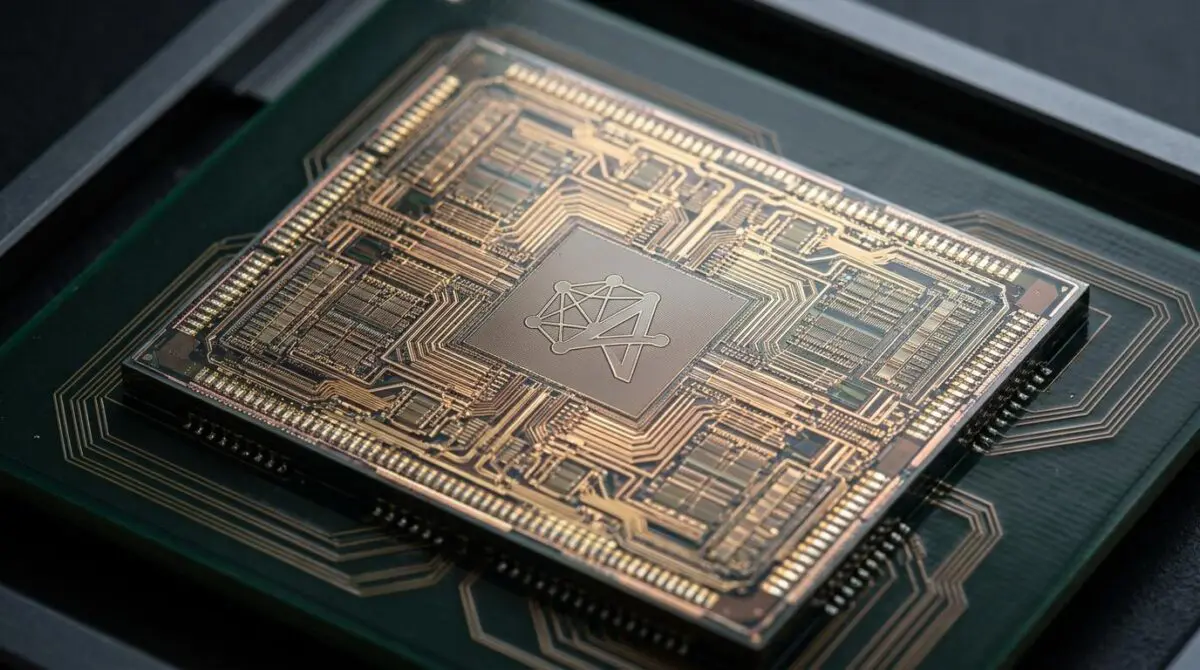
NVIDIA has officially unveiled the Vera CPU, a server processor built around its custom Olympus core and engineered specifically for agentic AI workloads. First samples shipped to customers including OpenAI and Anthropic in June 2026, and the company now reveals the full technical architecture — from a neural branch predictor to a unified coherency fabric delivering 3.4 TB/s of bandwidth. As AI agents increasingly rely on CPU-side execution for tool calling, code interpretation, and context retrieval, Vera claims up to 2x faster per-core performance versus competing x86 and Arm designs, making it the first server CPU purpose-built for the irregular, latency-sensitive demands of agentic AI.
Table of Contents
Inside the Olympus Core: Designed for Irregular Workloads
Agentic AI workloads place a unique set of demands on CPUs. Unlike traditional cloud applications that benefit from high core density and uniform throughput, agent loops involve long chains of dependent operations — interpreting code, traversing runtime objects, invoking tools, and parsing results. These paths are branch-heavy, irregular, and memory-latency sensitive. The Olympus core was conceived from the ground up to accelerate these exact patterns through extreme co-design across the Vera Rubin platform.
The front end of Olympus integrates a neural branch predictor capable of handling up to two taken branches per cycle, combined with a 10-wide decode engine. This keeps the pipeline fed through complex control flow changes common in Python runtimes and graph analytics. The mid core extends a large reorder buffer and physical register array to expose hidden parallelism in long dependency chains. Features like memory renaming and value prediction help reduce stalls from pointer-chasing code that dominates agentic workloads.
On the execution side, a balanced set of integer, vector, cryptographic, and load/store resources ensures that once instructions are dispatched, they encounter minimal bottlenecks. The cache subsystem includes a dedicated graph prefetcher designed to anticipate irregular access patterns from graph and database structures. Complimenting this is NVIDIA Spatial Multithreading, which partitions core resources between two threads more predictably than traditional SMT, reducing noisy-neighbor effects in dense sandbox environments. As detailed in NVIDIA’s official architecture blog, each Vera CPU integrates 88 Olympus cores with 176 threads total.
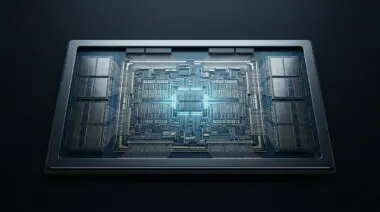
Behind the cores, the NVIDIA Scalable Coherency Fabric provides a unified, monolithic 164 MB L3 cache with up to 3.4 TB/s bisectional bandwidth. This avoids the latency penalties of chiplet-based designs and ensures cache coherence across all resources. Memory is supplied via modular SOCAMM2 LPDDR5X modules, delivering up to 1.2 TB/s of aggregate bandwidth at significantly lower power than typical DDR5 or MRDIMM solutions. The platform also supports coherent NVLink-C2C for dual-socket scaling, presenting a single NUMA domain per socket, along with PCIe 6.4 and CXL 3.1 for I/O expansion.
Confidential computing is built in through Arm CCA/RME with per-VM encryption keys, enabling secure isolation for agentic workloads across the AI factory without the need for bounce buffers.
Market Impact: Competitive Positioning and Early Adoption
The Vera CPU enters a server market long dominated by Intel and AMD. But its design philosophy represents a deliberate departure from the core-count arms race. Ian Buck, NVIDIA Vice President of Hyperscale, emphasized that agents are making the CPU more critical than ever, especially for achieving low response times per query. This emphasis on single-thread performance and low latency aligns with early benchmark data published by NVIDIA.
In internal SPEC CPU 2026 estimates, Vera achieved substantial margins over an AMD Turin 128-core x86 processor, though NVIDIA acknowledges more independent benchmarks are needed. The lead is partly attributed to the use of LPDDR5X memory, originally designed for mobile, which offers both bandwidth and efficiency gains. An analysis by Forbes noted that Vera monolithic architecture and on-chip memory fabric can lower latencies by up to 5-fold per watt compared to chiplet designs. Additionally, the International Business Times reports that Nvidia claims up to 50% better performance on AI agent workloads versus traditional x86 chips.
Early customer results, as reported by Forbes, paint a compelling picture. Perplexity saw 1.5 to 1.9 times faster job completion versus an off-the-shelf x86 CPU. DeepInfra observed a 1.6x latency improvement. The New York Stock Exchange saw a 6-fold reduction in P99 streaming latency. Los Alamos National Laboratories noted a 3 to 7 times better HPC performance when combining Vera CPUs with Rubin GPUs. These real-world metrics underscore the potential of Vera architecture for both AI and traditional high-performance computing.
However, adoption among hyperscale cloud providers appears still in its early stages. Oracle was named as a launch partner, but other major players have not publicly committed. Gartner analyst Kevin Knox observed that AMD currently leads innovation in enterprise AI server CPUs and holds strong relationships with cloud providers. Despite this, Bank of America estimates that NVIDIA could ship 4 to 5 million Vera CPUs in the second half of 2026, potentially generating $20 billion in revenue, given a fully configured 256-Vera rack is priced around $10 million. NVIDIA itself pegs the total addressable market for server CPUs at $200 billion.
The competitive landscape is heating up. AMD upcoming Turin and Intel Granite Rapids will likely offer performance improvements, but the fundamental architectural divergence — core count versus single-thread speed and memory bandwidth — may define the next era of datacenter computing. Vera early lead in agentic AI workloads, validated by customer benchmarks, positions NVIDIA as a serious contender in the CPU space, especially for the growing segment of AI factories that require predictable, low-latency execution for agent loops.
The CPU Renaissance in AI Factories
NVIDIA Vera CPU signals that the server processor is no longer just a throughput engine. In the age of agentic AI, the CPU must handle irregular, latency-sensitive software paths while coordinating accelerators, memory, and networking across the AI factory. By building a core from scratch to address these specific demands, NVIDIA has introduced a new design philosophy that challenges the industry long-held assumptions about architectural balance.
Whether Vera will achieve the same dominance in CPUs that NVIDIA holds in GPUs remains to be seen, but the early data and customer traction suggest a compelling value proposition. For AI-first organizations, the ability to reduce agent response latency and increase sandbox concurrency without sacrificing single-thread performance could translate directly into faster development cycles and better user experiences.
As the lines between CPU, GPU, and network blur in pursuit of efficient AGI, the Vera CPU represents a pivotal moment — one that demands the attention of every infrastructure architect and technical leader building for tomorrow AI workloads.
At Andres SEO Expert, we understand that performance engineering at scale goes beyond hardware. Whether you are optimizing AI pipelines, deploying high-throughput web services, or building the infrastructure for next-generation applications, our team delivers tailored solutions. Explore our programmatic SEO and AI automation services to align your digital strategy with the demands of modern AI. For a deep dive into how we can accelerate your technical stack, connect with Andres at the contact page or visit Andres SEO Expert to learn more.
Frequently Asked Questions
What is the NVIDIA Vera CPU designed for?
The NVIDIA Vera CPU is a server processor built around the custom Olympus core, engineered specifically for agentic AI workloads. It focuses on low-latency execution for irregular, branch-heavy tasks like tool calling, code interpretation, and context retrieval.
How does the Olympus core improve performance for agentic AI?
The Olympus core integrates a neural branch predictor, a 10-wide decode engine, a large reorder buffer, memory renaming, value prediction, a dedicated graph prefetcher, and NVIDIA Spatial Multithreading to handle the unique demands of agentic AI.
What is the memory configuration of the Vera CPU?
Each Vera CPU integrates 88 Olympus cores, a 164 MB L3 cache via the NVIDIA Scalable Coherency Fabric, and uses modular SOCAMM2 LPDDR5X memory modules delivering up to 1.2 TB/s aggregate bandwidth.
How does Vera compare to competing CPUs from Intel and AMD?
In internal SPEC CPU 2026 estimates, Vera achieved substantial margins over AMD Turin 128-core x86. It uses a monolithic architecture with on-chip memory fabric, lowering latencies by up to 5-fold per watt versus chiplet designs.
What are some early customer results for Vera?
Perplexity reported 1.5-1.9x faster job completion, DeepInfra saw 1.6x latency improvement, the NYSE observed a 6x reduction in P99 streaming latency, and LANL noted 3-7x better HPC performance when combined with Rubin GPUs.
What is the market outlook for NVIDIA Vera?
Bank of America estimates NVIDIA could ship 4-5 million Vera CPUs in H2 2026, generating $20B revenue. The total addressable market for server CPUs is $200B. Early adoption includes OpenAI, Anthropic, and Oracle as a launch partner.
How does Vera’s architecture differ from traditional server CPUs?
Vera departs from the core-count arms race by emphasizing single-thread performance and low latency, crucial for agentic AI. It uses a monolithic die with high-bandwidth memory and coherent fabric, rather than chiplet designs common in competitors.