Executive Summary
- Enables the creation of statistically accurate datasets for training LLMs and testing autonomous agents without compromising PII or sensitive data.
- Facilitates the scaling of programmatic SEO and content operations by generating high-fidelity edge cases and diverse training inputs.
- Reduces dependency on manual data collection, significantly lowering the latency and cost of developing stateless automation pipelines.
What is Synthetic Data Generation?
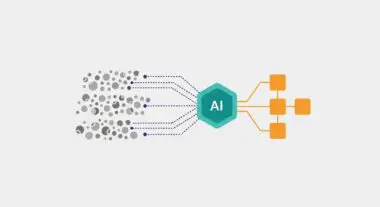
Synthetic Data Generation is the algorithmic process of creating artificial datasets that mirror the mathematical and statistical characteristics of real-world data. In the context of AI Automations and LLM development, this involves using generative models—such as Variational Autoencoders (VAEs) or Generative Adversarial Networks (GANs)—to produce information that maintains the utility of original data while ensuring complete anonymity and privacy compliance.
For engineering teams at Andres SEO Expert, synthetic data serves as a critical bridge for training autonomous agents where real-world data is either scarce, expensive to acquire, or restricted by regulatory frameworks like GDPR. By leveraging probabilistic distributions, we can generate millions of unique JSON payloads or content structures that simulate user behavior, search patterns, or transactional logs with high fidelity.
The Real-World Analogy
Imagine a high-fidelity flight simulator used to train commercial pilots. The simulator does not use a real aircraft or fly in actual airspace, yet it perfectly replicates the physics, weather patterns, and mechanical responses of a real flight. Synthetic data generation functions as this simulator for AI; it provides a safe, controlled, and infinitely scalable environment where models can learn to navigate complex scenarios without the risks or costs associated with real-world data collection.
Why is Synthetic Data Generation Critical for Autonomous Workflows and AI Content Ops?
In the era of stateless automation and programmatic SEO, the ability to generate high-quality data at scale is a competitive necessity. Synthetic data allows for the rapid prototyping of API integrations by simulating diverse response payloads, ensuring that automation scripts are resilient to edge cases. Furthermore, it powers AI Content Ops by providing diverse training sets for fine-tuning LLMs, which prevents model collapse and ensures that generated content remains unique and statistically varied.
From a serverless architecture perspective, synthetic data minimizes the need for persistent database calls during the testing phase, allowing developers to stress-test infrastructure under simulated peak loads. This leads to more robust, scalable, and cost-effective deployment of GEO (Generative Engine Optimization) strategies, where high volumes of structured data are required to influence AI-search visibility.
Best Practices & Implementation
- Ensure Statistical Parity: Validate that the synthetic output maintains the same mean, variance, and correlation coefficients as the seed dataset to ensure model accuracy.
- Implement Automated Quality Gates: Use programmatic validation scripts to check for hallucinations or data drift within the synthetic sets before they enter the production pipeline.
- Diversify Seed Inputs: Use a broad range of initial data points to prevent the generative model from overfitting, which ensures the synthetic data covers a wide spectrum of edge cases.
- Maintain Privacy by Design: Ensure the generation process does not inadvertently leak memorized fragments of sensitive real-world data through differential privacy techniques.
Common Mistakes to Avoid
One frequent error is the Echo Chamber Effect, where models are trained on synthetic data that was itself generated by a previous iteration of the same model, leading to a degradation in quality and diversity. Another common mistake is failing to account for real-world noise; perfectly clean synthetic data often fails to prepare an automation workflow for the messy, inconsistent nature of live API responses.
Conclusion
Synthetic Data Generation is a foundational pillar for scaling AI-driven automations, providing the high-fidelity inputs necessary for robust testing and model training. By mastering this concept, organizations can accelerate their content operations and GEO performance while maintaining strict data privacy standards.