Executive Summary
- Utilization of Large Language Models (LLMs) for semantic extraction and structural transformation of unstructured data.
- Integration of stateless automation pipelines to maintain data integrity across disparate distribution channels.
- Implementation of programmatic SEO through automated schema mapping and context-aware prompt engineering.
What is AI-Powered Content Repurposing?
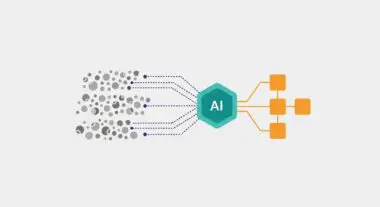
AI-powered content repurposing is the systematic application of Large Language Models (LLMs) and automated data pipelines to transform a single “source of truth” into multiple, platform-optimized assets. Unlike manual editing, this process leverages semantic analysis to decompose long-form content—such as technical whitepapers, webinars, or documentation—into modular components. These components are then re-synthesized through structured prompts to meet the specific constraints of various distribution channels, including social media, email sequences, and programmatic SEO landing pages.
At its core, this architecture relies on Retrieval-Augmented Generation (RAG) and stateless automation. By feeding the source material into an LLM via API, engineers can programmatically extract key insights, generate summaries, or translate technical jargon into accessible language while maintaining the original intent. This ensures that the resulting content is not merely a summary, but a contextually aware transformation that adheres to specific JSON schemas or HTML structures required by CMS platforms.
The Real-World Analogy
Imagine a master architect who creates a comprehensive 3D digital model of a complex building. Instead of manually drawing separate blueprints for the electricians, plumbers, and interior designers, a specialized software system automatically extracts the relevant data layers from the master model. It generates precise, tailored instructions for each professional in their preferred format. The core structural integrity remains identical, but the delivery is optimized for the specific task at hand, eliminating the risk of human transcription errors and drastically reducing the time to deployment.
Why is AI-Powered Content Repurposing Critical for Autonomous Workflows and AI Content Ops?
In the era of Generative Engine Optimization (GEO) and AI-Search, the volume and velocity of content required to maintain visibility have increased exponentially. AI-powered content repurposing allows for stateless automation, where each transformation step is independent and scalable. By utilizing API payloads that carry only the necessary context, organizations can reduce token consumption and latency. Furthermore, this approach facilitates programmatic SEO by allowing brands to generate thousands of unique, high-quality pages from a central knowledge base, ensuring that every asset is optimized for both human readers and LLM-based crawlers.
Best Practices & Implementation
- Enforce Structured Outputs: Always request JSON or XML formats from LLMs to ensure that repurposed content can be parsed programmatically by downstream webhooks and CMS APIs.
- Implement Semantic Chunking: Before processing, divide long-form source material into semantically coherent segments to prevent the LLM from losing context or exceeding token limits.
- Maintain a Vectorized Brand Voice: Use vector databases to store brand guidelines and past successful content, injecting this context into the prompt to ensure consistency across all repurposed assets.
- Automate Metadata Generation: Use the LLM to simultaneously generate Open Graph tags, meta descriptions, and schema markup tailored to each specific output format.
Common Mistakes to Avoid
One frequent error is the use of zero-shot prompting for complex transformations, which often results in hallucinations or generic outputs. Another critical mistake is failing to account for platform-specific technical constraints, such as character limits or required HTML tags, leading to broken layouts in the final distribution. Finally, many organizations neglect to implement a Human-in-the-Loop (HITL) verification step for high-authority content, risking the publication of technically inaccurate information.
Conclusion
AI-powered content repurposing is a fundamental pillar of modern AI Content Ops, enabling the scalable, programmatic transformation of data into multi-channel assets. By integrating LLMs into automated pipelines, technical teams can ensure maximum content utility and search visibility with minimal manual overhead.