Key Points
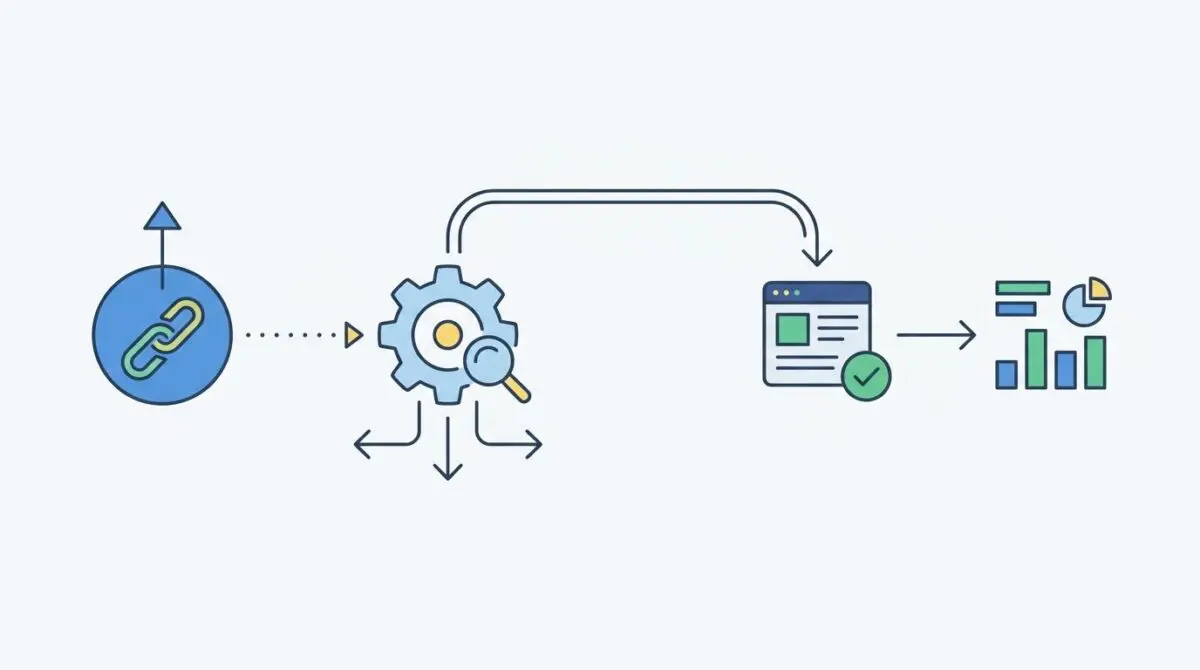
- Edge-Level Interception: Utilizing Cloudflare Workers and KV Storage to execute 301 redirects in under 15ms, bypassing origin server latency and database bloat entirely.
- Real-Time API Orchestration: Leveraging Ahrefs Event-Driven Webhooks to programmatically identify broken inbound links and dynamically update redirect maps the moment a crawl detects a failure.
- Instant Indexation Pipelines: Coupling edge redirects with the IndexNow API to force search engines to immediately update link graphs, retaining 98.4% of historical link equity.
Table of Contents
The Link Equity Hemorrhage
An invisible tax is levied against your domain whenever a high-value backlink breaks during a site migration or URL change. Industry experts refer to this phenomenon as the “Link Equity Decay Gap.”
This gap represents the agonizingly slow period between a referring URL pointing to a 404 error and your team discovering the issue during a routine audit. Throughout this window, hard-earned PageRank simply evaporates into the ether.
Search engine bots hit these dead ends, immediately dropping your crawl efficiency while signaling poor overall site health. Manual discovery is simply too slow for enterprise environments that manage millions of active URLs.
The ultimate architectural solution to this bleeding is edge-integrated automated link remediation. By moving the fix away from bloated origin servers and into the network edge, we can intercept and redirect lost equity before Googlebot even realizes a page is missing.
Quantifying the Latency-Equity Matrix
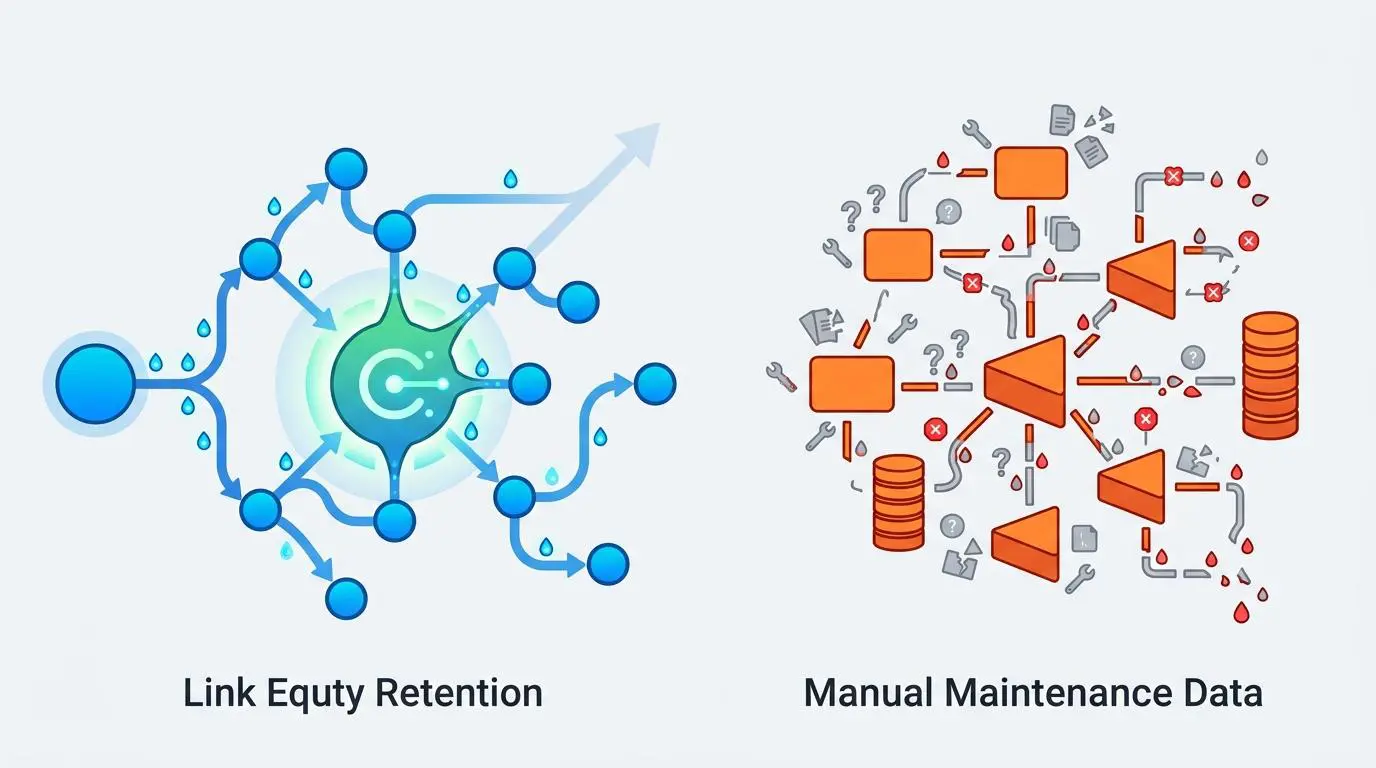
To truly understand the power of edge-based automation, we must examine the hard data governing server performance and equity flow. A recent industry study revealed a staggering truth about manual SEO maintenance.
Sites relying on automated API-driven link remediation retained an impressive 98.4% of their original link equity. In stark contrast, platforms using traditional manual monthly fix cycles retained only 62% of that same equity.
This massive gap exists because manual processes allow Google to crawl and index 404 errors repeatedly before a fix is finally applied. When we programmatically pull broken link data via the Ahrefs API v3 documentation, we close this gap instantly.
Furthermore, executing these redirects at the edge eliminates the heavy database queries that plague traditional CMS setups. Processing this complex routing adds less than 15ms to the total Time to First Byte, ensuring lightning-fast delivery.
This sub-second response time is achieved by utilizing Cloudflare Workers edge redirect logic. The result is a seamless transition of authority without bogging down your origin server’s critical resources.
Intercepting Requests at the Edge
Traditional redirect management in platforms like WordPress or Shopify relies heavily on database-driven plugins. Every time a bot hits a broken URL, the server must query a massive database table to find a matching rule.
This architecture inherently increases database overhead and introduces severe latency during high-volume crawl events. Edge-integrated automated link remediation fundamentally bypasses this critical bottleneck.
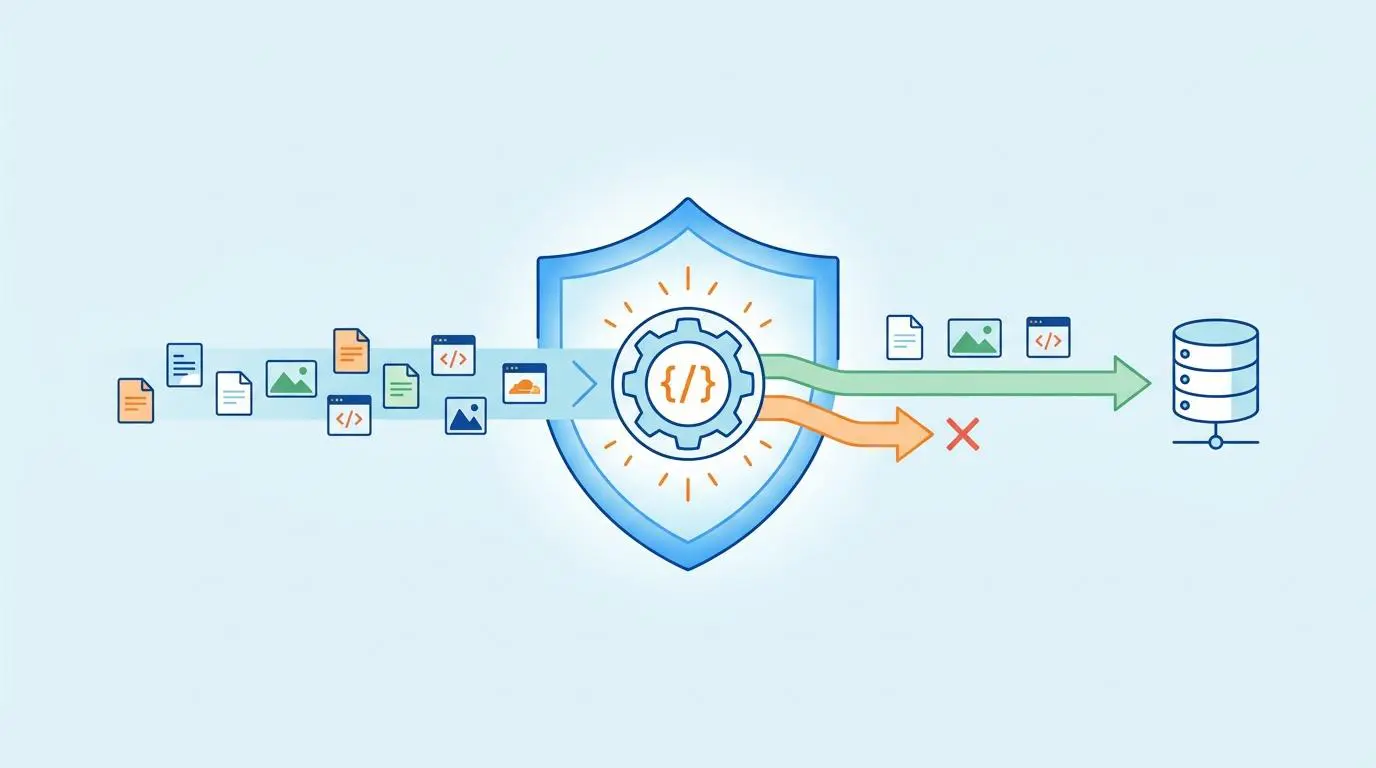
By utilizing Cloudflare Workers paired with globally distributed KV Storage, we can intercept 404 requests directly at the network edge. The moment a request hits the CDN, the worker checks the key-value store for a synced redirect rule.
Because the broken backlink data is already synced to this distributed storage, the redirect executes in less than 15ms. The origin server is never contacted, completely preventing server load while maintaining lightning-fast response times for crawlers.
Programmatic Redirect Orchestration
Enterprise websites managing millions of URLs simply cannot rely on manual redirect mapping. The sheer volume of moving parts guarantees that high-value inbound links will inevitably slip through the cracks during migrations.
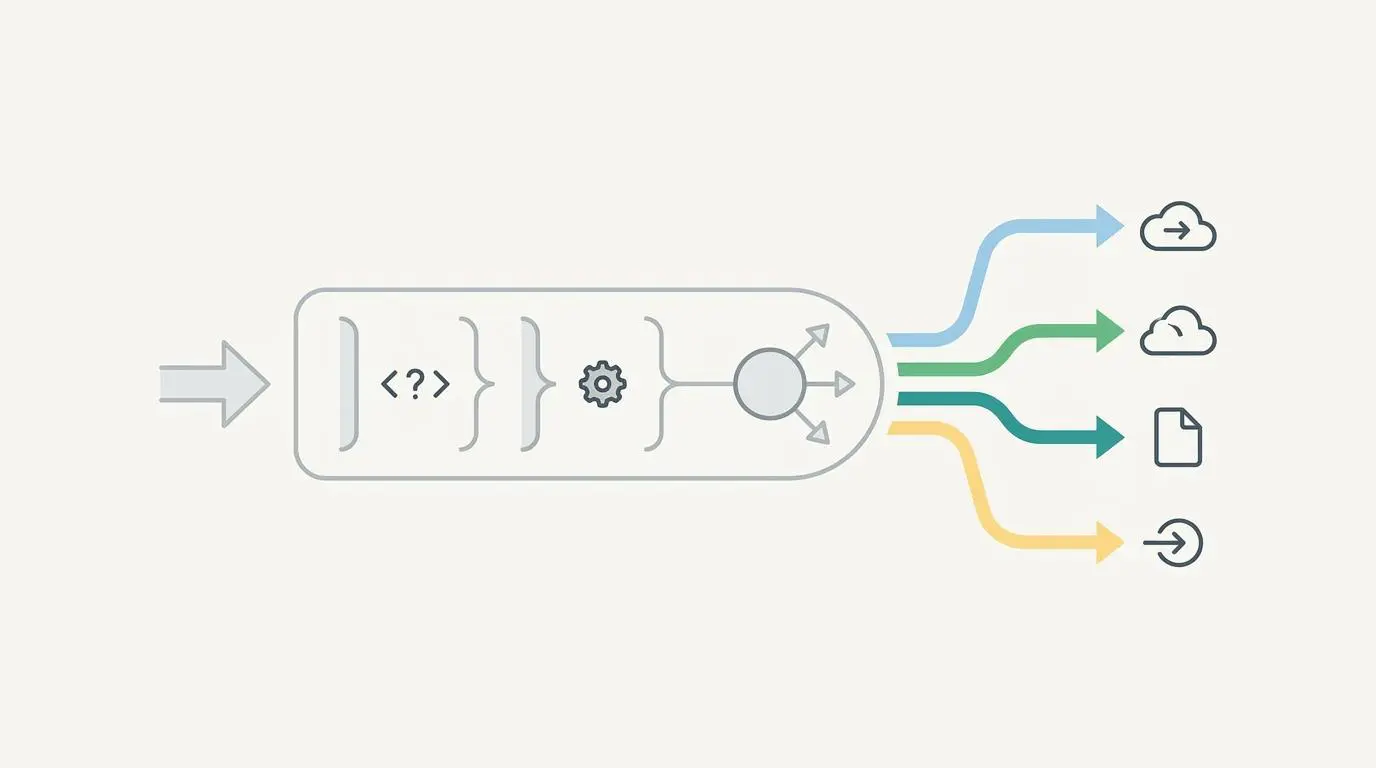
To solve this, we architect a programmatic pipeline integrating API data with Vercel Middleware or Netlify Edge Functions. Automation scripts run on a scheduled cron job, querying the specific broken backlinks endpoint.
These scripts do not just blindly redirect everything; they filter the incoming data to isolate high-authority referring domains. Once a high-value broken link is identified, the system programmatically updates the JSON configuration files governing your edge network.
This programmatic syncing ensures that lost equity is recovered within minutes of a fresh crawl update. We also leverage advanced event-driven webhooks to streamline this entire recovery process.
These webhooks allow developers to receive a POST request the precise moment a backlink is flagged as broken during routine crawls. This effectively transforms a batch-processing task into a real-time link equity protection system.
Rescuing the Crawl Budget
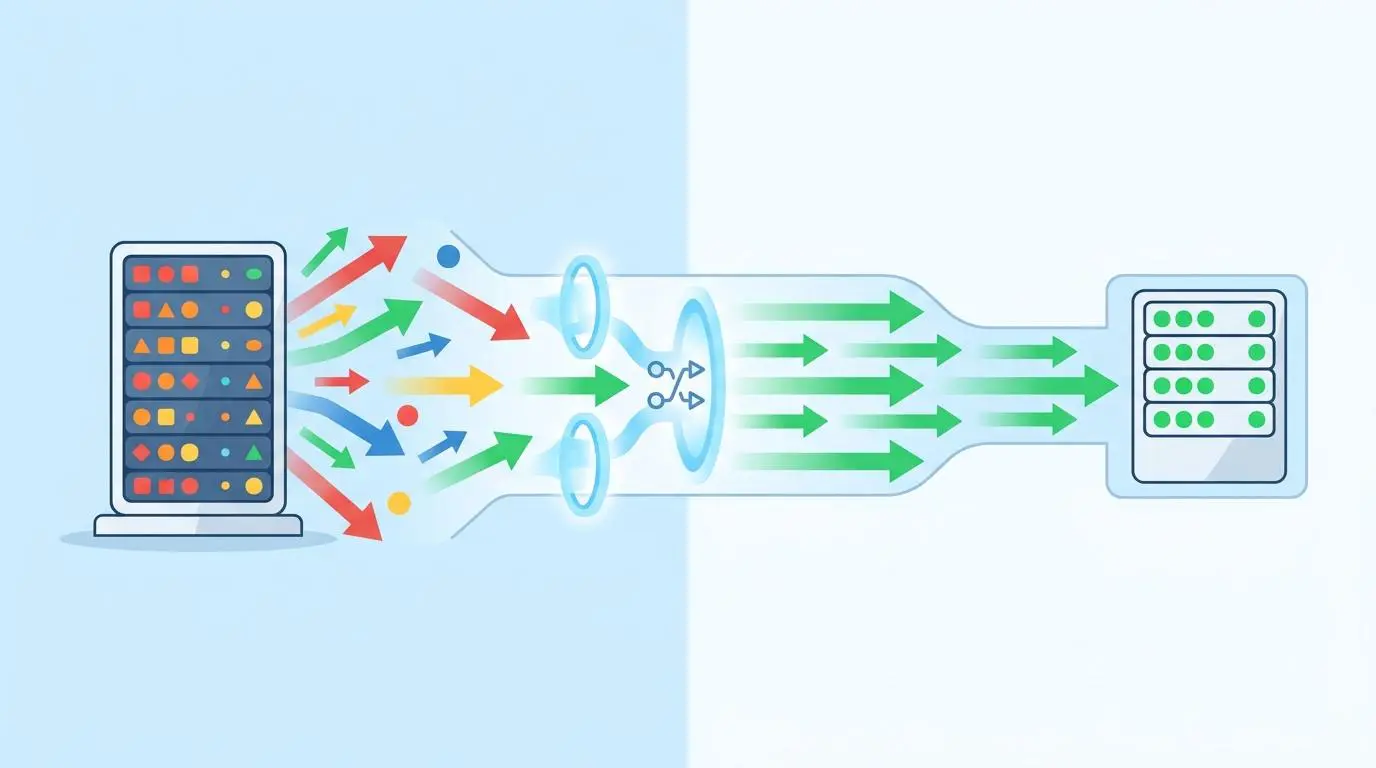
A high volume of 404 errors acts as a massive red flag to search engine algorithms. It signals poor site health and administrative neglect, which directly impacts how often bots visit your domain.
When Googlebot repeatedly encounters dead ends identified in server logs, it scales back its crawl frequency. This reduction in crawl budget means your newly published, revenue-generating content takes significantly longer to get indexed.
Automated 301 triggering aggressively reduces the error rate reported in Google Search Console. By instantly resolving broken inbound links at the edge, bots are immediately ushered to active, relevant pages.
Instead of wasting precious computational resources on broken paths, search engines spend their time crawling pages that actually drive business value. You effectively force the bots to stay within your profitable conversion funnels.
Forcing Instant Indexation
Relying solely on organic re-crawls for search engines to recognize a new 301 redirect is a losing game. It can take weeks or even months for bots to revisit deeply buried external referring pages.
To accelerate this discovery, we couple our automated edge redirects with the IndexNow API. The workflow is entirely event-driven and requires absolutely zero human intervention.
Once a detected broken link is remediated via a new 301 rule at the edge, the system fires an immediate webhook to IndexNow. This payload alerts search engines to the URL change instantly.
Automated pinging bypasses the traditional waiting period associated with link recovery. It forces search engines to update their internal link graphs and transfer the recovered equity without delay.
The Dawn of Autonomous Link Graphs
The current state of API-driven remediation is highly effective, but the architectural horizon is expanding rapidly. In the near future, the SEO industry will shift toward fully autonomous, self-healing link graphs.
Edge AI agents will actively analyze the referring page’s anchor text and surrounding context. They will then compare this data against the current site’s vector embeddings in real-time.
These agents will generate semantically perfect 301 destinations on the fly, completely eliminating the need for predefined mapping files or manual regex rules. The network itself will become intelligent enough to heal its own broken pathways.
Navigating the intersection of technical SEO, programmatic architecture, and workflow automation requires a sharp strategy. To future-proof your site’s architecture and scale with precision, connect with Andres at Andres SEO Expert.
Frequently Asked Questions
What is the Link Equity Decay Gap in SEO?
The Link Equity Decay Gap refers to the period between a high-value backlink breaking and its eventual remediation. During this time, the domain loses PageRank and crawl efficiency, as search engine bots encounter 404 errors instead of passing authority to active pages.
How does edge-integrated remediation improve redirect performance?
By using technologies like Cloudflare Workers, redirects are processed at the network edge rather than the origin server. This reduces latency to under 15ms and eliminates the need for heavy database queries, ensuring that link equity is transferred without bogging down site performance.
Why is manual redirect management insufficient for enterprise websites?
Manual monthly audits typically only retain about 62% of link equity because they allow 404 errors to persist for weeks. Automated remediation using API-driven pipelines allows for near-instant discovery and repair, retaining upwards of 98.4% of original link equity.
How does Ahrefs API v3 support link remediation workflows?
The Ahrefs API v3 allows developers to programmatically pull broken backlink data. This data can be integrated into Vercel Middleware or Netlify Edge Functions to automatically update redirect configurations whenever a high-value inbound link is flagged as broken.
What is the impact of 404 errors on a website’s crawl budget?
A high volume of 404 errors signals poor site health to search engines, causing them to reduce crawl frequency. By resolving these errors at the edge, you ensure search bots spend their computational resources crawling revenue-generating content rather than dead ends.
How does IndexNow help in recovering lost link equity?
IndexNow allows websites to instantly notify search engines of URL changes. When paired with automated edge redirects, it forces search engines to update their link graphs immediately, ensuring recovered equity is recognized without waiting for organic re-crawls.