Key Points
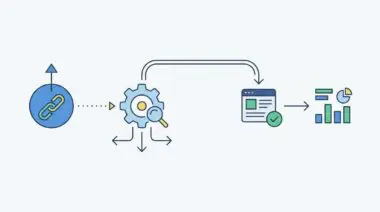
- Serverless DOM Injection: Leverage Cloudflare Workers and HTMLRewriter to inject OCR-extracted text directly at the edge, bypassing client-side JavaScript rendering limits.
- Automated Schema Mapping: Transform extracted strings into structured JSON-LD ImageObject properties, qualifying visual assets for Google Lens and Rich Product discovery.
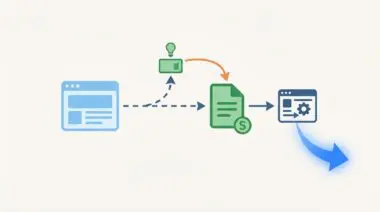
- Instant Indexation Pipelines: Utilize IndexNow 2.0 and Google Indexing API webhooks to trigger immediate re-crawls upon the generation of new text-overlay Shadow DOMs.
Table of Contents
The Invisible Cost of Visual Real Estate
The invisible tax on your visual-heavy e-commerce site extends far beyond server bandwidth. It is the massive graveyard of unindexed text trapped inside promotional banners, infographics, and hero images.
We call this the Dark Content bottleneck. Critical keyword data remains locked away inside non-semantic visual assets, rendering it completely invisible to search crawlers and AI agents.
For visual-heavy brands, this architectural flaw leads to a staggering loss in potential topical authority. You are essentially hiding your most persuasive marketing copy from the very algorithms tasked with ranking it.
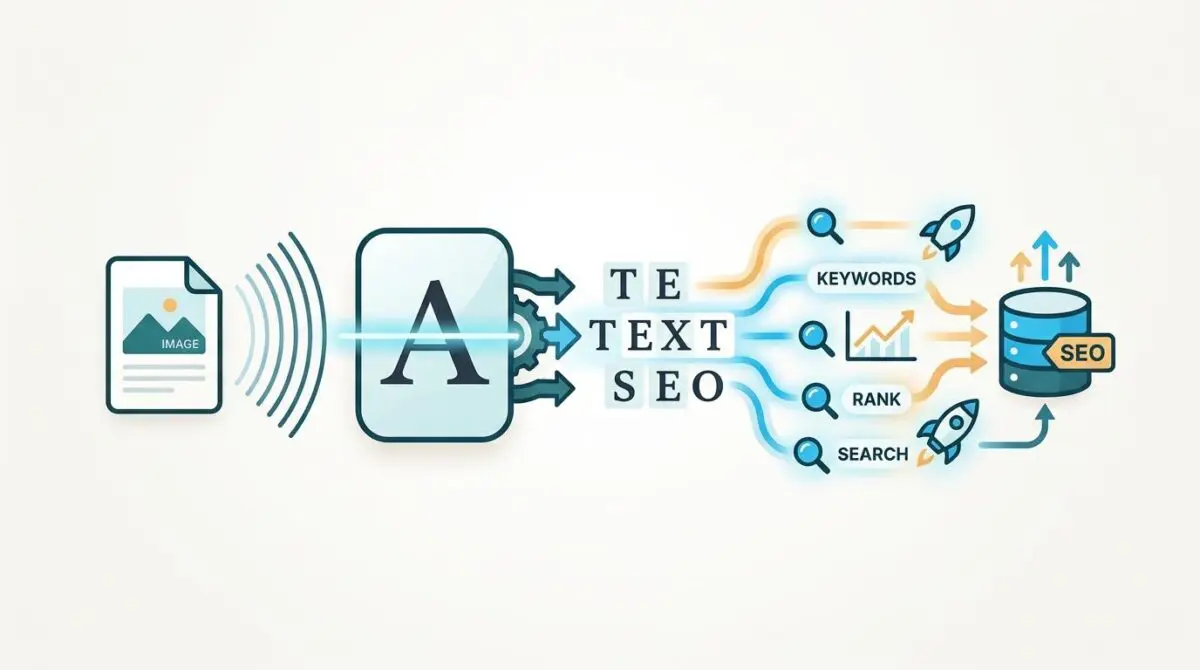
The definitive solution is Semantic Image Reconstruction executed via OCR-to-HTML Edge Overlays. By extracting visual text and injecting it back into the DOM as semantic HTML, we bridge the gap between human aesthetics and machine readability.
Latency vs. Accuracy in the Edge Era
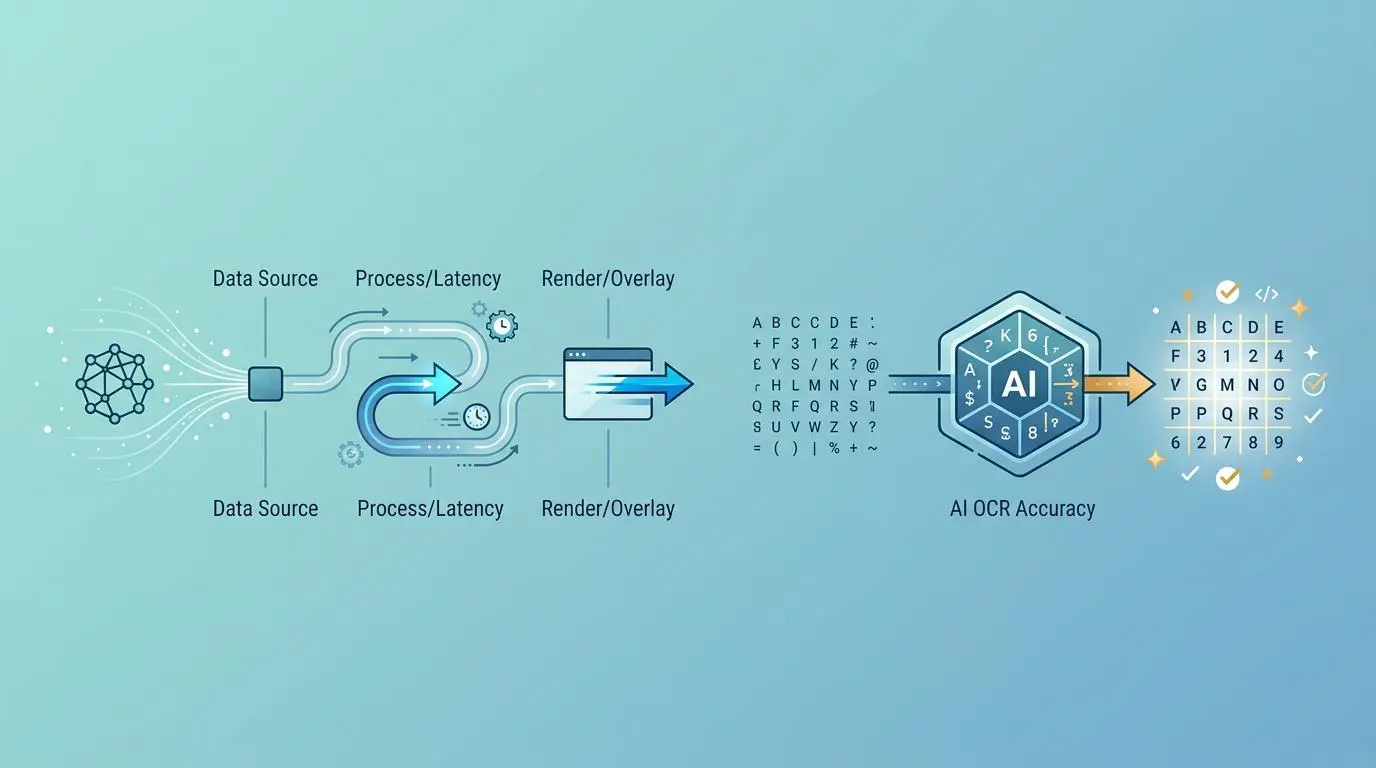
Speed and accuracy are the twin pillars of programmatic SEO architecture. When altering the DOM on the fly, you cannot afford to degrade the user experience or disrupt the crawl budget.
According to Cloudflare Engineering benchmarks from early 2026, executing HTML text-overlay injection via Workers adds an average of only 12ms to the Time to First Byte (TTFB). This negligible latency overhead means you can manipulate the HTML response in transit without penalizing the origin server.
Simultaneously, extraction fidelity has reached a critical inflection point. Recent industry reports confirm that modern AI-native OCR models have achieved 98% accuracy in extracting stylized brand typography.
This represents a massive increase over legacy standards. It makes automated text extraction reliable enough for enterprise deployment, ensuring that edge-injected overlays perfectly match the visual intent.
Deploying Serverless DOM Injection

Client-side JavaScript overlays are notoriously unreliable for SEO. They are frequently ignored during the initial rendering pass of search engines, leaving your semantic text undiscovered for weeks.
The modern architectural fix relies on edge SEO and server-side automation. By deploying Cloudflare Workers alongside the HTMLRewriter API, we can intercept the HTML response before it ever reaches the browser.
This serverless function parses the incoming HTML stream and injects the OCR-derived text overlays directly into the DOM. The semantic text is present in the initial HTML response, guaranteeing immediate discovery by search crawlers.
Furthermore, this workflow optimizes modern server-timing metrics. It ensures the origin server remains completely unburdened, offloading the heavy lifting to the global edge network.
High-Throughput Vision Pipelines
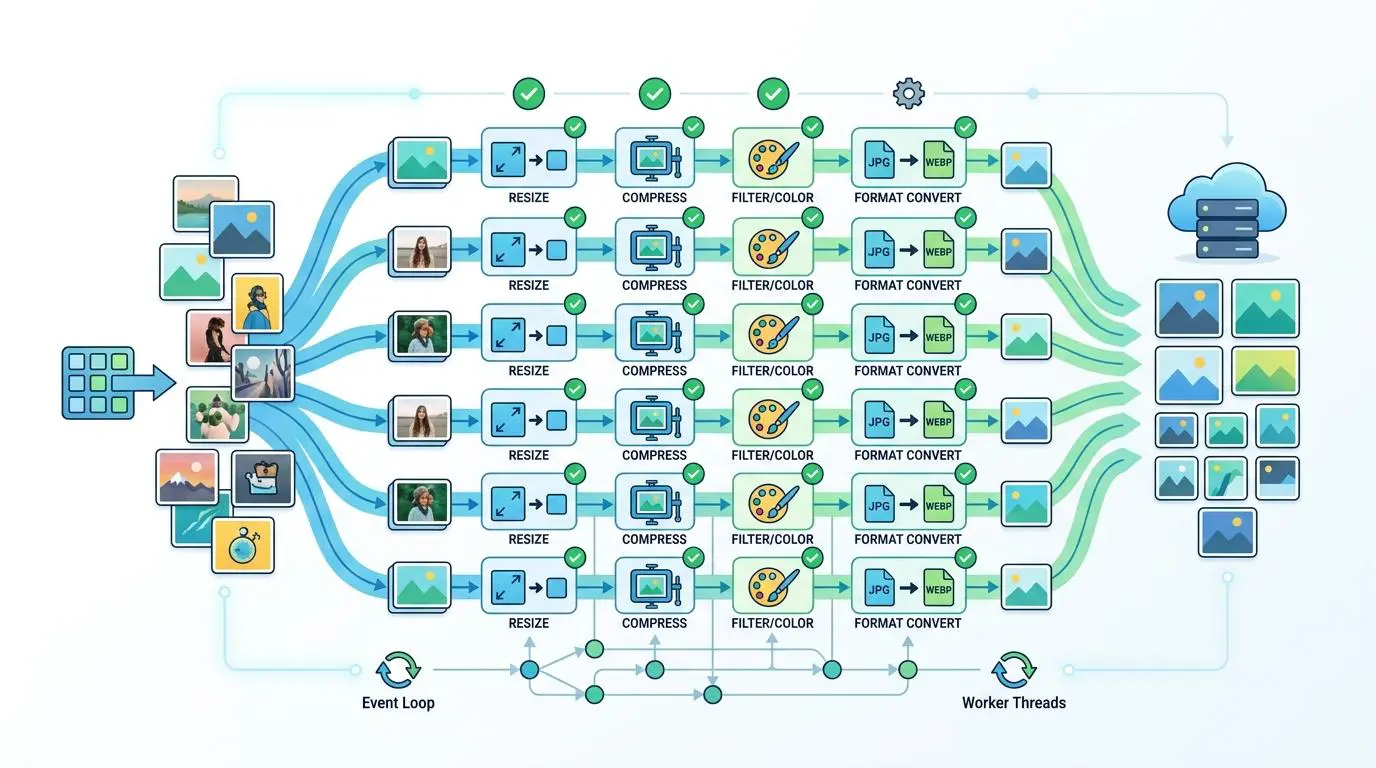
Legacy Digital Asset Management systems lack real-time OCR hooks. This forces content teams into manual alt-text entry, a process that completely fails to scale for e-commerce catalogs boasting hundreds of thousands of dynamic visual variants.
To solve this, we architect media optimization pipelines at scale. By integrating advanced vision AI models via a Node.js pipeline, we enable high-throughput batch detection.
This pipeline analyzes image buffers in real-time, calculating text-density thresholds and extracting strings with pinpoint coordinate accuracy. The data is then instantly formatted for edge injection.
This methodology is now a competitive necessity. Recent technical metrics specifically audit how well visual assets are structured for AI agents and LLM-based crawlers.
This marks a massive industry pivot. Accessibility-rich image containers are now a primary signal for AI search visibility, making high-throughput OCR pipelines mandatory for modern SEO.
JSON-LD Contextualization Engine
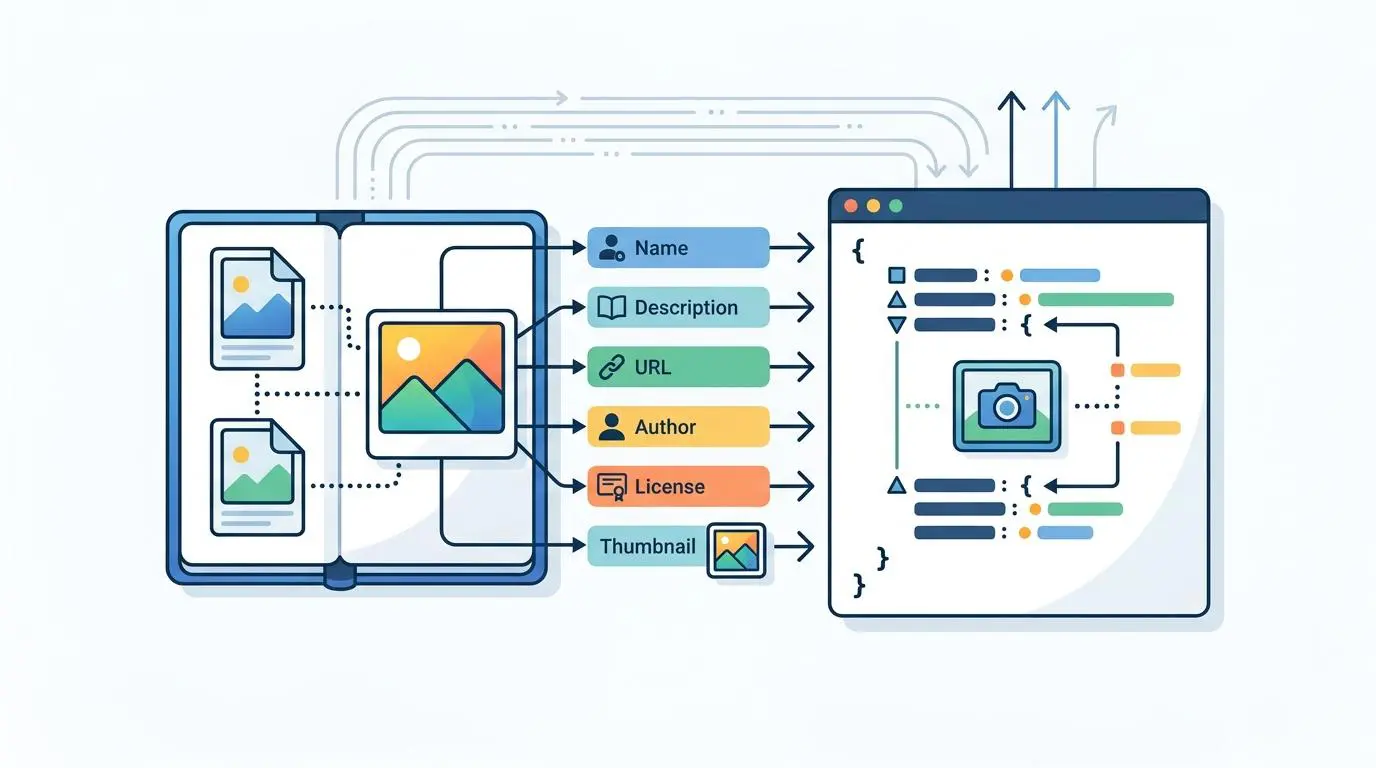
Extracting text is only half the battle. Without structured context, images are relegated to the generic abyss of standard image search.
To elevate these assets, we utilize schema markup and structured data automation. The OCR-extracted strings are programmatically mapped directly to Schema.org ImageObject properties.
We inject this data as JSON-LD, specifically targeting the caption and description attributes. This creates a dense web of context around the visual asset, clearly defining its relevance to the surrounding page content.
Connecting OCR data to structured schema unlocks massive visibility upgrades. It allows your visuals to qualify for Rich Product results and highly competitive visual discovery feeds.
Real-Time Indexation Triggers
Generating semantic HTML at the edge is useless if search engines do not know it exists. Historically, new visual content could take weeks to be parsed for text context by legacy crawling schedules.
We eliminate this waiting period by engineering aggressive indexing pipelines. The moment a text-overlay Shadow DOM is successfully generated at the edge, the system fires automated webhooks.
These webhooks leverage modern indexing protocols and APIs. They transmit exact URLs and timestamp payloads directly to the search engines.
This automated pinging architecture ensures that OCR-enhanced pages are re-crawled within minutes. It forces the algorithms to immediately digest the newly accessible semantic data.
The Transition to Generative SVG
While OCR-to-HTML overlays represent the pinnacle of current edge SEO, the architectural horizon is rapidly evolving. The industry is shifting entirely toward Generative SVG Reconstruction.
In this near-future paradigm, AI agents will programmatically convert rasterized, text-heavy images into lightweight, fully semantic SVG code. This will eliminate the need for overlays entirely.
These generative SVGs will be fully crawlable, interactive, and inherently accessible, all while maintaining pixel-perfect brand aesthetics. It will mark the final eradication of the Dark Content bottleneck.
Navigating the intersection of technical SEO, programmatic architecture, and workflow automation requires a sharp strategy. To future-proof your site’s architecture and scale with precision, connect with Andres at Andres SEO Expert.
Frequently Asked Questions
What is semantic image reconstruction for SEO?
Semantic image reconstruction is a process that uses OCR-to-HTML edge overlays to extract unindexed text from visual assets—such as banners and infographics—and inject it back into the DOM. This converts ‘Dark Content’ into machine-readable HTML, allowing search crawlers and AI agents to index information that was previously invisible.
How do edge-injected overlays affect site performance and latency?
According to 2026 Cloudflare Engineering benchmarks, executing HTML text-overlay injection via edge workers adds a negligible average of 12ms to the Time to First Byte (TTFB). This allows for real-time DOM manipulation without penalizing origin server performance or user experience.
Why is server-side injection better than client-side JavaScript for indexing?
Client-side JavaScript overlays are often ignored during the initial rendering pass of search engines. Server-side or edge injection ensures that semantic text is present in the initial HTML response, guaranteeing immediate discovery and indexation by search crawlers and AI agents.
What is the Cloudflare Agent Readiness Score?
The Agent Readiness Score is a technical metric introduced in 2026 that audits how well a site’s visual assets are structured for AI agents and LLM-based crawlers. High-throughput OCR pipelines and accessibility-rich image containers are essential for maintaining a high score and ensuring AI search visibility.
How does structured data improve image visibility in search?
By programmatically mapping OCR-extracted text to Schema.org ImageObject properties via JSON-LD, sites can define the precise context of visual assets. This enables images to qualify for Rich Product results and highly competitive discovery feeds like Google Lens.
What is the future of semantic visual content beyond 2026?
The industry is transitioning toward Generative SVG Reconstruction. By 2027, AI agents will likely convert rasterized images into lightweight, fully semantic SVG code. This evolution will eliminate the need for overlays by making images inherently crawlable, interactive, and accessible to all search engines.