Key Points
- Yield Lag Elimination: Deploying Real-Time Dynamic Interest Rate Engines prevents multi-million dollar Net Interest Margin leakage by instantly matching central bank adjustments.
- Instant Data Pipelines: Utilizing Apache Kafka and ISO 20022 protocols synchronizes central bank webhooks directly with retail ledgers to eliminate data silos.
- Predictive Autonomous Banking: Agentic AI infrastructure allows modern institutions to front-run policy shifts through real-time sentiment analysis of economic data.
Table of Contents
The Yield Lag Penalty
Imagine the Federal Reserve announcing an unexpected rate hike. While your treasury committee scrambles to schedule a meeting, agile neobanks have already updated their yields and are actively poaching your top depositors.
This 48-to-72 hour manual delay is widely known across the financial sector as the Yield Lag penalty.
Every minute spent waiting for batch processing or manual approvals translates directly into multi-million dollar Net Interest Margin leakage.
Modern customers simply move their liquidity to platforms that reflect the new economic reality instantly.
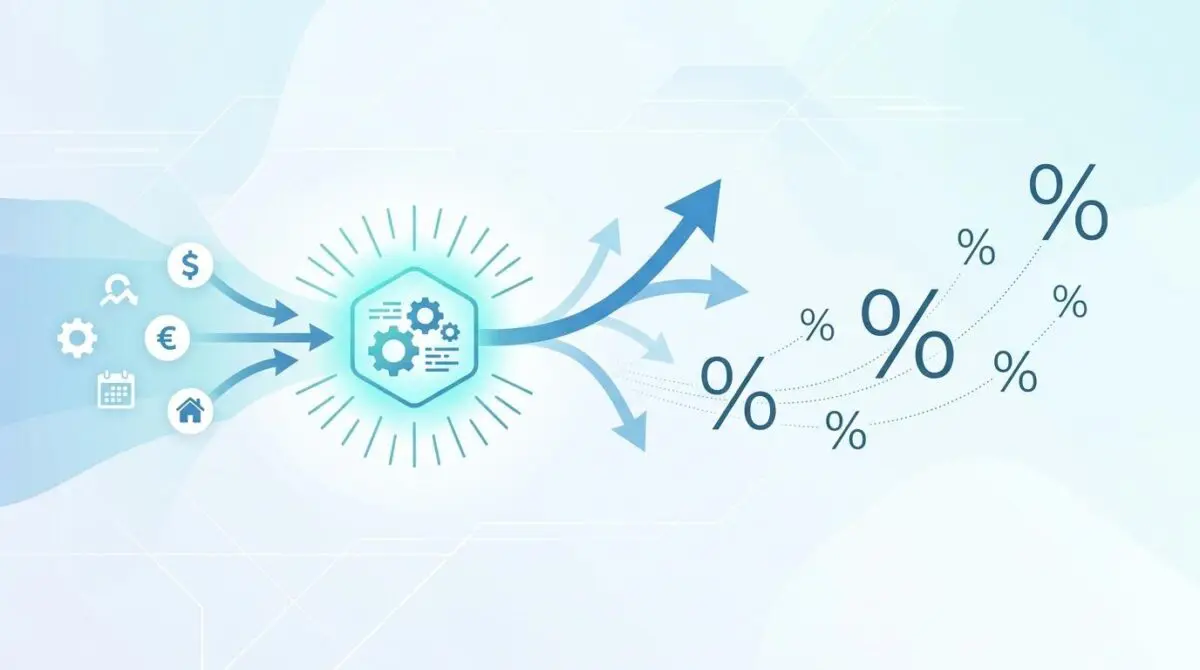
The ultimate solution to this massive operational vulnerability is deploying Real-Time Dynamic Interest Rate Engines (DIRE).
These intelligent systems eliminate human bottlenecks and connect your core banking ledger directly to central bank policy shifts.
Quantifying the Speed Advantage
Market Intelligence & Data
Fintech Deposit Growth
According to the 2026 BCG Global Fintech Report, the deposit segment grew by 30% in 2025 for firms utilizing real-time automated interest engines, significantly outpacing traditional incumbents.
Annual Productivity Impact
McKinsey’s 2025 analysis on Agentic AI in banking estimates that process automation will generate up to $340 billion in annual productivity gains across the industry by 2026.
Automation Market CAGR
A 2026 Global Strategic Business Report from ResearchAndMarkets projects the financial automation market to grow at a CAGR of 15.1% through 2032.
Profitability Gains
According to 2026 fintech metrics reported by the World Economic Forum, 75% of fintech firms reported significant improvements in both cost reduction and profitability after deploying automated AI process engines.
The 30% surge in fintech deposit growth is neither an accident nor a temporary market anomaly.
Firms leveraging automated interest engines are systematically capturing the flight to yield by offering updated rates milliseconds after a policy shift.
This unprecedented speed transforms a standard savings account into a highly liquid, market-responsive asset.
The broader economic implications of this technological shift are truly staggering.
In fact, McKinsey estimates that AI could add up to $340 billion in global value annually to banking.
This immense value is generated by shifting human capital away from repetitive treasury tasks toward strategic asset allocation.
This operational pivot clearly explains the projected 15.1% compound annual growth rate for financial automation.
Institutions are quickly realizing that manual rate adjustments are no longer a viable operational model.
Investing in real-time middleware has become a baseline survival imperative rather than a luxury upgrade.
Ultimately, the bottom line tells the most compelling story about automation.
A recent World Economic Forum report finding 75% of fintechs achieved cost reduction and higher profitability proves that eliminating manual rate tables fundamentally transforms unit economics.
Automated parity engines drastically reduce overhead while simultaneously driving rapid customer acquisition.
Bypassing Legacy Batch Delays
Traditional banks currently rely on manual treasury committees and legacy core banking systems that often require overnight batch processing.
This sluggish manual review cycle creates a massive competitive window for agile neobanks.
Digital challengers can easily poach customers by offering updated yields within milliseconds of a policy announcement.
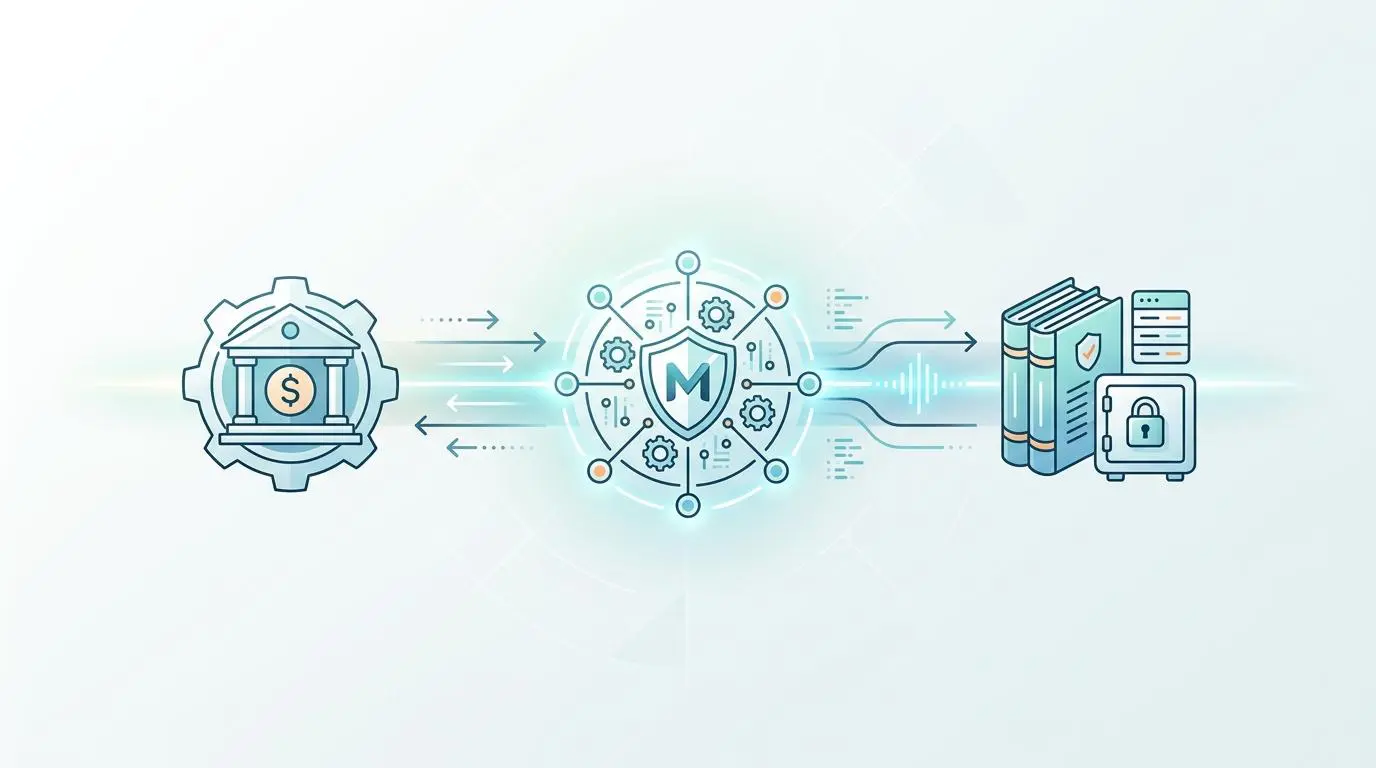
Real-time parity is now achieved through API-first middleware that monitors daily rate sheets like the Fed’s H.15 reports.
By intercepting these critical signals instantly, modern banking cores can adjust retail rates entirely without human intervention.
Building Instant Ledger Pipelines

Data silos between treasury management systems and customer-facing retail apps cause major operational friction.
These internal disconnects often lead to inconsistent rate displays and severe regulatory reporting errors.
Direct API integration with central bank data feeds completely bypasses these fragmented internal systems.
Modernizing your data pipeline requires three core technical components:
- ISO 20022 Protocols: Ensures universal data formatting across fragmented global banking networks.
- Event Streaming: Utilizes Apache Kafka to push real-time central bank webhook data directly to ledgers.
- API Middleware: Eliminates data silos between legacy treasury management systems and modern retail apps.
Safeguarding Against Volatility

Execution speed must always be balanced with structural safety during high-volatility market events.
Rate limit triggers and API timeouts during unexpected emergency hikes can freeze the update pipeline entirely.
To mitigate this risk, institutions deploy sophisticated circuit-breaker logic written in Python to manage fintech scripts.
These automated sanity check gates are specifically designed to prevent catastrophic fat-finger errors.
A simple decimal placement error could otherwise set interest rates to mathematically unsustainable levels.
Transparent Compliance Models
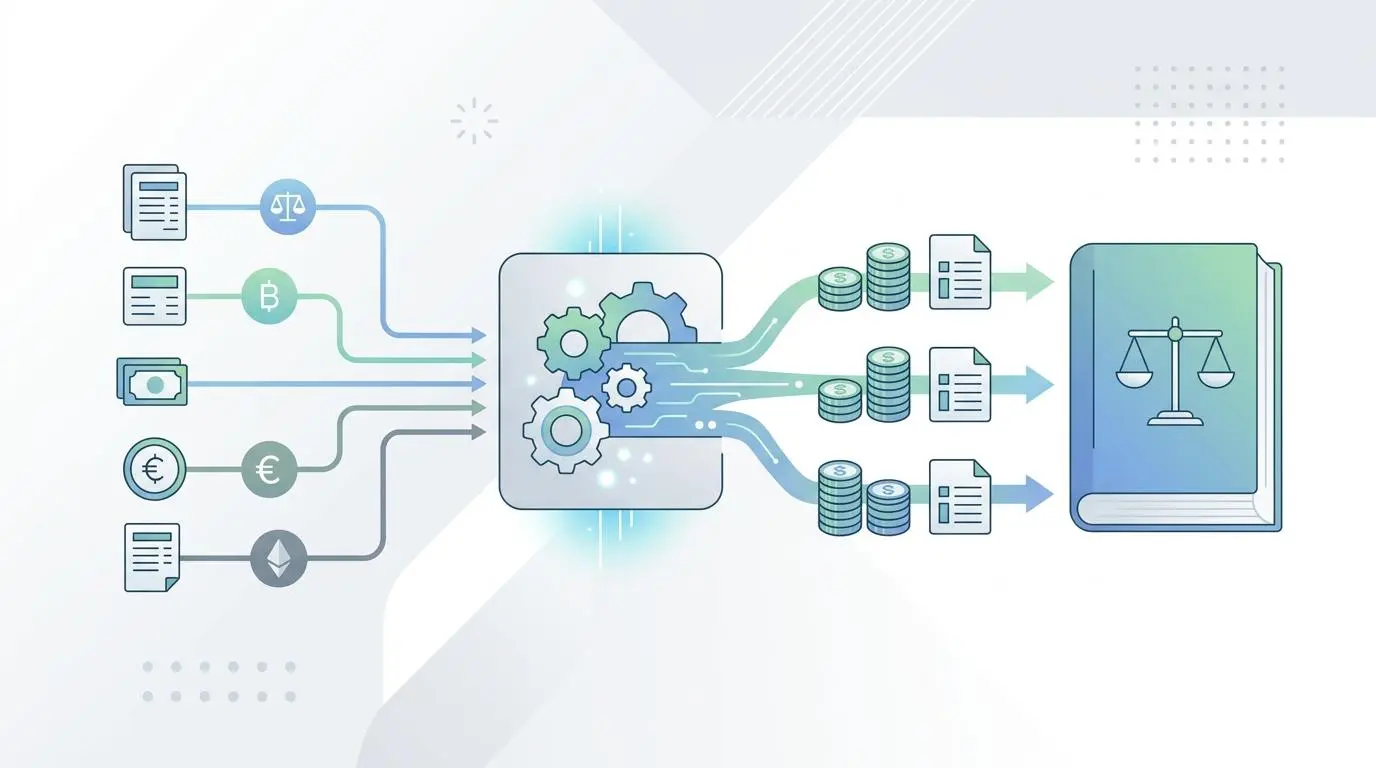
Proving to regulators that automated adjustments are non-discriminatory remains a massive hurdle.
Banks must guarantee that their algorithms align with fair-lending and savings mandates in real-time.
Immutable audit trails generated via Hyperledger or Corda provide the necessary mathematical proof for compliance.
Regulatory oversight is further managed through Explainable AI models.
These advanced models clearly document the specific logic used for every automated rate change to satisfy stringent bank examiners.
The True Cost of Manual Updates
The immense labor cost of manual treasury management is quietly draining valuable institutional resources.
Compliance and marketing teams spend thousands of hours manually updating localized rate tables and disclosures.
Transitioning from End-of-Day processing to instant-on-action triggers completely eliminates this wasted effort.
Automated Ledger Adjustment software fundamentally rewrites the operational cost structure for modern banks.
Furthermore, it drives a massive reduction in support ticket volume related to customer rate parity inquiries.
Predictive Yield Hedging
The rigidity of one-size-fits-all rates fails to maximize the value of high-liquidity individual depositors.
Hyper-personalized Rate-of-One banking is rapidly becoming the new industry standard.
Agentic AI has evolved from generative experimentation to being embedded directly in core banking infrastructure.
According to recent industry reports, these intelligent agents autonomously reconcile accounts and initiate ledger updates in real-time.
The convergence of Agentic AI and direct Federal Reserve Master Account access will soon enable predictive yield hedging.
Banks will automatically front-run central bank policy shifts by parsing raw sentiment from live-streamed governor speeches.
The Autonomous Banking Horizon
The era of waiting for treasury committees to manually approve yield adjustments is officially over.
Institutions that fail to adopt real-time dynamic engines will continue to bleed deposits to faster competitors.
Embracing event-driven architecture ensures that your banking infrastructure operates at the speed of the global market.
Navigating the intersection of technology, workflows, and operational efficiency requires a sharp strategy. To future-proof your business architecture and scale with precision, connect with Andres at Andres SEO Expert.
Frequently Asked Questions
What is the yield lag penalty in banking?
The yield lag penalty refers to the 48-to-72 hour manual delay between a central bank interest rate hike and a financial institution’s update to its retail yields. This delay creates an operational vulnerability that leads to Net Interest Margin (NIM) leakage and depositor flight to more agile competitors.
How do Dynamic Interest Rate Engines (DIRE) work?
Real-Time Dynamic Interest Rate Engines (DIRE) utilize API-first middleware to monitor central bank data feeds, such as the Federal Reserve’s H.15 reports. These systems bypass legacy batch processing and manual committee reviews, automatically updating core banking ledgers in milliseconds.
What technical protocols are needed for real-time ledger updates?
To build instant ledger pipelines, banks must implement ISO 20022 protocols for standardized data formatting, Apache Kafka for real-time event streaming, and robust API middleware to eliminate data silos between legacy treasury systems and customer-facing apps.
How does automation ensure regulatory compliance for interest rate changes?
Automated rate adjustments are secured through immutable audit trails on platforms like Hyperledger or Corda. Additionally, Explainable AI (XAI) models provide the necessary logic documentation to prove to bank examiners that automated changes align with fair-lending and savings mandates.
What is the role of Agentic AI in future banking infrastructure?
Agentic AI is evolving to handle autonomous account reconciliation and predictive yield hedging. By parsing real-time sentiment from central bank speeches and data feeds, these agents can initiate ledger updates to front-run policy shifts, enabling hyper-personalized “Rate-of-One” banking.
Can automated rate engines prevent errors during market volatility?
Yes, institutions deploy circuit-breaker logic and automated sanity check gates written in Python. These safeguards manage API timeouts and rate limit triggers during emergency market events, preventing “fat-finger” errors and mathematically unsustainable rate placements.