Key Points
- Employee Experience (EX) Platforms have evolved into proactive ‘Work OS’ layers, utilizing multimodal AI to eradicate the costly ‘Context-Switching Tax’ and neutralize hybrid disconnection.
- Smart capital is aggressively backing ‘Agentic HR Tech’ and ‘Neural-EX’ startups that leverage biometrics, gaze-tracking, and predictive analytics to optimize cognitive load and prevent burnout.
- Leading enterprises are deploying ‘Digital Twins’ and ‘Proactive Career Synthesis’ to simulate team dynamics and predictively retain top talent months before they consider leaving.
Table of Contents
The Core Friction: Eradicating the Context-Switching Tax
According to the 2026 Deloitte Global Human Capital Trends report, 74% of organizations now view ‘Employee Experience Orchestration’ as their primary driver for operational resilience. This surpasses traditional digital transformation for the first time.
This staggering shift in executive priority highlights a fundamental realization in the modern boardroom. The enterprise tech stack has become a labyrinth of fragmented tools, creating a hostile digital environment for top talent.
We are no longer dealing with simple software fatigue. We are facing a systemic crisis of cognitive overload.
At the center of this crisis is the ‘Context-Switching Tax’. This hidden operational hemorrhage costs the average enterprise millions in lost productivity every single quarter.
Employees are forced to jump between 20 or more disconnected applications just to execute basic daily functions. Every time an engineer or executive shifts from a project management tool to a communication channel, valuable cognitive momentum is destroyed.
Modern Employee Experience (EX) Platforms have emerged as the definitive solution to this friction. They no longer function as passive HR portals for requesting time off or submitting generic engagement surveys.
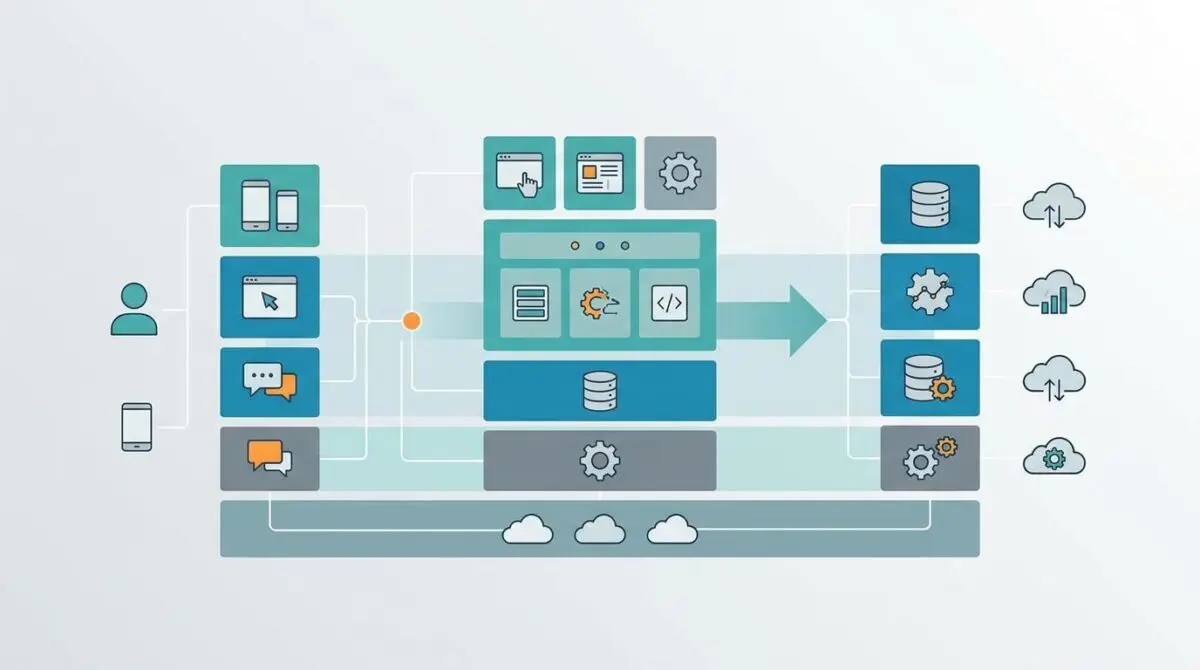
Instead, they act as a unified ‘Work OS’ layer that abstracts backend complexity. This provides a single, frictionless source of truth for the employee.
By centralizing the digital workspace, these platforms drastically reduce the cognitive friction required to navigate the enterprise. Furthermore, they directly address the ‘Hybrid Disconnection’ problem that plagued the early 2020s.
Utilizing advanced spatial computing and asynchronous collaboration tools, modern EX platforms ensure that remote workers remain deeply integrated into the social and cultural fabric of the company.
This seamless integration has effectively neutralized the 2024-era ‘Quiet Quitting’ phenomenon. When the digital friction is removed, employees can redirect their energy toward deep, meaningful work rather than administrative navigation.
The EX platform becomes the invisible scaffolding that supports peak human performance.
Market Intelligence: The Smart Capital Migration
Market Intelligence & Data
Market Valuation
IDC reports the global EX platform market reached $18.4 billion in Q1 2026, driven by a 22% CAGR in AI-native solutions.
AI-First Adoption
According to a 2026 Gartner survey, 89% of Fortune 500 CEOs have prioritized ‘Agentic EX’ as a top-three investment for the fiscal year.
ROI Multiplier
A 2026 McKinsey analysis found that companies using predictive EX analytics achieve 2.8x higher profit margins compared to traditional HR-tech users.
Venture Inflow
Data from Bloomberg Beta indicates that $6.1 billion was deployed into EX-focused startups in the first five months of 2026.
The financial data surrounding Employee Experience (EX) Platforms reveals a massive migration of smart capital. We are witnessing the rapid obsolescence of legacy Human Capital Management systems.
Investors are aggressively funding cognitive infrastructure that actively manages human output.
As reflected in recent industry surveys, the vast majority of enterprise leaders are pivoting hard toward these agentic, AI-first systems. They recognize that the traditional workplace architecture is fundamentally broken and requires algorithmic intervention.
This is not merely an HR upgrade. It is a complete restructuring of how enterprise value is generated.
The influx of venture capital into this space signals a clear paradigm shift. Smart money is betting that the future of enterprise software is intrinsically linked to the psychological and operational well-being of the user.
Organizations that successfully deploy these platforms are already seeing the financial benefits. By optimizing the digital environment, these companies are achieving higher profit margins and establishing an insurmountable competitive moat.
The Rise of Hyper-Aggregators
Market dominance is currently held by a group known as ‘The Hyper-Aggregators’—tech behemoths like Microsoft Viva, ServiceNow, and Salesforce.
These companies are executing ruthless acquisition strategies to consolidate the EX landscape. They are actively buying up niche AI startups that focus heavily on ‘Contextual Productivity’.
The goal of these Hyper-Aggregators is to build inescapable walled gardens of enterprise efficiency. By owning every touchpoint of the employee journey, they can capture unprecedented amounts of digital telemetry.
This data is then used to train increasingly sophisticated workplace models.
For the enterprise buyer, this consolidation offers a compelling proposition. Instead of stitching together dozens of point solutions, they can purchase a unified ecosystem.
However, this also creates a high-stakes vendor lock-in scenario where the EX platform dictates the operational rhythm of the entire organization.
Strategic Deep Dive: From HCM to Agentic HR Tech
The evolution from generic Human Capital Management to ‘Agentic HR Tech’ represents the most significant leap in workplace technology in a decade.
We have officially moved away from passive engagement surveys that measure historical dissatisfaction. The new mandate is ‘Proactive Orchestration’, where the system actively intervenes to optimize the employee experience.
Enterprises are now deploying AI-driven ‘Workplace Agents’ that anticipate employee needs with eerie precision. These agents seamlessly handle everything from automated calendar scheduling to real-time skill-gap bridging.
If an employee is assigned a project requiring a new coding language, the agent automatically curates and delivers the necessary micro-learning modules.
A critical ‘killer strategy’ in this space is the integration of multimodal AI. This technology continuously analyzes sentiment and workflow patterns across Slack, Teams, and email.
By monitoring these communication channels, the AI can detect early signs of fatigue and trigger ‘wellness micro-interventions’ before actual burnout occurs.
This creates a hyper-personalized digital environment tailored to individual cognitive loads. If the system detects that an engineer has been in back-to-back intense meetings, it will automatically block out focus time on their calendar.
It is a proactive defense mechanism for human capital.
Neural-EX and Biometric Optimization
The frontier of this technology is moving into deeply personal territory. Significant venture capital from firms like Sequoia and Andreessen Horowitz is flowing into ‘Neural-EX’ startups.
These highly advanced platforms leverage biometrics and gaze-tracking to optimize deep focus and flow states.
While controversial, the business impact of Neural-EX is undeniable. By understanding exactly when an employee is operating at peak cognitive capacity, the platform can intelligently route tasks and block intrusive notifications.
It transforms the unpredictable nature of human focus into a manageable, quantifiable metric.
Smart money is betting heavily on this ‘quantified employee’ model. The belief is that the next massive leap in enterprise productivity will not come from better software features, but from better biological alignment with the work itself.
Neural-EX represents the ultimate convergence of human physiology and digital workflow.
Proactive Orchestration and Predictive Retention
In this new algorithmic era, employee retention is no longer a reactive HR function. It has become a predictive science.
Data from a leaked 2026 internal Apple leadership audit reveals the company has reduced turnover in its high-stakes R&D divisions by 55% using ‘Proactive Career Synthesis.’
This AI system identifies and offers new project roles to engineers 180 days before they internally signal a desire for a change.
This level of foresight fundamentally alters the talent landscape. By analyzing subtle shifts in code commit velocity, meeting participation, and internal communication patterns, the AI can predict career stagnation months in advance.
It then automatically curates a compelling internal mobility offer, effectively neutralizing external recruiters.
This proactive methodology perfectly aligns with the broader industry movements detailed in the Deloitte Global Human Capital Trends report, which emphasizes the critical need for predictive talent orchestration.
Companies that wait for an employee to hand in a resignation letter have already lost the war for talent. The future belongs to organizations that can algorithmically predict and fulfill employee aspirations before they are even articulated.
The Executive Action Plan: Building the Algorithmic Talent Marketplace
Strategic Trajectory
- Prepare organizational infrastructure for the transition to an Algorithmic Talent Marketplace.
- Implement Digital Twins of employees to simulate team dynamics and project success rates prior to recruitment.
- Integrate Human Capital Predictive Analytics to treat employee sentiment as a leading financial performance indicator.
- Utilize real-time innovative energy data to forecast and adjust quarterly business performance targets.
Founders and enterprise executives must immediately prepare their organizational infrastructure for the ‘Algorithmic Talent Marketplace’. The days of static org charts and rigid job descriptions are over.
The modern enterprise must operate as a fluid, AI-driven marketplace where skills are dynamically matched to high-priority initiatives.
The next major evolution involves EX platforms that utilize ‘Digital Twins’ of employees. These sophisticated digital replicas allow leadership to simulate complex team dynamics before a single hire is made.
By mapping psychological profiles and complementary skill adjacencies, executives can algorithmically guarantee project success rates.
Furthermore, CEOs must begin integrating ‘Human Capital Predictive Analytics’ into their core financial planning.
By late 2026, raw employee sentiment data will no longer be viewed as a soft HR metric. It is now treated as a leading financial indicator, directly correlated with future revenue.
This allows leadership to forecast quarterly performance based on the real-time ‘innovative energy’ within their workforce.
If the EX platform detects a dip in organizational momentum, executives can adjust revenue targets and operational strategies proactively. Human capital is finally being measured with the same mathematical rigor as capital allocation.
Conclusion: The Future of Human Capital
The transformation of Employee Experience (EX) Platforms from passive portals into aggressive, AI-driven orchestration layers marks a permanent shift in business strategy.
We are moving toward a reality where the digital workspace actively manages, protects, and optimizes the human mind. The companies that embrace this algorithmic approach to human capital will secure an insurmountable advantage in the market.
Those who cling to legacy HR systems and fragmented tech stacks will suffer from continuous talent drain and operational friction.
The future of enterprise dominance belongs to the organizations that can seamlessly blend multimodal AI, predictive analytics, and proactive orchestration into a unified digital experience.
Navigating the intersection of technology, capital, and market psychology requires a sharp strategy. To future-proof your business architecture and scale with precision, connect with Andres at Andres SEO Expert.
Frequently Asked Questions
What is the Context-Switching Tax in the modern workplace?
The Context-Switching Tax refers to the hidden operational hemorrhage and productivity loss caused by employees constantly toggling between disconnected applications. In an enterprise setting, this cognitive overload destroys momentum and is estimated to cost organizations millions in lost efficiency every quarter.
How do Employee Experience (EX) Platforms function as a Work OS?
Modern EX Platforms serve as a unified ‘Work OS’ layer that abstracts the complexity of fragmented backend tools. By providing a single, frictionless source of truth, these platforms reduce cognitive friction, integrate hybrid teams, and centralize the digital workspace into an invisible scaffolding for peak performance.
What is the difference between legacy HCM systems and Agentic HR Tech?
Legacy Human Capital Management (HCM) systems are typically passive portals used for historical data and administrative tasks. In contrast, Agentic HR Tech uses AI-driven ‘Workplace Agents’ to proactively orchestrate the employee journey, anticipating needs such as skill-gap bridging, wellness interventions, and automated scheduling in real-time.
How does Neural-EX utilize biometrics to optimize employee focus?
Neural-EX is a frontier technology that leverages biometrics and gaze-tracking to monitor an employee’s cognitive capacity. By identifying peak flow states, the platform can intelligently route high-priority tasks and block intrusive notifications, aligning digital workflows with human biological rhythms.
Can AI-driven platforms predict employee turnover before it occurs?
Yes, advanced EX systems use predictive analytics to identify ‘Proactive Career Synthesis’ opportunities. By analyzing subtle shifts in communication patterns and work velocity, these systems can forecast career stagnation and turnover risk up to 180 days in advance, allowing leaders to offer internal mobility before an employee resigns.
What role do Hyper-Aggregators play in the EX market?
Hyper-Aggregators, such as Microsoft Viva, ServiceNow, and Salesforce, are consolidating the market by acquiring niche AI startups. Their goal is to build comprehensive ecosystems that capture digital telemetry across the entire employee journey, providing a unified but high-stakes vendor-locked environment for efficiency.