
Key Points
- Proactive Vulnerability Discovery: Ethical Hacking (Offensive Security) identifies critical system flaws before malicious actors can exploit them, closing the disastrous 200-day vulnerability gap.
- AI-Driven Continuous Testing: Modern offensive security leverages multi-agent AI and synthetic attackers to provide 24/7, real-time validation of your entire attack surface.
- Preventing Triple Extortion: Investing in continuous threat exposure management shields businesses from catastrophic brand erosion, data leaks, and devastating ransomware payouts.
Table of Contents
- The Invisible Window Open in Your Server Room
- The True Price Tag of Reactive Security
- Outpacing the Vulnerability Fatigue Loop
- The Master Locksmith Analogy
- Calculating the Triple Extortion Tax
- Deploying Synthetic Attackers at Scale
- Beyond the Automated Vulnerability Scan
- Mapping the 2026 Attack Surface
- Securing the Perimeter of Tomorrow
The Invisible Window Open in Your Server Room
Imagine a state-of-the-art bank vault with a titanium front door, but a small side window left unlatched by a contractor. This mirrors the exact reality for modern IT networks suffering from a catastrophic vulnerability gap. Organizations routinely deploy brilliant software while leaving backdoors wide open for malicious actors.
This dangerous window of opportunity exists because traditional IT departments remain stuck in a reactive loop. They build firewalls, monitor traffic, and simply wait for alarms to sound. By the time an alert finally triggers, the adversary is already inside the network extracting sensitive data.
Forward-thinking organizations are adopting ethical hacking as their primary defense mechanism to close this gap. Instead of waiting for a breach, they actively attack their own infrastructure to uncover hidden weaknesses. This proactive methodology transforms a passive IT posture into a hardened digital fortress.
The True Price Tag of Reactive Security
Market Intelligence & Data
Annual Cybercrime Cost
According to the 2025 Cybersecurity Ventures report, global cybercrime costs are projected to hit this record high annually by the end of 2025.
Average Breach Cost
The IBM Cost of a Data Breach Report 2025 indicates that the average cost per incident has risen significantly, necessitating proactive ethical hacking investments.
AI-Driven Pen-Testing
A 2026 Gartner survey revealed that 42% of mid-to-large enterprises have fully integrated AI-powered ethical hacking tools into their security stacks.
Pen-Testing Market Value
MarketsandMarkets forecasts that the global penetration testing market will reach this valuation by December 2026 as compliance requirements tighten.
The staggering projection of a $10.5 trillion annual cybercrime cost by 2025 is far more than a macroeconomic statistic. It represents a direct and aggressive wealth transfer from legitimate enterprises to organized digital syndicates. Businesses operating without a continuous offensive security strategy are effectively subsidizing this shadow economy.
With the average breach cost reaching $5.21 million, the financial fallout of a compromised network threatens the very existence of mid-market companies. This immense cost accumulates because internal IT teams remain blind to exploitable security flaws for an average of 200+ days. That open window provides adversaries with unrestricted time to map architectures and extract sensitive data.
The industry is rapidly shifting toward automation to combat this massive dwell time. Today, 42% of enterprises are integrating AI-driven penetration testing into their core operations. Relying on manual audits once a year is no longer sufficient to protect dynamic cloud environments.
Artificial intelligence allows security teams to continuously validate their defenses against evolving threat vectors in real time. As compliance mandates tighten globally, the penetration testing market is surging toward a $4.5 billion valuation by 2026. This investment is fundamentally about preventing catastrophic brand erosion.
The reality of modern cyber warfare is incredibly unforgiving. In fact, 60% of small businesses close within six months following a major data breach due to irreparably broken customer trust.
Outpacing the Vulnerability Fatigue Loop

Modern businesses deploy software updates and new cloud applications much faster than their security teams can audit them. This rapid deployment cycle inevitably leads to severe vulnerability fatigue across the entire IT department. Teams become overwhelmed by endless alerts, making it impossible to prioritize critical threats.
Ethical hackers utilize sophisticated toolkits to cut through this noise and identify actual points of entry. Software platforms are deployed to scan, intercept, and manipulate web traffic to find exploitable logic flaws. These tools help security professionals navigate the staggering 25,000 new vulnerabilities published annually.
Organizations break free from the reactive loop of fixing holes after a breach by adopting an offensive security mindset. Ethical hacking prioritizes remediation based on real-world exploitability rather than theoretical risk. This ensures engineering teams spend their time patching the exact vulnerabilities a malicious actor would use.
The Master Locksmith Analogy
Complex cybersecurity jargon often prevents business leaders from understanding the true value of proactive defense. Many executives mistakenly view offensive security as an unnecessary risk or a disruptive threat to daily operations. To bridge this communication gap, it helps to look at the process through a simpler lens.
Ethical hacking is exactly like hiring a master locksmith to break into your house while you sit safely inside. The locksmith does not steal your valuables or damage your property during the assessment. They simply push on the windows, pick the deadbolts, and map out exactly how a real burglar would gain entry.
Once the assessment is complete, the locksmith hands you a detailed report showing which door locks are flimsy. They also highlight which alarm sensors completely failed to trigger during the intrusion attempt. This offensive defense empowers you to upgrade your locks before a real criminal ever steps foot on your property.
Calculating the Triple Extortion Tax

The financial fallout from a modern data breach extends far beyond the immediate costs of forensic investigations and legal fees. Cybercriminals have drastically evolved their monetization strategies to maximize the pain inflicted on their victims. The traditional model of simply encrypting data and demanding a decryption fee is now largely obsolete.
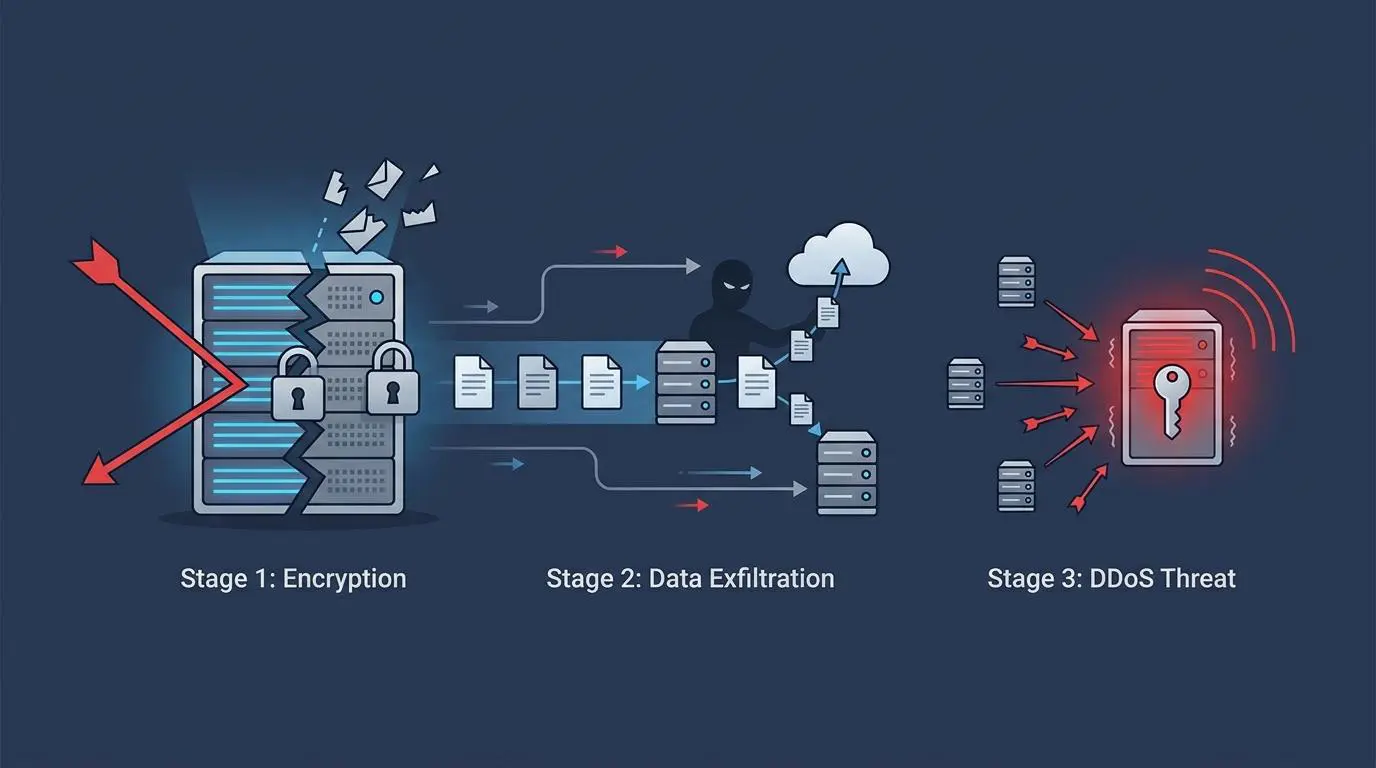
The modern threat landscape is completely dominated by triple extortion ransomware tactics. Attackers now steal sensitive data before encrypting the servers, threatening to leak proprietary information to the public. Simultaneously, they launch devastating DDoS attacks against public-facing services to maximize operational downtime.
The hidden cost of these sophisticated attacks is severe and irreversible brand erosion. Customers quickly abandon platforms that fail to protect their personal data, leading to a massive drop in lifetime customer value. Investing in ethical hacking prevents these extortion scenarios by neutralizing the initial attack vectors early.
Deploying Synthetic Attackers at Scale
Traditional manual penetration testing is simply too slow and resource-intensive for the rapidly expanding threat landscape. Human testers, while brilliant, cannot continuously monitor a global enterprise network around the clock. The ultimate solution lies in the convergence of offensive security and advanced artificial intelligence.
Autonomous penetration testing platforms now use AI to simulate millions of complex attack paths simultaneously. Generative AI is actively utilized to create synthetic attackers that flawlessly mimic human behavior during a simulated breach. This allows for continuous, highly realistic security validation at an unprecedented scale.
Industry data shows a strategic pivot where the average payout for AI-specific vulnerabilities has increased significantly. This massive shift signals that ethical hackers are no longer just testing standard web applications. They are now the primary line of defense for ensuring corporate AI integrity against adversarial manipulation.
Beyond the Automated Vulnerability Scan
A dangerous misconception in the corporate world is the belief that ethical hacking is just running an automated software scan. Many companies purchase a vulnerability scanner, run a weekly report, and falsely assume their digital perimeter is secure. This fundamental misunderstanding leaves deep logical flaws entirely hidden from view.
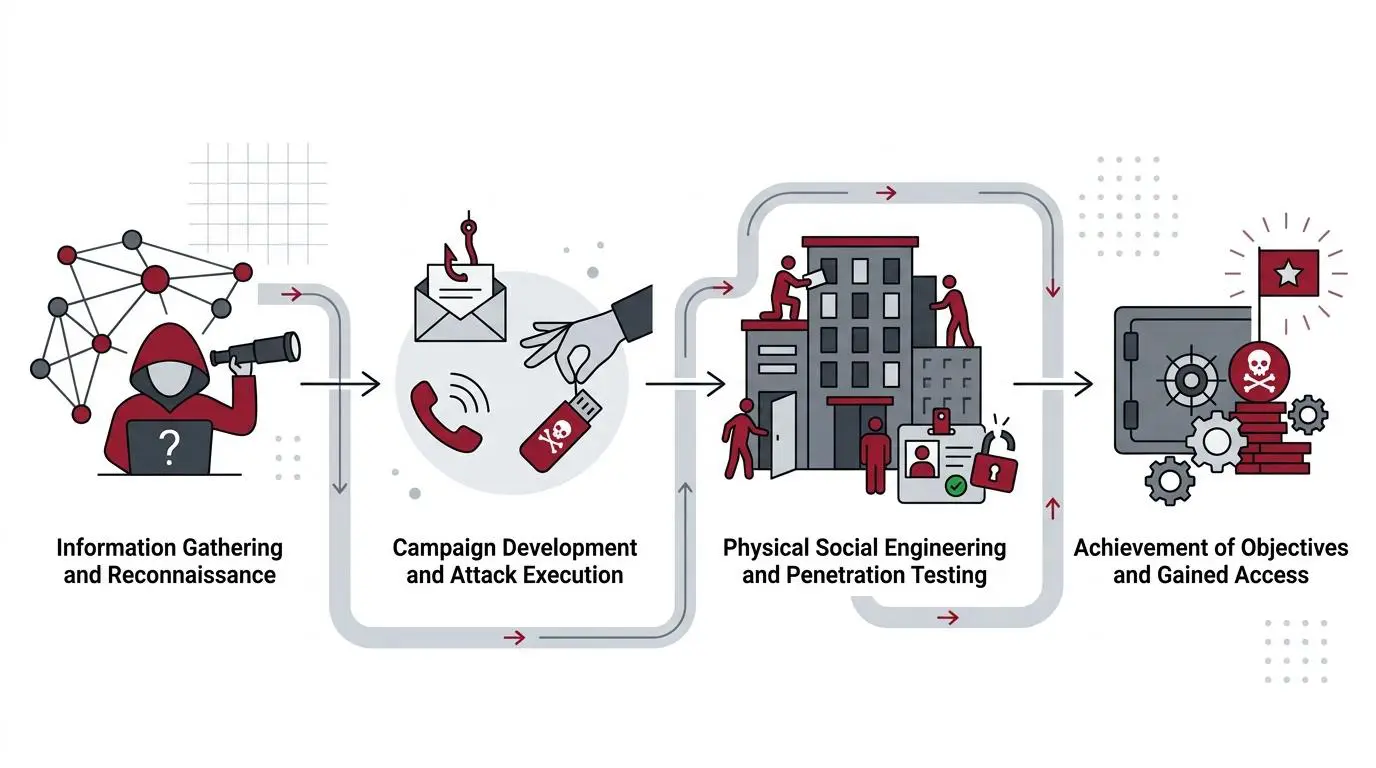
True offensive security encompasses a much broader and more aggressive scope of testing. It involves sophisticated red teaming exercises that mimic the exact tactics of advanced persistent threats. These exercises do not just target software; they target the human element through highly targeted social engineering campaigns.
Comprehensive ethical hacking often includes physical security testing to bypass badge readers and access server rooms directly. A vulnerability scanner will never tell you if a malicious actor can simply walk into your headquarters. Physical assessments ensure no one can plug a rogue device directly into your internal network switch.
Mapping the 2026 Attack Surface
The future of offensive security is moving rapidly toward continuous threat exposure management. This modern framework completely abandons the outdated concept of static, annual security audits. Static reports are effectively obsolete the moment they are printed, failing to account for daily cloud infrastructure changes.
Continuous threat exposure management involves real-time offensive monitoring integrated directly into the software development lifecycle. By adopting DevSecOps principles, developers and ethical hackers work in tandem to secure code before deployment. This collaborative approach creates a live, evolving map of an organization’s entire attack surface.
Ethical hacking is quickly evolving into autonomous red teaming, representing a revolutionary leap in proactive defense. Multi-agent AI systems will continuously hunt for zero-day vulnerabilities across complex cloud environments without human intervention. These intelligent systems will find the flaws and instantly provide verified remediation scripts directly to IT teams.
Securing the Perimeter of Tomorrow
The transition from reactive patching to proactive offensive security is no longer an optional upgrade. It has become a fundamental business requirement for survival. As threat actors deploy automated attacks, defending your infrastructure requires an equally sophisticated and aggressive methodology.
Ethical hacking provides the clarity and leverage needed to stay one step ahead of digital adversaries. By continuously testing your own defenses, you eliminate the blind spots that lead to catastrophic breaches. Embracing offensive security ensures your technological investments remain resilient and your customer data stays private.
Navigating the intersection of modern technology, software architecture, and business growth requires a sharp strategy. To future-proof your tech stack and scale with precision, connect with Andres at Andres SEO Expert.
Frequently Asked Questions
What is the primary difference between ethical hacking and traditional IT security?
Traditional IT security is reactive, focusing on building firewalls and monitoring for alarms. In contrast, ethical hacking, or offensive security, is a proactive methodology where organizations actively attack their own infrastructure to uncover and remediate hidden weaknesses before malicious actors can exploit them.
How much does the average data breach cost businesses in 2025?
According to the 2025 IBM Cost of a Data Breach Report, the average cost of a single data breach has risen to $5.21 million. These costs include forensic investigations, legal fees, and the long-term impact of brand erosion and lost customer trust.
What is triple extortion ransomware and why is it so dangerous?
Triple extortion is an advanced ransomware tactic where attackers steal sensitive data before encrypting servers, threaten to leak proprietary information, and simultaneously launch DDoS attacks against the victim’s public services. This multi-layered approach maximizes operational downtime and financial pressure.
How does AI-driven penetration testing improve corporate security?
AI-driven penetration testing allows for continuous security validation at a scale manual testing cannot match. By 2026, 42% of enterprises are expected to use AI to simulate millions of attack paths and deploy synthetic attackers that mimic human decision-making to identify vulnerabilities in real time.
What is Continuous Threat Exposure Management (CTEM)?
Continuous Threat Exposure Management (CTEM) is a modern security framework that replaces static, annual audits with real-time offensive monitoring. It integrates security testing directly into the software development lifecycle, providing a live, evolving map of an organization’s entire attack surface.
Why is a standard vulnerability scan insufficient for modern cyber defense?
Automated vulnerability scans often miss complex logical flaws and social engineering vulnerabilities. Comprehensive offensive security, such as Red Teaming, goes beyond software scans to test human elements and physical security, identifying if an actor could bypass badge readers or plug rogue devices into internal switches.