Key Points
- Layer-2 blockchain protocols now enable T+0 settlement, replacing 90-day royalty delays with instant programmable income for independent creators.
- Institutional capital is funding advanced financial operating systems that leverage AI for hyper-accurate 24-month revenue forecasting and collateralized lending.
- Over 40% of high-earning freelancers have migrated to USDC-stablecoin rails to bypass traditional SWIFT fees, signaling a massive shift toward decentralized treasury management.
Table of Contents
The Financial Friction of the Modern Artist
According to a 2026 report from Goldman Sachs, the global creator economy has reached a valuation of $420 billion, with specialized fintech services for independent artists growing at a compound annual growth rate (CAGR) of 22.5% since 2024. This staggering influx of capital is not a mere market anomaly. It represents a fundamental shift in how creative professionals monetize their intellectual property on a global scale.
For decades, the core financial friction for a freelance musician or artist was the massive liquidity gap. This is the agonizing period between a creative act and its actual monetization. Historically, a hit song might take 90 days or more to generate a royalty check, strangling an artist’s ability to reinvest in their growth.
Today, robust Creator Economy FinTech Infrastructure is eradicating this delay entirely. We are witnessing a definitive shift from legacy banking to highly specialized financial operating systems. These modern platforms treat independent artists not as gig workers, but as high-growth startup enterprises requiring enterprise-grade financial tools.
Market Intelligence and Capital Flow
Market Intelligence & Data
Instant Liquidity Adoption
A 2026 survey by MIDiA Research indicates that 82% of top-tier independent creators now prioritize platforms offering instant revenue advances over traditional banking products.
Smart Contract Royalty Flow
According to Chainalysis, over $12.4 billion in music royalties was processed via automated smart contracts in 2025, representing a 300% increase from 2024 levels.
Neobank Migration
Forrester reports that 1 in 3 freelance artists in the United States have moved their primary business banking to creator-specific neobanks as of May 2026.
AI-Driven Tax Efficiency
The Freelancers Union 2026 update shows that 68% of creative professionals using AI-integrated accounting tools reported a significant reduction in year-end tax-season administrative costs.
The data above illustrates a tectonic shift in market psychology and institutional capital allocation. Traditional banking institutions are rapidly losing ground to specialized neobanks that natively understand the erratic cash flows of a touring musician. Smart money is chasing these specialized platforms because they solve highly specific, lucrative pain points.
The rapid adoption of instant liquidity protocols proves that creators value cash velocity over traditional banking relationships. This migration is forcing legacy payment giants like PayPal and Block to aggressively acquire niche music-tech startups. They are scrambling to integrate automated split-pay features just to remain relevant in collaborative creative projects.
The FinTech Deep Dive
Programmable Income and T+0 Settlement
By mid-2026, the innovation landscape for creative freelancers has decisively shifted toward programmable income ecosystems. Cutting-edge tools now utilize Layer-2 blockchain protocols for T+0 settlement. This allows musicians to receive royalty payments in real-time as streams occur, bypassing the archaic quarterly payout models entirely.
Generative AI is no longer just a novelty for content creation; it is now deeply embedded within financial dashboards. These intelligent systems provide hyper-accurate 24-month revenue forecasting. The algorithms analyze viral social sentiment and algorithmic playlisting trends to predict future cash flows with astonishing precision.
This level of financial visibility allows independent artists to plan global tours and merchandise drops with institutional-grade confidence. The best fin-tech tools for a freelance musician or artist act as a predictive CFO, transforming unpredictable streaming spikes into modeled, reliable revenue.
Decentralized Treasury Management
This real-time liquidity is further amplified by advanced stablecoin integration within creative neobanks. Data from a Q1 2026 Citigroup Fintech Analysis reveals that over 40% of independent music labels and high-earning freelancers have migrated their cross-border payroll to USDC-stablecoin rails to bypass the 3.2% average loss incurred via traditional SWIFT banking fees.
Decentralized Finance primitives are being actively integrated into standard creative neobanks. This offers artists high-yield treasury management for their tour and production budgets, ensuring idle capital is constantly generating returns. The financial architecture is shifting from passive storage to active yield generation.
Furthermore, automated tax withholding for multi-jurisdictional streaming income and instant currency conversion for global tours are now standard features. AI-powered expense categorization bots specifically recognize artist-specific tax deductions with 99% accuracy, solving the massive administrative burden that typically consumes 15% of a freelancer’s working hours.
Disrupting the Predatory Advance Model
Institutional capital is flowing heavily into comprehensive financial operating systems like Stem, Karat, and Prism Finance. The latter recently closed a massive $200M Series C led by Andreessen Horowitz, signaling deep institutional confidence in this sector. For a deeper understanding of this capital flow, you can read Andreessen Horowitz’s breakdown of the creator fintech stack.
These platforms are fundamentally disrupting the predatory music-advance model historically dominated by major record labels. We are seeing a massive surge in royalty-collateralized lending platforms that use AI-driven intellectual property valuation. They provide low-interest credit lines based on verifiable streaming data rather than exploitative ownership contracts.
This shift is empowering artists to retain their master recordings while still accessing the capital needed to scale their operations. In fact, industry research highlights alternative fintech advances over traditional label loans as the primary driver of independent artist growth in the modern era.
The Future of IP Fractionalization
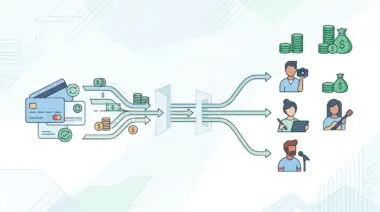
The concept of intellectual property is being digitized and fractionalized at an unprecedented rate. Smart contracts allow creators to embed automated royalty splits directly into the master file of a song. When a track generates revenue, producers, writers, and vocalists are paid instantly and proportionally.
This eliminates the need for expensive entertainment lawyers and complex accounting audits. The blockchain serves as an immutable ledger of truth, ensuring that every micro-penny generated by a stream is routed to the correct digital wallet. This level of transparency is unprecedented in the history of the music industry.
Ultimately, this technology transforms a single piece of music into a micro-economy. The infrastructure supporting this ecosystem is becoming the gold standard for how digital assets are monetized, traded, and leveraged in the modern creator economy.
The Strategic Action Plan
Strategic Trajectory
- Facilitate the rise of Personal Equity Tokens to fractionalize future earnings and offer regulated security token offerings (STOs) directly to fans.
- Implement Autonomous Financial Agents to track income and actively rebalance portfolios into inflation-hedged assets as royalties are received.
- Finalize the transition from Creator-as-a-Business to Creator-as-a-Corporation through integrated fintech infrastructure.
- Leverage automated R&D tax credit filings provided by fintech platforms for experimental creative projects.
The next 12 to 24 months will completely redefine the financial architecture available to independent creators. The transition from treating a creator as a simple business to a fully functioning, investable corporation is nearing completion. Founders and institutional investors must aggressively adopt these decentralized and AI-driven frameworks to remain competitive.
Offering static banking products is no longer viable for this highly sophisticated demographic. The integration of autonomous financial agents will soon become a baseline expectation rather than a premium feature. Platforms that fail to offer automated portfolio rebalancing and fractionalized equity tokens will quickly lose market share.
Executives must focus on building interoperable systems that seamlessly connect streaming data with credit facilities. The winners in this space will be those who can provide the most frictionless bridge between a creative act and institutional-grade liquidity.
Conclusion
The best fin-tech tools for a freelance musician or artist are no longer just about tracking expenses or sending invoices. They are highly sophisticated engines of wealth creation, utilizing blockchain settlement and predictive AI to maximize every drop of intellectual property value. The liquidity gap that once suffocated independent creators is being permanently closed by programmable income.
As the creator economy matures into a half-trillion-dollar asset class, the underlying financial infrastructure will only become more complex and powerful. Artists who leverage these programmable ecosystems will dominate the next decade of digital entertainment, operating not just as musicians, but as highly optimized tech-driven enterprises.
Navigating the intersection of financial technology, institutional capital, and market psychology requires a sharp strategy. To future-proof your FinTech architecture and scale with precision, connect with Andres at Andres SEO Expert.
Frequently Asked Questions
What is the current market valuation of the global creator economy?
As of 2026, the creator economy has reached a valuation of $420 billion, with fintech services for independent artists growing at a compound annual growth rate (CAGR) of 22.5% since 2024.
How does T+0 settlement benefit freelance musicians and artists?
T+0 settlement utilizes Layer-2 blockchain protocols to provide real-time royalty payouts as streams occur, eliminating the traditional 90-day liquidity gap and allowing creators to reinvest in their growth instantly.
Why are artists moving their banking to creator-specific neobanks?
One in three freelance artists have migrated to specialized neobanks because they offer tools tailored to erratic cash flows, including automated split-pay features, AI-driven tax efficiency, and yield-generating treasury management.
How is AI used for financial forecasting in the music industry?
Generative AI and intelligent algorithms analyze viral social sentiment and algorithmic playlisting trends to provide hyper-accurate 24-month revenue forecasting, acting as a predictive CFO for independent creators.
What are royalty-collateralized lending platforms?
These are fintech platforms that use AI-driven intellectual property valuation to provide low-interest credit lines based on verifiable streaming data, allowing artists to access capital while retaining ownership of their master recordings.
What is the role of smart contracts in IP fractionalization?
Smart contracts allow creators to embed automated royalty splits directly into master files, ensuring that producers, writers, and vocalists are paid proportionally and instantly through an immutable blockchain ledger.