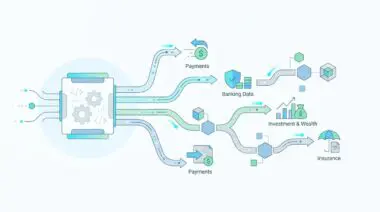
Key Points
- Spatial Finance Verification: Generative AI and spatial finance are replacing static ESG scores with real-time, immutable environmental asset verification.
- Programmable Natural Capital: Tokenization via high-throughput blockchains transforms illiquid natural capital into programmable, tradable financial instruments.
- Advanced Impact Modeling: Impact forecasting and digital twins are becoming essential tools to simulate financial and environmental ROI before strategic execution.
Table of Contents
The Financial Tech Friction
According to Bloomberg Intelligence, global ESG-labeled assets under management are projected to surpass $50 trillion by the close of 2025. This staggering figure represents over one-third of all professionally managed assets worldwide. The sheer volume of capital shifting toward sustainable frameworks creates an unprecedented demand for technological infrastructure capable of verifying these investments.
Historically, the financial sector relied on static, self-reported sustainability metrics lacking verifiable depth. This created massive inefficiencies in capital allocation, often resulting in a widening greenwashing gap. Institutional investors and corporate treasuries struggled to accurately price climate-vulnerable assets without high-fidelity risk models.
This is precisely where Green FinTech and Sustainable Asset Intelligence disrupt the legacy financial stack. By replacing annual sustainability reports with real-time, immutable data feeds, this technology delivers absolute transparency. It transforms ambiguous environmental goals into hard, quantifiable data points driving smart money decisions.
Market Intelligence and Capital Flow
The transition toward a sustainable economy is no longer just a regulatory mandate but a massive liquidity opportunity. Financial institutions are aggressively reallocating capital to capture the upside of regenerative finance and climate-resilient infrastructure. This shift is clearly reflected in the latest market data.
Market Intelligence & Data
Annual Green Bond Issuance
Data from the Climate Bonds Initiative shows that annual green bond volume has hit record highs in 2025-2026 as transition finance becomes a core corporate strategy.
AI Adoption in ESG
According to Gartner, nearly 90% of global financial institutions now utilize specialized LLMs to automate regulatory compliance and impact reporting as of 2026.
Climate FinTech VC Funding
PitchBook reports that venture capital investment in Climate FinTech startups reached a peak in 2025, driven by demand for transparent carbon accounting software.
Gen Z Banking Preferences
A 2026 Deloitte survey indicates that nearly three-quarters of Gen Z and Millennial consumers now select their primary financial service provider based on verified sustainability credentials.
Analyzing this data reveals a clear trajectory for global capital markets. Smart money is flowing rapidly into transition FinTech firms and specialized carbon-credit exchanges. Institutional giants are recognizing that superior data intelligence is the ultimate competitive advantage in the new green economy.
The sheer velocity of this capital movement indicates a permanent structural shift in global finance. Legacy banks relying on outdated ESG scoring methodologies are rapidly losing market share to agile, tech-forward competitors. The integration of embedded finance modules ensures that every retail transaction now serves as a micro-investment in verified carbon removal projects.
Furthermore, consumer sentiment is fundamentally restructuring retail banking models. A 2026 Deloitte survey confirms that the next generation of wealth demands absolute transparency. Green neo-banks and embedded finance modules are capitalizing on this by offering automated carbon-offsetting at the point of sale.
The FinTech Deep Dive
The technological architecture underpinning modern sustainable finance is undergoing a radical evolution. Big Tech firms and agile startups are deploying cloud-native sustainability APIs to establish themselves as primary data providers. This infrastructure is essential for building the next generation of climate-aware financial products.
Spatial Finance and Real-Time Verification
The 2026 landscape is heavily dominated by the convergence of generative AI and spatial finance. Financial institutions are now utilizing real-time satellite imagery and IoT-linked sensors to verify environmental impact at the asset level. This hardware-software synergy ensures that capital is deployed exactly where it claims to be going.
This level of asset-level verification eliminates the blind spots that previously plagued green bond issuances. Portfolio managers can now track the precise carbon offset of a specific forestry project via satellite telemetry updated daily. This continuous data stream provides high-fidelity risk pricing for climate-vulnerable assets across the globe.
Institutional giants have fully integrated AI-driven sentiment analysis engines that scan alternative data sets to predict climate risk. These advanced algorithms can detect subtle shifts in environmental patterns long before they impact traditional financial statements. By leveraging these tools, asset managers can proactively hedge against climate-related volatility.
While regulatory frameworks continue to evolve globally, the true driver of adoption is technological efficiency. Automation via specialized LLMs ensures compliance while simultaneously freeing up quantitative analysts to focus on alpha generation. This dual benefit makes spatial finance an indispensable component of the modern trading desk.
Tokenization of Natural Capital
Perhaps the most disruptive innovation in this sector is the tokenization of natural capital. Carbon sinks and biodiversity corridors are being transformed into programmable financial instruments via high-throughput Layer 1 blockchains. This process converts historically illiquid environmental assets into highly tradable commodities.
A 2026 study by the World Economic Forum reveals that the market for tokenized biodiversity credits has expanded by 420% year-over-year. Institutional investors are aggressively seeking direct exposure to ecosystem restoration projects to diversify their portfolios. Automated smart-contract settlement ensures these transactions execute flawlessly without costly intermediaries.
Furthermore, the programmability of these assets allows for dynamic yield generation based on real-time ecological health. If a tokenized biodiversity corridor shows verifiable improvement via IoT sensor data, the smart contract automatically adjusts the asset’s yield profile. This creates a powerful financial incentive for actual, measurable environmental regeneration rather than mere compliance.
Data from the Climate Bonds Initiative further underscores the massive scale of this transition. As transition finance becomes a core corporate strategy, the infrastructure to support these programmable assets must scale proportionally. Startups focusing on regenerative finance are securing massive funding rounds to build this exact plumbing.
The Strategic Action Plan
To navigate this complex technological landscape, financial executives must adopt a proactive, data-first strategy. The integration of biodiversity metrics into standard credit scoring models is no longer optional. Nature-positive performance is rapidly becoming a primary determinant of a corporation’s overall cost of capital.
Strategic Trajectory
- Deploy Impact Forecasting to simulate environmental and financial ROI before execution.
- Implement Digital Twins of global supply chains for advanced strategic modeling.
- Integrate biodiversity metrics into standardized corporate credit scoring models.
- Prioritize Nature-Positive performance as a primary driver of the cost of capital.
The next 18 months will see the explosive rise of impact forecasting across enterprise ecosystems. By utilizing digital twins of global supply chains, CEOs can simulate the financial and environmental ROI of strategic shifts before deploying capital. This capability dramatically reduces execution risk in an increasingly volatile global market.
Executive boards must also prioritize the acquisition of specialized talent capable of bridging the gap between data science and climate modeling. The deployment of advanced APIs will require engineering teams that understand both high-frequency trading infrastructure and ecological risk factors. Ultimately, the fusion of these disciplines will dictate which firms dominate the next decade of sustainable finance.
Firms that fail to implement these advanced modeling techniques will find themselves priced out of premium liquidity pools. The mandate for institutional leaders is clear. Upgrade the technology stack to support real-time asset intelligence or face systemic obsolescence.
Conclusion
The convergence of spatial finance, generative AI, and blockchain tokenization is fundamentally rewiring how global markets value natural capital. Green FinTech and Sustainable Asset Intelligence have moved beyond theoretical concepts to become the bedrock of modern institutional investing. As the greenwashing gap closes, only those armed with real-time, immutable data will capture the massive alpha generated by the transition economy.
Navigating the intersection of financial technology, institutional capital, and market psychology requires a sharp strategy. To future-proof your FinTech architecture and scale with precision, connect with Andres at Andres SEO Expert.
Frequently Asked Questions
What is Green FinTech and how does it combat greenwashing?
Green FinTech uses technological infrastructure like real-time data feeds and immutable ledgers to verify sustainability claims. By replacing self-reported metrics with high-fidelity, transparent data, it eliminates the greenwashing gap and allows investors to accurately price climate-vulnerable assets.
What is spatial finance and how does it verify environmental impact?
Spatial finance involves the convergence of generative AI, satellite imagery, and IoT sensors to monitor assets in real-time. This allows financial institutions to verify the precise environmental impact of specific projects, such as carbon offsets in forestry, through continuous telemetry rather than periodic reports.
How does the tokenization of natural capital work?
Natural capital, such as biodiversity corridors and carbon sinks, is converted into programmable financial instruments using blockchain technology. These tokenized assets use smart contracts to automate settlements and can dynamically adjust yields based on real-time ecological health data.
Why is AI adoption critical for ESG regulatory compliance?
As of 2026, nearly 90% of financial institutions use specialized Large Language Models (LLMs) to automate compliance. AI streamlines the processing of massive regulatory data sets and utilizes sentiment analysis to predict climate risks, allowing firms to maintain compliance while focusing on alpha generation.
What are digital twins in the context of sustainable finance?
Digital twins are virtual models of global supply chains used for impact forecasting. They allow executives to simulate the financial and environmental ROI of strategic shifts before execution, reducing risk and helping firms integrate biodiversity metrics into their credit scoring models.
How are Gen Z and Millennial preferences shaping the banking sector?
Approximately 74% of Gen Z and Millennial consumers choose financial providers based on verified sustainability credentials. This shift is driving the growth of green neo-banks and embedded finance modules that offer automated, point-of-sale carbon offsetting.