Key Points
- Delta-Scoring Mechanisms: Search engines now filter out zero-delta synthetic content that offers no new parametric data to the generative retrieval system.
- Semantic Vector Saturation: Purely automated content clusters into generic centroids within vector databases, preventing individual pages from achieving top-k retrieval status.
- Cryptographic Authorship: Implementing C2PA protocols and robust Schema entity binding is mandatory to bypass synthetic content penalties and establish verifiable trust.
Table of Contents
The AI Search Context
According to the Q1 2026 AI Search Transparency Report, 74% of websites relying exclusively on automated content for over six months experienced a 90% drop in AI Overview citations. This starkly contrasts with sites utilizing hybrid-human workflows.
Automated content generation has transitioned from a competitive advantage to a massive liability within Generative Engine Optimization. As large language models like GPT-5 and Claude 4.5 serve as primary gateways for information retrieval, search architectures have fundamentally changed.
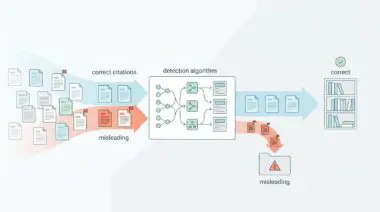
Search engines have implemented strict Information Gain filters to evaluate the utility of indexed documents. These filters deprioritize content failing to provide a unique delta compared to the existing training set. When a brand relies on pure automation, it essentially creates a semantic echo across the web.
Retrieval-Augmented Generation systems actively filter out these echoes to avoid model collapse. The long-term impact of over-automation is the total erasure of a digital footprint from AI-driven discovery platforms.
Modern search architectures prioritize authoritative source attribution and verified experience above raw text volume. Unedited synthetic content is immediately flagged as low-utility by neural classifiers.
This leads to a catastrophic drop in citations within AI Overviews across major search interfaces. Retrieval algorithms can no longer verify the human-in-the-loop validation necessary for high-stakes queries. Sectors like health, finance, and technical engineering are particularly vulnerable to this synthetic dilution.
When large language models generate text, they rely on probabilistic token prediction based on their training data. If thousands of websites publish the exact same probabilistically generated text, the vector space becomes saturated.
Search engines recognize this saturation and actively compress these duplicate vectors into a single, low-value node. This compression means your automated blog post is never evaluated as an independent source of truth.
Instead, it is discarded before the retrieval engine even begins constructing the AI Overview response. To survive this transition, technical SEO directors must fundamentally rewire their approach to content architecture.
Core Architecture And Pillars
Core Architecture & Pillars
Information Gain Deficiency
Modern RAG systems utilize a ‘Delta-Scoring’ mechanism to determine if a document provides new tokens or facts not already present in the LLM’s parametric memory. Purely automated content often results in a ‘Zero-Delta’ score.
Semantic Vector Saturation
Vector databases (like Pinecone or Milvus) used by search engines cluster automated content into ‘generic centroids.’ If your content’s vector embedding is too close to the average, it is ignored in favor of ‘Outlier Content’ that offers unique perspectives.
E-E-A-T Attribution Failure
Search engines in 2026 use ‘Entity-Binding’ to verify if content originated from a known human expert or a verified organization. Synthetic content lacks the ‘Signature-of-Origin’ required for high-trust retrieval.
Model Autophagy (Self-Feeding) Penalties
To prevent ‘Model Collapse,’ where AI trains on its own output and degrades, 2026 search algorithms penalize sources identified as 95% or more synthetic by internal classifiers.
Expanding on these pillars requires a deep understanding of how modern AI search engines process and store data. Modern RAG systems utilize a delta-scoring mechanism to determine if a document provides new tokens. Purely automated content often results in a zero-delta score because it mimics the baseline LLM output.
To understand the underlying mechanics of this scoring system, search engineers often review Google’s Information Gain patent and ranking filters. This documentation reveals how search engines calculate the unique value of a document before passing it to the generative layer.
Vector databases are used by search engines to cluster automated content into generic centroids. If your content’s vector embedding is too close to the average semantic cluster, it is ignored entirely. Search algorithms favor outlier content that offers unique perspectives and proprietary data points.
In April 2026, the Web-Trust consortium introduced the Entropy-Threshold update. This automatically mutes retrieval sources exhibiting a semantic predictability score higher than 0.85, effectively silencing most AI-generated affiliate blogs. This update fundamentally altered how enterprise SEO teams approach content generation at scale.
Search engines now use entity-binding to verify if content originated from a known human expert. Synthetic content lacks the signature-of-origin required for high-trust retrieval in modern RAG pipelines. Furthermore, search algorithms actively penalize sources identified as predominantly synthetic.
This is done to prevent model collapse, a scenario where AI trains on its own output and degrades in quality. Data scientists have clearly demonstrated how training AI on synthetic content leads to model collapse. Consequently, sites relying on auto-blogging setups face site-wide synthetic flags in modern search consoles.
Vector databases organize information by converting text into high-dimensional numerical arrays called embeddings. When a user submits a query, the search engine converts that query into a corresponding vector.
The system then uses algorithms like K-nearest neighbors and cosine similarity to find the most relevant document vectors. If your content is purely automated, its embedding will sit directly in the center of a dense cluster of identical articles.
RAG systems are programmed to ignore these dense, generic centroids in favor of outliers. Outliers represent unique data points, novel opinions, or proprietary research that the LLM has not previously encountered.
The Coalition for Content Provenance and Authenticity has established new standards for digital signatures on the web. Search engines are rapidly adopting these C2PA standards to verify the human origin of text and images.
Without a cryptographic signature, an article is automatically treated with suspicion by the retrieval layer. This lack of verification drastically lowers the document’s trust score, preventing it from appearing in high-stakes queries.
The Execution Roadmap
Implementation Roadmap
Information Gain Audit
Analyze your top 50 pages using an IGS (Information Gain Score) tool to compare your content against the top 3 AI Overviews for those keywords. Identify sections where your content provides no unique data.
Proprietary Data Injection
Manually insert unique case studies, internal statistics, or expert quotes. Update the technical metadata to include ‘Dataset’ schema if applicable, proving the content is based on non-public data.
Cryptographic Authorship Setup
Implement Content Credentials (C2PA) or verified Schema.org ‘Author’ profiles linked to LinkedIn/ORCID. Ensure the ‘isBasedOn’ property in JSON-LD points to primary source documents.
RAG-Friendly Formatting
Refactor content into ‘Question-Insight-Evidence’ structures. This allows AI retrievers to easily parse the unique value (Insight) and the verification (Evidence) for citation in LLM responses.
Executing this roadmap demands a transition from traditional keyword optimization to semantic entropy engineering. The Information Gain Audit is the critical first step in diagnosing your current digital footprint.
Analyzing your top pages using an IGS tool allows you to compare your baseline against top AI Overviews. This process identifies specific sections where your content provides zero unique data to the retrieval engine.
Once these zero-delta zones are identified, content teams must execute proprietary data injection. Manually inserting unique case studies, internal statistics, or expert quotes instantly raises the document’s entropy score.
Updating the technical metadata to include Dataset schema proves the content is based on non-public data. This signals to the RAG system that your page contains high-value, unmapped tokens.
Cryptographic authorship setup is the next mandatory phase for establishing verifiable trust. Implementing Content Credentials or verified Schema profiles linked to ORCID binds your content to a real-world entity.
Ensuring the isBasedOn property in JSON-LD points to primary source documents solidifies this attribution chain. Finally, RAG-friendly formatting restructures your content into a highly parsable Question-Insight-Evidence format.
This specific architecture allows AI retrievers to easily extract the unique value and the verifying evidence. Structuring data in this manner drastically increases the probability of direct citation in LLM responses.
Traditional SEO audits relied on TF-IDF and keyword density to measure content relevance. In the era of Generative Engine Optimization, these legacy metrics are completely obsolete.
An Information Gain Audit measures the semantic distance between your content and the LLM’s baseline knowledge. Tools that calculate this delta score provide a granular view of your content’s actual utility to a search engine.
If a paragraph scores a zero-delta, it must be aggressively rewritten or replaced with proprietary data. RAG systems do not ingest entire web pages at once during the retrieval phase.
Instead, they break documents down into smaller semantic chunks for faster vector matching. Refactoring your content into a Question-Insight-Evidence structure optimizes these exact chunks for the retrieval engine.
The insight provides the unique vector outlier, while the evidence provides the verifiable trust signal. When these two elements are chunked together, the AI engine is highly likely to extract and cite the block.
Technical Implementation
Deploying cryptographic authorship and proprietary data markers requires precise JSON-LD structuring. Traditional metadata is no longer sufficient for modern Generative Engine Optimization architectures.
You must explicitly define the datasets and human entities responsible for the semantic output. The following configuration demonstrates how to bind an article to a verified human author.
It also illustrates how to reference an internal dataset to satisfy the entity-binding requirements for high-stakes retrieval. This exact schema structure prevents the content from being flagged as unverified synthetic noise.
{
  "@context": "https://schema.org",
  "@type": "Article",
  "headline": "Advanced GEO Strategies for 2026",
  "author": {
    "@type": "Person",
    "name": "Senior AI Architect",
    "sameAs": "https://www.linkedin.com/in/verified-expert/"
  },
  "hasPart": {
    "@type": "Dataset",
    "name": "Internal GEO Impact Study 2026",
    "description": "Proprietary data used to generate insights in this article."
  },
  "isBasedOn": "https://internal-database.secure/report-2026"
}
Notice the inclusion of the Dataset object within the hasPart property. This specific node tells the RAG crawler that the article relies on proprietary, non-parametric data.
Linking the isBasedOn property to a secure internal database further validates the uniqueness of the information. This technical markup is the foundation of high-entropy content engineering.
Beyond JSON-LD, advanced technical SEOs are implementing provenance headers directly at the server level. Configuring NGINX or Apache to serve C2PA manifests ensures that every HTML document carries a cryptographic signature.
This server-side implementation bypasses the need for complex frontend scripting and ensures universal compliance. When the search engine crawler requests the page, the provenance manifest is delivered in the HTTP response headers.
This immediate verification drastically accelerates the trust-scoring process within the indexing pipeline. Implementing this at the template level ensures site-wide compliance with modern information gain standards.
Validation And Future Proofing
Validation & Monitoring
- Use the SearchGPT Citation Tracker and Perplexity Brand Visibility dashboards to monitor AI Overview traffic.
- Cross-reference traffic data with the Synthetic Content Ratio reported in the 2026 Google Search Quality Console.
- Validate that human-edited, high-IGS content is being prioritized over purely automated assets in retrieval.
Validating your Generative Engine Optimization strategy requires continuous monitoring of emerging semantic metrics. Traditional click-through rates have been replaced by citation penetration and semantic entropy scores.
Using the SearchGPT Citation Tracker provides real-time visibility into your AI Overview market share. Cross-referencing this traffic data with the Synthetic Content Ratio ensures your domain remains healthy.
If your synthetic ratio climbs above the algorithmic threshold, your entire domain risks retrieval exclusion. You must validate that human-edited, high-IGS content is consistently prioritized over automated assets.
As large language models evolve, the baseline for acceptable information gain will continuously shift upward. Future-proofing your enterprise stack means treating content as a dynamic, verifiable dataset.
As LLMs ingest more data, their parametric memory expands, raising the baseline for what is considered unique information. An article that scores high in information gain today may score zero-delta in six months.
This shifting entropy baseline requires a continuous cycle of data injection and content refreshing. Static content strategies are fundamentally incompatible with the dynamic nature of Generative Engine Optimization.
Enterprise teams must build automated alerts that trigger content reviews when citation penetration drops. This proactive approach ensures your digital footprint remains visible across all AI discovery engines.
Navigating the intersection of traditional SEO and Generative Engine Optimization requires a precise architecture. To future-proof your enterprise stack for AI Overviews and LLM discovery, connect with Andres at Andres SEO Expert.
Frequently Asked Questions
What is Information Gain in the context of Generative Engine Optimization?
Information Gain is a metric used by modern RAG systems to measure the ‘Delta-Score’ of a document—the amount of new, unique information it provides compared to the LLM’s existing parametric memory. Content that lacks a unique delta is considered a ‘semantic echo’ and is typically filtered out of AI Overview citations to prevent model collapse.
How do search engines identify and penalize purely automated content?
Search engines utilize neural classifiers and ‘Entropy-Threshold’ updates to detect synthetic patterns. In 2026 architectures, content with a semantic predictability score higher than 0.85 is flagged. These systems also look for ‘Semantic Vector Saturation,’ where automated text is compressed into low-value centroids and ignored in favor of unique outlier content.
What is the ‘Question-Insight-Evidence’ structure for RAG optimization?
This is a content architecture designed for easy parsing by AI retrievers. It structures information into a specific sequence: a clear query (Question), a unique data point or perspective (Insight), and a verifiable source or proprietary metric (Evidence). This format increases the likelihood that a specific ‘chunk’ of data will be cited in an LLM response.
Why is cryptographic authorship (C2PA) necessary for modern SEO?
Cryptographic authorship provides a ‘Signature-of-Origin’ that verifies content was created by a human expert or a trusted entity. Search engines now use ‘Entity-Binding’ and C2PA standards to validate the trust score of a document. Without these digital signatures, content is treated as unverified synthetic noise, especially in high-stakes sectors like finance and health.
What is an Information Gain Audit (IGA)?
An Information Gain Audit is a technical process that measures the semantic distance between your website’s content and the baseline knowledge of an LLM. By using IGS tools, SEO directors can identify ‘zero-delta’ zones where content offers no new utility, allowing them to inject proprietary data or expert quotes to restore retrieval visibility.
How does ‘Model Collapse’ affect search engine ranking algorithms?
Model Collapse occurs when AI models are trained on their own synthetic output, leading to a degradation in quality and diversity. To prevent this, search engines aggressively penalize and filter out sources identified as predominantly synthetic, ensuring that only high-entropy, human-validated data is used to inform generative search results.