Executive Summary
- Customer Acquisition Cost (CAC) is a fundamental unit economic metric representing the total cost of sales and marketing efforts required to acquire a single new customer over a specific period.
- Accurate CAC calculation requires the integration of multi-channel attribution data, including direct advertising spend, personnel overhead, and technological infrastructure costs.
- Optimization of CAC is critical for achieving a sustainable LTV:CAC ratio, ensuring long-term profitability and efficient capital allocation in competitive digital markets.
What is Customer Acquisition Cost?
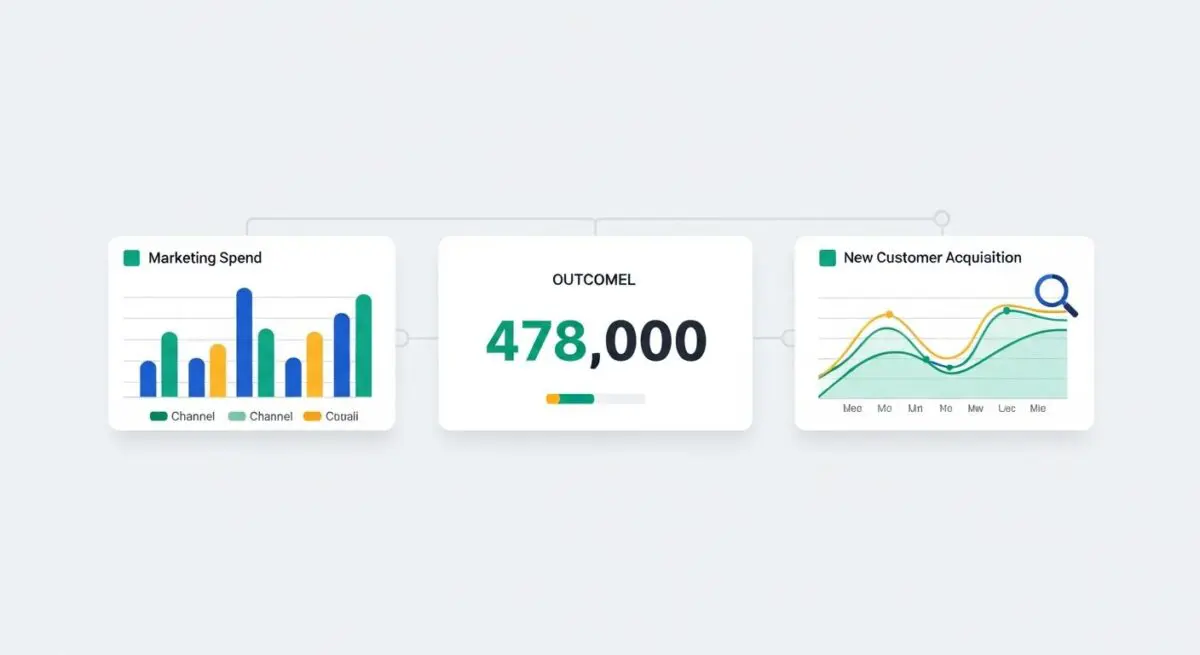
Customer Acquisition Cost (CAC) is a core unit economic metric that quantifies the total financial expenditure required to convert a prospect into a customer. At Andres SEO Expert, we define CAC as the aggregation of all sales and marketing costs—including advertising spend, personnel salaries, software subscriptions, and overhead—over a specific period, divided by the number of new customers acquired during that same interval. This metric provides a granular view of the efficiency of capital deployment across various acquisition channels.
In the context of Data Analytics and Search Engine Optimization (SEO), CAC serves as a benchmark for evaluating the long-term viability of organic versus paid strategies. Unlike immediate performance metrics like Cost Per Click (CPC) or Cost Per Lead (CPL), CAC accounts for the entire conversion funnel, offering a holistic perspective on the cost-effectiveness of the customer journey. For enterprise-level organizations, integrating CAC data into Business Intelligence (BI) tools allows for real-time adjustments to programmatic bidding and content strategy based on the marginal cost of acquisition.
The Real-World Analogy
Consider the operation of a commercial citrus orchard. To harvest a single crate of oranges, the owner does not merely account for the cost of picking the fruit. They must calculate the investment in land acquisition, the cost of the saplings, the irrigation infrastructure, the fertilizers, the labor for pruning, and the fuel for transport. If the cost of maintaining the orchard exceeds the market value of the fruit produced over its lifetime, the operation is unsustainable. Similarly, in digital marketing, CAC represents the total cultivation cost of a customer, which must be lower than the yield or Lifetime Value (LTV) they provide to the business.
How Customer Acquisition Cost Impacts Marketing ROI & Data Attribution?
CAC is the primary denominator in determining the efficiency of Marketing ROI. When integrated with advanced attribution models—such as Data-Driven Attribution (DDA) or Shapley Value modeling—CAC allows marketers to identify which touchpoints are truly driving conversions and which are merely inflating costs. By isolating the CAC of specific segments, such as organic search versus social media, organizations can optimize their budget allocation toward high-efficiency channels that lower the blended CAC.
Furthermore, CAC is intrinsically linked to data integrity. Inaccurate attribution leads to misattributed CAC, where credit is given to the final touchpoint while ignoring the expensive top-of-funnel awareness campaigns that initiated the journey. For SEO and GEO professionals, demonstrating a declining CAC over time is a key indicator of brand authority and organic growth, as organic traffic typically requires a higher upfront investment in content and technical infrastructure but yields a significantly lower marginal CAC compared to perpetual paid media spend.
Strategic Implementation & Best Practices
- Implement Full-Funnel Attribution: Utilize server-side tracking and advanced CRM integration to ensure every marketing dollar is mapped to a specific customer ID, eliminating data silos between sales and marketing teams.
- Calculate Fully Loaded CAC: Include all indirect costs such as MarTech subscription fees, creative production costs, and the salaries of the growth team to ensure the metric reflects true operational reality.
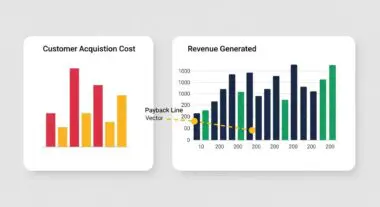
- Segment CAC by Channel and Cohort: Analyze CAC on a per-channel basis and by customer cohorts to identify which segments provide the fastest payback period and the highest long-term profitability.
- Optimize for LTV:CAC Ratio: Aim for a benchmark ratio (typically 3:1 for SaaS) to ensure that the cost of acquiring a customer is significantly lower than the revenue they generate over their lifecycle.
Common Pitfalls & Strategic Mistakes
One frequent error is the failure to account for the Sales Cycle Length; calculating CAC for a given month without considering that those customers may have been influenced by marketing spend from three months prior leads to skewed data. In the era of AI-driven marketing, another common mistake is over-reliance on automated bidding without a fully loaded CAC baseline, where brands only look at direct ad spend, resulting in an artificially optimistic view of profitability that ignores significant operational overhead.
Conclusion
Customer Acquisition Cost is the definitive metric for measuring the scalability and financial health of a digital marketing architecture. Mastery of CAC through precise attribution and data integration is essential for optimizing enterprise growth and maximizing long-term shareholder value.