Executive Summary
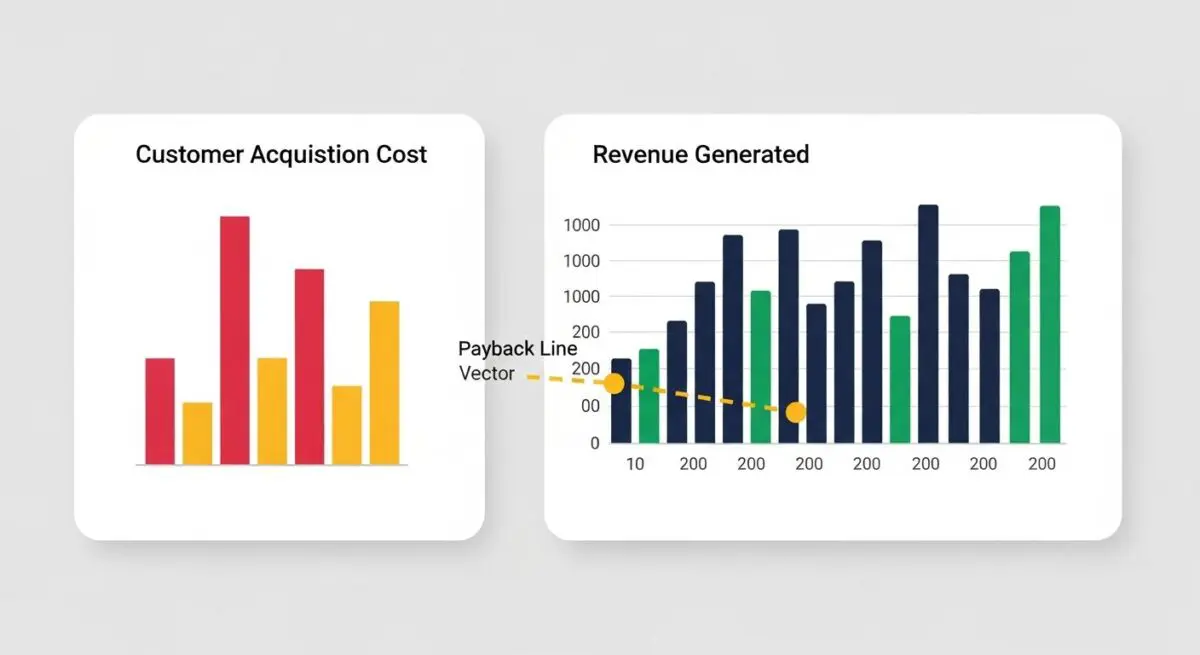
- The Payback Period measures the temporal duration required for the cumulative net revenue from a customer cohort to equal the initial Customer Acquisition Cost (CAC).
- It serves as a critical liquidity metric in MarTech, determining the velocity at which marketing capital can be recycled into new growth initiatives.
- Optimizing this metric involves a multi-dimensional approach focusing on high-intent lead generation, churn reduction, and automated attribution modeling.
What is Payback Period?
The Payback Period is a fundamental financial and marketing metric that quantifies the time required to recover the initial investment made in acquiring a customer or a cohort of customers. In the context of a modern MarTech stack and performance marketing, it is calculated by dividing the total Customer Acquisition Cost (CAC) by the average monthly contribution margin per customer. This metric is particularly vital for SaaS and subscription-based enterprises where revenue is recognized over time rather than at a single point of sale.
From a technical perspective, the Payback Period acts as a risk assessment tool for marketing directors and data scientists. It highlights the efficiency of capital allocation across various channels, such as SEO, programmatic advertising, and GEO (Generative Engine Optimization). A shorter payback period indicates a highly efficient marketing engine that allows for rapid reinvestment of capital, whereas a prolonged period may signal inefficiencies in targeting, pricing, or retention strategies.
The Real-World Analogy
Consider a commercial solar energy installation for a large data center. The initial capital expenditure includes the cost of panels, hardware, and labor. The Payback Period is the exact amount of time the system must operate—generating electricity and reducing utility bills—until those cumulative savings equal the original installation cost. Until that break-even point is reached, the project is technically in a deficit; once surpassed, the energy produced represents pure operational profit. In marketing, your acquisition spend is the solar panel, and the recurring customer revenue is the electricity generated.
How Payback Period Impacts Marketing ROI & Data Attribution?
The Payback Period is intrinsically linked to the health of the marketing funnel and the accuracy of data attribution models. While Return on Ad Spend (ROAS) provides a snapshot of immediate revenue, the Payback Period offers a longitudinal view of profitability. It forces marketing teams to look beyond the initial conversion and analyze the quality of the traffic. For instance, a channel might produce a high volume of low-cost leads, but if those leads have a high churn rate, the Payback Period may never be reached, resulting in a negative ROI despite seemingly positive front-end metrics.
Furthermore, integrating Payback Period analysis into attribution modeling allows for more sophisticated budget weighting. By identifying which touchpoints in the customer journey lead to the fastest recovery of acquisition costs, brands can optimize their programmatic bidding and content strategies to favor high-velocity revenue streams. This data-driven approach ensures that the marketing budget is not just spent, but invested in a manner that maintains organizational liquidity and supports scalable growth.
Strategic Implementation & Best Practices
- Granular Cohort Analysis: Segment your Payback Period calculations by acquisition channel, geographic location, and product tier to identify specific areas of capital inefficiency.
- Automated LTV Forecasting: Utilize machine learning algorithms within your analytics layer to predict future revenue streams and adjust CAC thresholds dynamically based on projected payback velocity.
- Retention-First Optimization: Implement automated re-engagement workflows to reduce early-stage churn, as even a minor increase in retention during the first 90 days can drastically shorten the Payback Period.
- Dynamic CAC Scaling: Adjust your maximum allowable CAC based on the current cost of capital and the speed of the payback cycle to ensure marketing spend remains sustainable during market fluctuations.
Common Pitfalls & Strategic Mistakes
One frequent error is the reliance on “Blended CAC,” which obscures the performance of individual channels and can lead to over-investment in inefficient sources. Another critical mistake is failing to account for variable operational costs—such as customer support and server overhead—when calculating the contribution margin, which results in an artificially optimistic Payback Period. Finally, many enterprise brands ignore the impact of seasonal churn, which can extend the recovery timeline beyond the projected break-even point, creating unforeseen cash flow constraints.
Conclusion
The Payback Period is a vital indicator of marketing capital efficiency, providing the necessary data to balance aggressive growth with financial stability. Mastering this metric allows for a more resilient MarTech architecture and a more predictable path to long-term profitability.