Executive Summary
- The viral coefficient (K) quantifies the number of new users generated by a single existing user, serving as a primary indicator of product-led growth.
- A coefficient greater than 1.0 signifies exponential growth, where the user base expands organically without incremental paid acquisition costs.
- Optimizing the viral loop directly reduces the blended Customer Acquisition Cost (CAC) and accelerates the compounding effect of Lifetime Value (LTV).
What is Viral Coefficient?
The Viral Coefficient is a quantitative metric used to measure the number of new users or customers generated by an existing user base. Mathematically represented as K, it is calculated by multiplying the average number of invitations sent per user by the conversion rate of those invitations. In a modern MarTech stack, this metric is critical for evaluating the efficiency of product-led growth (PLG) strategies and the inherent shareability of a digital ecosystem.
From a technical perspective, the Viral Coefficient is a core component of growth modeling and data analytics. It allows data scientists and marketing directors to predict the velocity of organic expansion. When integrated with advanced attribution models, the Viral Coefficient helps distinguish between paid acquisition and the compounding effect of organic loops, providing a clearer picture of how features like referral programs, social sharing, and collaborative tools contribute to the total user count.
The Real-World Analogy
Consider a high-end, invitation-only professional networking platform. If every executive who joins finds the tool so indispensable that they invite two colleagues, and those colleagues subsequently join at a high rate, the network expands exponentially without the platform spending additional capital on advertising. This self-perpetuating cycle is the essence of a high viral coefficient: the product’s utility acts as its own primary distribution channel, much like a successful word-of-mouth recommendation in a closed, high-value business circle.
How Viral Coefficient Impacts Marketing ROI & Data Attribution?
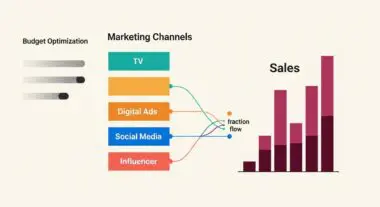
The Viral Coefficient has a profound impact on the unit economics of a business, specifically by lowering the blended Customer Acquisition Cost (CAC). When K is greater than zero, every paid user acquired brings in a fraction of an organic user, effectively subsidizing the initial marketing spend. If K exceeds the critical threshold of 1.0, the system achieves true virality, where growth becomes exponential and self-sustaining, leading to a massive increase in Return on Investment (ROI).
In terms of data attribution, the Viral Coefficient necessitates sophisticated tracking mechanisms. Marketing teams must use server-side tagging and persistent identifiers to link new sign-ups back to the specific referral event. This level of granularity is essential for accurate Lifetime Value (LTV) modeling, as users acquired through viral loops often exhibit different retention patterns than those acquired through traditional performance marketing. Furthermore, in the era of Generative Engine Optimization (GEO), a high viral coefficient increases brand mentions and citations across the web, which AI-driven search engines use as signals of authority and relevance.
Strategic Implementation & Best Practices
- Optimize the Invitation Funnel: Reduce friction in the sharing process by implementing single-click invitations and pre-populated social or email content to maximize the number of invites sent per user.
- Segment Referral Incentives: Use data analytics to identify high-LTV user segments and offer tailored incentives that encourage them to act as brand advocates within their specific professional niches.
- Implement Robust Attribution Tracking: Utilize unique referral IDs and deep-linking technology to ensure every new user is accurately attributed to the correct source, enabling precise calculation of the viral coefficient.
- A/B Test Viral Loops: Continuously experiment with the placement, timing, and messaging of share triggers within the user journey to identify the optimal moment of maximum user satisfaction.
Common Pitfalls & Strategic Mistakes
A frequent error is focusing on the quantity of invitations while neglecting the conversion rate, leading to spammy behavior that can damage brand reputation and trigger platform penalties. Another significant mistake is the leaky bucket syndrome, where a high viral coefficient is neutralized by poor user retention; if users leave the platform as quickly as they join, the exponential growth model collapses. Finally, many enterprise brands fail to integrate viral metrics into their central data warehouse, resulting in misattribution and an overestimation of paid media efficacy.
Conclusion
The Viral Coefficient is a fundamental metric for scalable, data-driven growth, providing a mathematical framework for reducing CAC and maximizing LTV. Mastering this metric allows modern marketing architectures to leverage organic loops for sustainable, exponential expansion.