Executive Summary
- Ensures high-fidelity data integrity by eliminating bot-driven subscriptions and invalid SMTP addresses through a two-step verification handshake.
- Provides a definitive, timestamped audit trail essential for meeting the strict ‘explicit consent’ requirements of GDPR, CCPA, and CASL.
- Protects sender reputation and IP warming strategies by significantly reducing hard bounces and spam complaints from non-consenting recipients.
What is Double Opt-In?
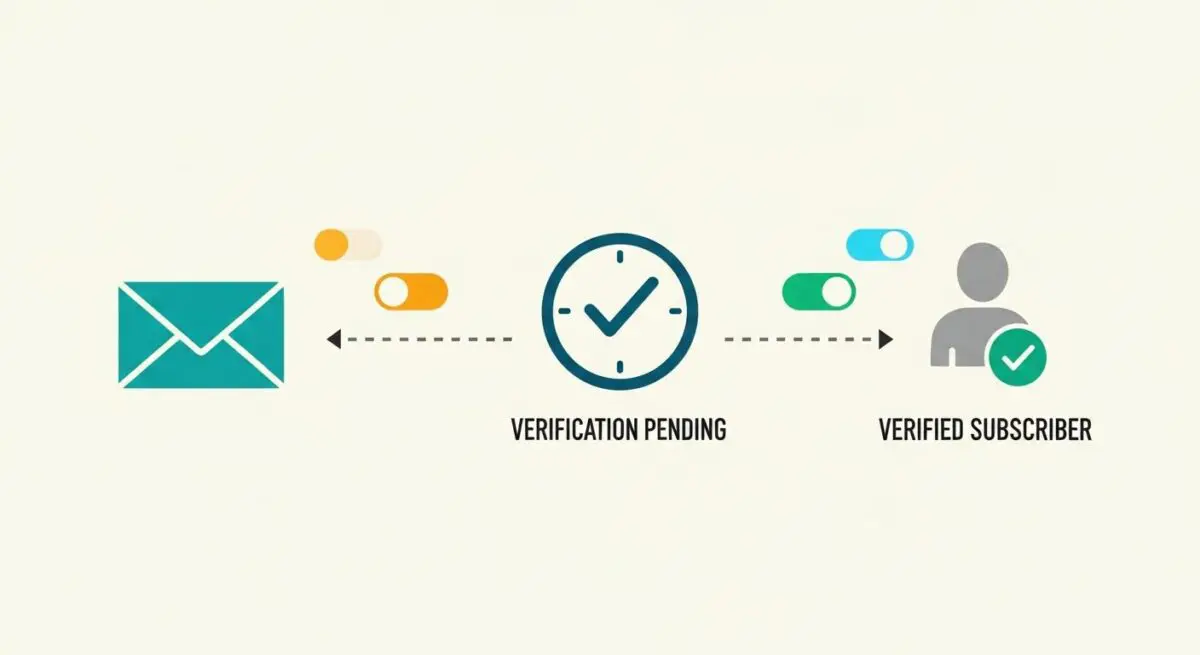
Double Opt-In (DOI), also known as Confirmed Opt-In (COI), is a rigorous lead acquisition protocol that requires a two-step verification process before a user is officially added to a marketing distribution list. The technical workflow begins when a user submits their information via a web form (the initial opt-in). This action triggers an automated transactional email containing a unique, time-sensitive verification token embedded in a hyperlink. The subscription is only finalized, and the user’s status updated to ‘confirmed’ within the database, once the recipient interacts with that specific link. This mechanism serves as a server-side validation of the user’s intent and the functional validity of the provided email address.
In the context of a modern MarTech stack, Double Opt-In acts as a critical filter for data ingestion. While Single Opt-In (SOI) allows for immediate database entry, it is susceptible to ‘form spam’ and malicious bot injections. DOI, conversely, ensures that every record in the Customer Relationship Management (CRM) system or Email Service Provider (ISP) platform has passed a functional handshake. This process is vital for maintaining high deliverability rates, as it prevents the inclusion of spam traps and ‘typo domains’ that can lead to blacklisting by Real-time Blackhole Lists (RBLs) and major Mail Transfer Agents (MTAs) like Gmail or Outlook.
The Real-World Analogy
To understand Double Opt-In, imagine a high-security corporate gala. A Single Opt-In is like someone writing their name on a guest list at the front door; anyone can write any name, even a fake one, and the organizers have no way of knowing if that person actually intended to be there. Double Opt-In is equivalent to that person writing their name down, and then receiving a text message with a unique code that they must show to a second security officer to receive their actual entry badge. This second step proves not only that the person is who they say they are, but that they possess the device (the inbox) associated with the identity and are genuinely committed to entering the event. It trades a small amount of convenience for a massive increase in security and the quality of the attendees.
How Double Opt-In Impacts Marketing ROI & Data Attribution?
The impact of Double Opt-In on Marketing ROI is profound, though often misunderstood by those focused solely on top-of-funnel volume. While DOI naturally introduces friction that can lead to a 20-40% drop-off in total signups, the resulting cohort exhibits significantly higher Lifetime Value (LTV) and engagement metrics. From a Data Attribution perspective, DOI provides a cleaner signal for conversion modeling. Because every confirmed user has actively engaged with the brand twice before receiving their first marketing communication, the ‘noise’ of accidental or low-intent signups is removed, allowing for more accurate calculation of Customer Acquisition Cost (CAC) and more reliable predictive modeling in AI-driven marketing platforms.
Furthermore, DOI is a cornerstone of deliverability engineering. ISPs monitor engagement signals—such as open rates and click-through rates (CTR)—to determine whether to deliver mail to the primary inbox or the spam folder. By ensuring that every recipient has explicitly confirmed their desire to receive content, DOI naturally inflates these engagement signals. This high-reputation environment reduces the likelihood of emails being throttled by MTAs, ensuring that high-value transactional and promotional content reaches the intended audience, thereby maximizing the return on investment for every campaign deployed.
Strategic Implementation & Best Practices
- Tokenization and Expiration: Implement cryptographically secure, one-time-use tokens for confirmation links. These links should expire within 24 to 48 hours to maintain security and ensure the immediacy of the user’s intent.
- Optimized Confirmation Pages: Upon the initial form submission, redirect users to a ‘Success’ page that explicitly instructs them to check their inbox, including specific instructions for checking ‘Promotions’ or ‘Spam’ folders to ensure the verification loop is closed.
- Automated Re-engagement for Pending Status: For users who have initiated the opt-in but not yet confirmed, trigger a single automated reminder 24 hours later. If the second step is not completed, the record should be purged or moved to a ‘non-marketable’ segment to maintain database hygiene.
- Cross-Channel Synchronization: Ensure that the ‘confirmed’ status is synced via API across all platforms, including the CDP, CRM, and Analytics suites, to prevent premature marketing touches to unconfirmed leads.
Common Pitfalls & Strategic Mistakes
One of the most frequent errors in DOI implementation is a lack of transparency during the initial signup phase. If a user is not informed that a second step is required, they may never check their email for the confirmation link, leading to a ‘leaky bucket’ in the acquisition funnel. Another technical mistake is failing to optimize the confirmation email for mobile devices; if the verification link is difficult to click or the email fails to render, the conversion path is effectively broken. Finally, many organizations fail to account for ‘pending’ users in their attribution software, leading to a discrepancy between lead generation spend and confirmed database growth, which skews performance data.
Conclusion
Double Opt-In is an essential protocol for any data-driven marketing architecture that prioritizes long-term deliverability, regulatory compliance, and high-intent audience growth over superficial lead volume. By implementing a rigorous two-step verification process, brands secure their sender reputation and ensure their marketing efforts are directed at a verified, engaged, and legally compliant audience.