Executive Summary
- Institutional Bifurcation: The market has split into Asset DAOs backed by major financial institutions and Modular Infrastructure DAOs focused on ecosystem scalability.
- AI-Agent Orchestration: Modern DAO stacks utilize autonomous AI agents to execute treasury operations, reducing governance latency from weeks to hours.
- Legal Personhood: The emergence of the Wyoming DUNA Act provides a framework for legal personhood, mitigating liability for contributors and enabling institutional participation.
The Evolution of Corporate Governance
The traditional corporate structure, defined by centralized boards and hierarchical management, is facing a fundamental challenge from a new organizational paradigm. A Decentralized Autonomous Organization (DAO) represents a shift toward software-mediated governance where rules are encoded as transparent computer programs. In the current market landscape of 2026, these entities have moved beyond experimental social clubs into sophisticated financial and infrastructure engines that manage billions in assets without a traditional CEO.
The strategic value of a DAO lies in its ability to coordinate global capital and talent with minimal friction. By replacing middle management with smart contracts, organizations can achieve a level of transparency and auditability that is impossible in legacy systems. This transition is not merely a technical upgrade; it is a complete reimagining of how value is created, captured, and distributed across a digital ecosystem.
Defining the DAO: The Strategic Foundation
A Decentralized Autonomous Organization is a member-owned institution without centralized leadership, where the rules of operation are hard-coded into smart contracts on a blockchain. Unlike a traditional company where decisions are made by a board of directors and executed by employees, a DAO executes decisions automatically based on the outcome of stakeholder votes. This structure ensures that the organization’s treasury and operational logic remain immutable and transparent, allowing participants who may not trust each other to collaborate toward a shared economic goal.
The Institutional Bifurcation of the DAO Ecosystem
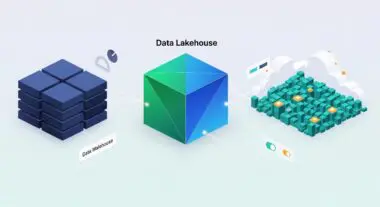
The landscape has matured into two distinct categories: Institutional Asset DAOs and Modular Infrastructure DAOs. Institutional Asset DAOs, often linked to major financial entities like BlackRock or Franklin Templeton, focus on the governance of tokenized real-world assets. These entities prioritize regulatory compliance and bankruptcy remoteness, often utilizing legal wrappers to bridge the gap between on-chain activity and traditional law.
On the other hand, Modular Infrastructure DAOs, such as those governing the Arbitrum or Optimism ecosystems, focus on technical scalability. These organizations manage the protocol parameters and upgrade paths for the underlying technology stack. We are seeing a significant shift in valuation drivers; investors no longer look at speculative total value locked (TVL) but instead focus on Governance Revenue Velocity (GRV) and Treasury Diversification Ratios. The goal is to create a self-sustaining economic loop where the protocol generates enough revenue to fund its own development and reward its participants.
A DAO is like a self-driving vending machine that not only sells products but also automatically orders its own inventory, pays its own taxes, and hires its own repair crew based on pre-set logic, all without a human manager ever touching the cash box.
DAO 2.0: AI-Agent Orchestration and Treasury Velocity
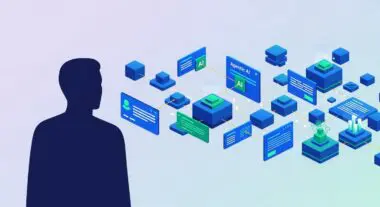
The most significant technical leap in recent years is the integration of AI agents into the governance stack. In earlier iterations, DAOs suffered from governance fatigue, where human token holders were overwhelmed by the volume of technical proposals. The current generation of DAOs leverages AI agents as primary delegates. These agents can execute sub-threshold treasury operations—such as rebalancing liquidity or optimizing yield—without requiring a full community vote for every minor adjustment.
This automation has improved the Proposal-to-Execution (PTE) metric by 400%, reducing the average governance cycle from 14 days to approximately 72 hours. Furthermore, the integration of Decentralized Knowledge Graphs (DKG) allows stakeholders to query real-time treasury health and risk vectors through generative search interfaces. Instead of reading a 50-page PDF proposal, a stakeholder can ask an AI interface about the potential impact of a specific treasury diversification strategy on the organization’s long-term solvency.
Operational Friction and the Oracle Gap
Despite the efficiency gains, significant hurdles remain. The primary technical bottleneck is the Oracle Gap—the latency between off-chain enterprise resource planning (ERP) systems and on-chain smart contracts. For a DAO to interact with the physical world, it requires real-time data synchronization that is currently computationally expensive. This creates a lag that can be exploited by sophisticated actors if the data becomes stale.
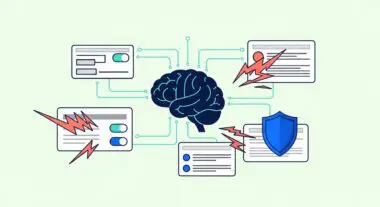
Additionally, the ecosystem faces a challenge with whale consolidation. In many top-tier protocols, a small fraction of wallet addresses controls a majority of the voting power. This concentration of influence can lead to strategic bottlenecks where the interests of large holders diverge from the long-term health of the protocol. Addressing this requires innovative game theory applications, such as quadratic voting or zero-knowledge (ZK) governance stacks, which allow for more equitable and private participation.
The Economic Impact: ROI and Administrative Efficiency
For enterprises, the transition to DAO-structured sub-units offers a compelling return on investment. Organizations report a 35% to 50% reduction in administrative overhead by replacing traditional middle-management functions with smart-contract-based service level agreements (SLAs). The cost of launching a global sub-entity has plummeted from hundreds of thousands of dollars in legal and administrative fees to a fraction of that cost through on-chain setup and standardized legal wrappers like the Wyoming DUNA Act.
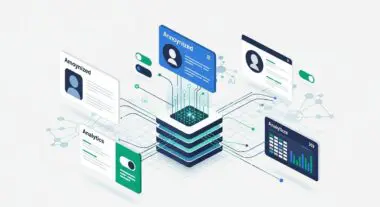
This regulatory catalyst provides DAOs with legal personhood and limited liability, effectively ending the regulatory gray zone that previously deterred institutional capital. By operating as a Decentralized Unincorporated Nonprofit Association, a DAO can enter into contracts and pay taxes while maintaining its decentralized nature. This legal clarity is essential for the next phase of growth, where DAOs will increasingly compete with traditional SaaS models by offering higher customer lifetime value through direct stakeholder ownership.
Andres’ Strategic Verdict: Tech-Business Outlook
From my perspective, the rise of the DAO is the most significant evolution in capital coordination since the invention of the joint-stock company. We are moving away from a world where trust is placed in individuals and toward a world where trust is placed in verifiable code. For the executive, the takeaway is clear: the competitive moat of the future is not just your product, but the efficiency of your governance. Organizations that can automate their decision-making processes while maintaining high levels of security will outpace traditional competitors who are bogged down by legacy bureaucracy.
I believe the real opportunity lies in the intersection of AI and decentralized infrastructure. As we see more DAOs owning their own hardware through DePIN (Decentralized Physical Infrastructure Networks), they will become truly censorship-resistant and autonomous. This is not just about crypto-tokens; it is about building resilient, global businesses that operate 24/7 without human intervention. The transition will be difficult, particularly regarding the talent shortage of protocol architects, but the long-term scalability and ROI make it an inevitable shift for any forward-thinking enterprise.
The Future of Autonomous Coordination
The transition to decentralized governance is a marathon, not a sprint. As the technology matures and the legal frameworks solidify, the DAO will become the standard for global, digital-first organizations. By leveraging AI orchestration and modular infrastructure, these entities are setting a new benchmark for operational efficiency and transparency in the global economy.
Navigating the intersection of generative search and operational efficiency requires more than just tools—it requires a roadmap. If you’re ready to evolve your strategy through specialized SEO, GEO, Adavanced Hosting Environments, or AI-driven automation, connect with Andres at Andres SEO Expert. Let’s build a future-proof foundation for your business together.”