Executive Summary
- Request count quantifies the total number of HTTP requests initiated by a browser to retrieve all assets required for a complete page render.
- High request volumes introduce significant latency through cumulative TCP/TLS handshakes and browser-level connection throttling.
- Modern optimization strategies prioritize resource consolidation and the utilization of multiplexing protocols like HTTP/2 and HTTP/3.
What is Request Count?
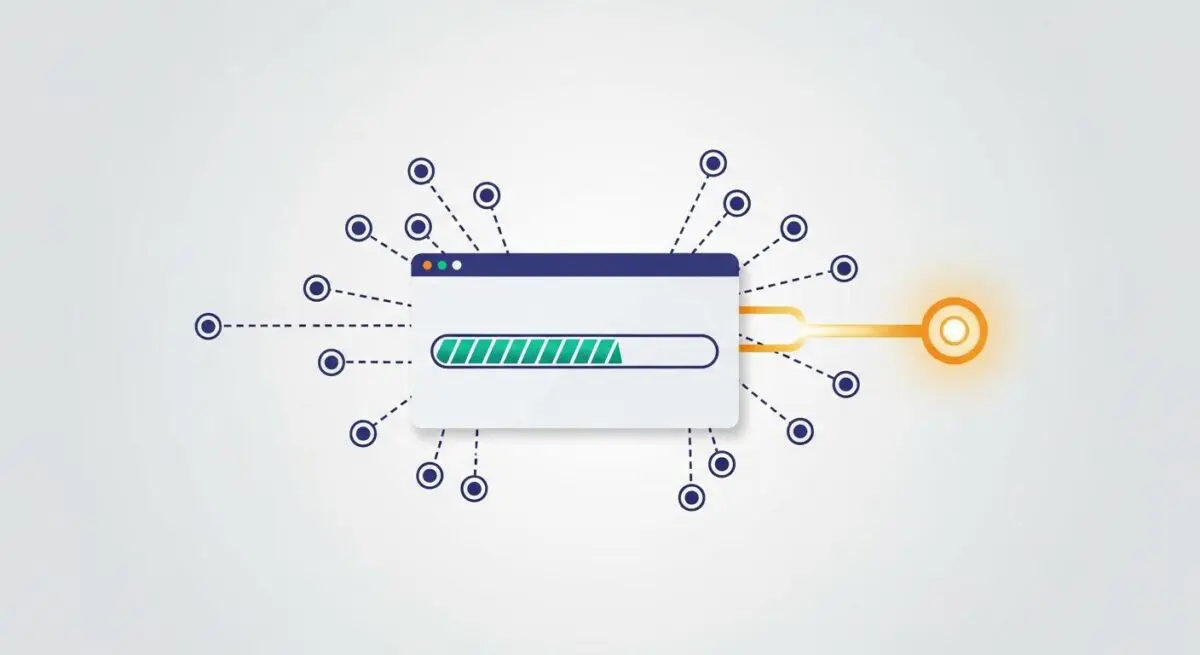
Request count is a fundamental metric in web performance auditing that represents the total number of individual HTTP requests a client (browser) must execute to retrieve all necessary assets for a complete page render. These assets include the initial HTML document, cascading stylesheets (CSS), JavaScript files, images, web fonts, and third-party scripts. Each request entails a specific lifecycle: DNS lookup, TCP handshake, TLS negotiation (for HTTPS), and the actual data transfer.
In a technical environment, every request carries a performance tax. Even if the file size is negligible, the overhead of establishing a connection and the subsequent server processing time can accumulate, leading to significant delays in the total page load time. We at Andres SEO Expert emphasize that managing this count is essential for maintaining a lean network waterfall and ensuring efficient resource allocation during the browser’s parsing phase.
The Real-World Analogy
Imagine you are building a piece of furniture. If every single screw, wooden plank, and tool is stored in a separate warehouse across town, you have to make a separate trip for every individual item. Even if the items are small, the travel time (latency) for 50 trips will far exceed the time spent actually building. Reducing the request count is equivalent to packing all necessary components into a single kit or a few large boxes, minimizing the number of trips required to complete the project and allowing you to finish the assembly much faster.
Why is Request Count Critical for Website Performance and Speed Engineering?
In the context of Speed Engineering, request count is a primary driver of the Critical Rendering Path efficiency. While modern protocols like HTTP/2 and HTTP/3 allow for multiplexing—sending multiple requests over a single connection—a high request count still imposes significant overhead. Browsers typically limit concurrent connections to a single origin (often 6 to 8 connections). When the request count exceeds this limit, assets are queued, leading to head-of-line blocking.
This queuing directly delays the Largest Contentful Paint (LCP) and increases the Time to Interactive (TTI), as the browser waits for critical scripts and styles to be parsed and executed. Furthermore, each request adds to the total CPU usage on the client side, as the browser must manage the state and priority of every incoming stream, which can degrade performance on low-powered mobile devices.
Best Practices & Implementation
- Implement Resource Bundling: Combine multiple CSS and JavaScript files into single production bundles to reduce the number of round-trips required to fetch styling and logic.
- Utilize CSS Sprites and SVG Symbols: Merge small decorative icons into a single image file or an SVG sprite sheet to fetch multiple visual elements in one single request.
- Adopt Lazy Loading: Defer the request of non-critical assets, such as below-the-fold images or off-screen videos, until they are required by the user’s viewport.
- Audit Third-Party Dependencies: Minimize the use of external tracking scripts, social widgets, and unnecessary plugins that inject multiple external requests beyond your direct control.
- Enable HTTP/3: Ensure the server supports modern protocols that mitigate the performance penalties of high request counts through improved multiplexing and header compression (QPACK).
Common Mistakes to Avoid
One frequent error is the over-reliance on micro-assets, where developers deploy dozens of tiny CSS or JS files instead of a cohesive architecture, which multiplies the overhead of HTTP headers. Another common mistake is uncontrolled third-party bloat, allowing marketing tags and analytics scripts to proliferate without a regular audit, often adding 50 or more requests to the network waterfall and severely impacting Core Web Vitals.
Conclusion
Optimizing request count remains a cornerstone of high-performance architecture, ensuring that the browser spends more time rendering content and less time navigating network overhead.