Key Points
- Data Type Validation: The recipeYield property strictly requires a Text or Integer format; injecting arrays or complex objects invalidates the JSON-LD extraction logic.
- Programmatic Injection: Bypassing empty UI fields via PHP filters ensures the recipeYield key-value pair is consistently appended to the structured data array before rendering.
- Headless Hydration Risks: In decoupled architectures, missing GraphQL query mapping can cause the yield data to render visually while remaining absent from the raw JSON-LD script tag.
Table of Contents
The Core Conflict: recipeYield Degradation
According to a technical study by Milestone Research, pages that resolve ‘Recommended’ property warnings in structured data see a cumulative 20% to 30% increase in Click-Through Rate (CTR) due to the higher visual prominence of enriched snippets.
When dealing with culinary content, the recipeYield property acts as a critical semantic anchor. It is a recommended field within the Schema.org/Recipe vocabulary that specifies the exact quantity produced by a recipe.
While Google classifies it as a recommended rather than required field, its absence triggers a direct warning in Google Search Console’s Rich Result reports. This warning signals a lack of data specificity to the parsing engine.
Consequently, this omission often leads to the suppression of rich snippet enhancements in mobile Search Engine Results Pages (SERPs). The servings count display is typically the first visual element to be degraded.
From a technical perspective, missing data impacts the Quality Score assigned by Google’s rendering engine, Caffeine, during the structured data processing phase. In the context of Generative Engine Optimization (GEO), AI-driven search agents rely heavily on this metric.
These agents need the yield data to answer complex user queries regarding portion sizes and nutritional scaling. Missing this data reduces the semantic density of the entity, potentially lowering the page’s visibility in structured data carousels.
Diagnostic Checkpoints and Root Causes
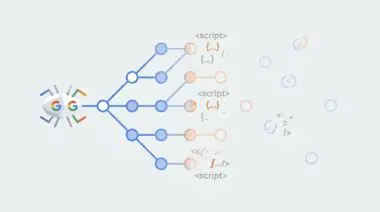
This error typically manifests as a desynchronization within the application stack. In server log files, you may observe Googlebot performing high-frequency fetches on pages with these warnings.
The bot attempts to re-parse the DOM for missing attributes, wasting valuable crawl budget. Running a curl command on the URL will reveal the presence of JSON-LD, but a manual string search for the yield property will return null.
Diagnostic Checkpoints
Plugin UI Field Omission
Empty UI fields trigger PHP array key omission.
Filter-based Schema Suppression
Logic-gated filters exclude recommended non-required schema properties.
Microdata vs. JSON-LD Conflict
Theme and plugin collisions cause parser entity failures.
Data Type Mismatch/Invalid Syntax
Non-string values invalidate property extraction logic.
Many WordPress SEO or Recipe plugins provide a specific UI field for servings. If this field is left empty by the content creator, the underlying PHP class responsible for generating the JSON-LD array will skip the key-value pair.
This is done to avoid outputting empty strings, which Google strictly interprets as a missing property. Furthermore, developers often use WordPress filters to programmatically clean up schema output.
A poorly written filter may exclude the yield property if it is logic-gated to only include required properties. This aggressive modification reduces payload size but strips critical context from the Official documentation defining recipeYield as a recommended property.
If a site uses a legacy theme with inline Microdata alongside a modern plugin adding JSON-LD, Google may encounter conflicting entities. The parser may fail to merge these entities correctly, resulting in a missing field error.
The Engineering Resolution Roadmap
Resolving this issue requires a systematic approach to structured data injection. You must ensure the JSON-LD object is fully populated before it reaches the frontend.
Engineering Resolution Roadmap
Identify Missing Data Source
Navigate to the affected URL and inspect the source code (Ctrl+U). Search for ‘”@type”:”Recipe”‘. Locate the JSON-LD block and verify if the “recipeYield” key exists. If it is missing, identify which plugin or theme file is generating the block using the ‘Search’ feature in the WP Plugin editor.
Global Schema Injection via Filter
If the plugin lacks a UI field, use a PHP filter to programmatically add the yield. For example, if using RankMath, hook into ‘rank_math/snippet/rich_snippet_recipe_entity’ and append the ‘recipeYield’ key to the $entity array with a default value or a value pulled from a custom field.
Sanitize and Format Output
Ensure the value passed to ‘recipeYield’ is a string or integer. Use the ‘strval()’ function in PHP to ensure the output is a valid JSON string. Avoid adding HTML tags within the yield value as this will break the structured data parsing.
Flush Object and Edge Cache
After code implementation, flush the WordPress Object Cache (Redis/Memcached) and purge the CDN (Cloudflare/Sucuri) to ensure the updated JSON-LD is served to Googlebot on its next crawl.
The first step is identifying the origin of the missing data source. You must verify which plugin or theme file is generating the primary recipe block.
Once identified, you can determine if the issue stems from a missing UI input or an aggressive PHP filter. If the plugin lacks a dedicated field, programmatic injection is required.
You must ensure the value passed to the yield property strictly adheres to the official vocabulary definition for expected data types. The property expects a Text or Integer format.
Injecting arrays or complex objects will invalidate the JSON-LD syntax. Finally, flushing the object cache and edge cache guarantees that Googlebot receives the updated payload on its next crawl.
Resolution Execution: Global Schema Injection
When UI fields fail or are consistently ignored by content teams, forcing the schema output via a global filter is the most robust solution. This ensures the key is always present in the JSON-LD array.
By hooking into the specific schema generation filter of your SEO or recipe plugin, you can append the missing property. You can pull this value from a custom meta field or assign a fallback default.
Fixing via PHP Filters
The following PHP snippet demonstrates how to intercept the JSON-LD array and inject the missing yield property. It checks for an existing value, retrieves custom post meta if necessary, and strictly sanitizes the output to a string.
add_filter( 'wprm_recipe_json_ld', function( $data, $recipe ) {
    if ( empty( $data['recipeYield'] ) ) {
        $servings = get_post_meta( $recipe->id, 'custom_yield_meta_key', true );
        $data['recipeYield'] = !empty( $servings ) ? strval( $servings ) : '1 serving';
    }
    return $data;
}, 10, 2 );
Validation Protocol & Edge Cases
Deploying the code is only half the battle. You must immediately verify the structural integrity of the newly generated JSON-LD object.
Validation Protocol
- Submit the production URL to the Google Rich Results Test tool for real-time parsing.
- Verify the ‘recipeYield’ field appears under the ‘Recipe’ detected items with no warnings.
- Execute ‘curl -s [URL] | jq’ in the terminal to inspect the raw JSON-LD structure.
- Confirm the key-value pair is present and uses correct Text or Integer data types.
Understanding how missing schema properties impact mobile visibility is crucial for debugging complex architectures. In Headless WordPress environments using WPGraphQL, the yield data might be present in the CMS but excluded from the frontend query.
If the React or Next.js frontend hydration logic fails to map the GraphQL field to the JSON-LD component, the parser will fail. The user will see the yield rendered on the page, but Googlebot will see a missing field in the raw HTML script tag.
Autonomous Monitoring & Prevention
To prevent future schema degradation, engineering teams should implement a schema validation stage within their CI/CD pipeline. Utilizing the schema-dts library ensures TypeScript definitions match expected structured data formats.
Additionally, automated testing scripts can run staging URLs through the Google Rich Results Test API before deployment. Setting up custom GSC alerts via the Search Console API provides real-time notifications when recipe warning thresholds are exceeded.
At an enterprise level, maintaining entity integrity requires continuous log analysis and automated data pipelines. Leveraging tools like Make.com alongside custom server monitoring ensures discrepancies are caught before they impact SERP real estate.
Conclusion
Resolving the missing yield property is a fundamental step in optimizing culinary entities for modern search engines. By ensuring strict data typing and bypassing UI limitations with programmatic filters, you secure your rich snippet eligibility.
Navigating the intersection of technical SEO, server architecture, and generative search requires a precise roadmap. If you need to future-proof your enterprise stack, resolve deep-level crawl anomalies, or implement AI-driven SEO automation, connect with Andres at Andres SEO Expert.