Executive Summary
- Extensible node-based workflow engine supporting self-hosting and fair-code licensing for complete data sovereignty.
- Native integration with 400+ APIs and deep support for custom JavaScript/TypeScript logic via the Code Node.
- Facilitates complex, stateless automation and multi-step data orchestration for AI-driven content pipelines and programmatic SEO.
What is n8n?
n8n is an extendable, node-based workflow automation tool designed to synchronize data and automate processes across disparate software ecosystems. Unlike traditional SaaS automation platforms that operate on a closed-source, per-execution pricing model, n8n follows a fair-code distribution. This allows engineering teams to self-host the application on their own infrastructure, ensuring that sensitive API payloads and proprietary data never leave the controlled environment. It is built on a highly flexible JSON-centric architecture, making it natively compatible with RESTful APIs, webhooks, and modern database structures.
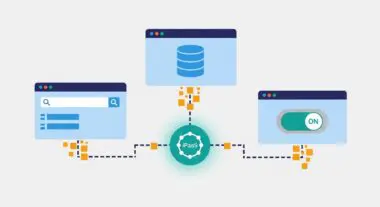
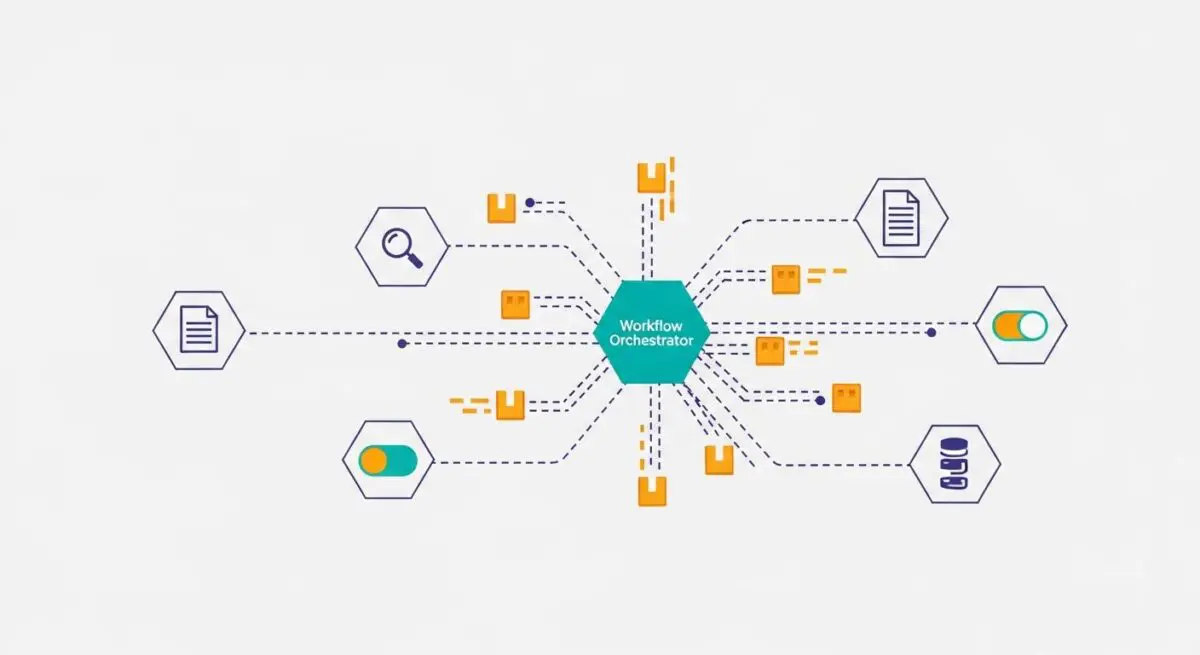
At its core, n8n functions as a visual orchestrator where each “node” represents a specific action, trigger, or data transformation. By connecting these nodes, developers can build sophisticated logic flows that include conditional branching, loops, and error-handling. Because it is written in TypeScript and runs on Node.js, it provides a high degree of extensibility, allowing users to write custom code directly within the workflow to manipulate data in ways that standard no-code tools cannot accommodate.
The Real-World Analogy
Think of n8n as a highly advanced, modular electrical circuit board for a global smart factory. In a standard factory, you might have various machines (apps) that perform specific tasks but don’t naturally communicate. n8n acts as the central wiring system and control panel. You can plug in any machine, define exactly how much electricity (data) flows between them, and insert custom logic gates or sensors (code) to ensure the entire assembly line operates autonomously. If one machine fails, the circuit board can automatically reroute the flow or trigger an alarm, ensuring the factory continues to produce results without manual oversight.
Why is n8n Critical for Autonomous Workflows and AI Content Ops?
In the era of AI-driven operations, n8n serves as the essential “connective tissue” for Large Language Model (LLM) orchestration. It enables the creation of complex stateless automation chains where data is fetched from a source (like a headless CMS or SEO tool), processed through an AI model for enrichment or generation, and then distributed across multiple endpoints. Its ability to handle high-volume API payloads with minimal latency makes it the preferred choice for programmatic SEO and GEO (Generative Engine Optimization), where thousands of pages or data points must be updated dynamically based on real-time search trends or database changes.
Best Practices & Implementation
- Modularize with Sub-workflows: Use the “Execute Workflow” node to break down complex processes into smaller, reusable components, which improves maintainability and debugging efficiency.
- Implement Global Error Handling: Configure a dedicated Error Trigger workflow to capture execution failures, ensuring that logs are sent to a monitoring service like Slack or Sentry immediately.
- Optimize with the Code Node: Instead of chaining multiple basic transformation nodes, use a single Code Node to perform complex JSON manipulations using JavaScript, reducing the computational overhead of the workflow.
- Utilize Environment Variables: Store API credentials and environment-specific configurations in variables rather than hard-coding them, facilitating seamless transitions between staging and production environments.
Common Mistakes to Avoid
One frequent error is the creation of “spaghetti workflows,” where users attempt to replicate complex logic using dozens of visual nodes instead of utilizing a single Code Node for data transformation. This leads to unreadable and fragile automations. Another common mistake is neglecting binary data persistence; failing to properly configure how n8n handles large files or images can lead to memory exhaustion on the host server during high-concurrency executions.
Conclusion
n8n provides the technical flexibility and data security required to build enterprise-grade AI automations, offering a scalable alternative to restrictive SaaS platforms for modern data engineering.