



Executive Summary
- Facilitates seamless data exchange between disparate software applications and services through standardized protocols.
- Acts as a critical translation layer for JSON payloads and webhook management within autonomous AI workflows.
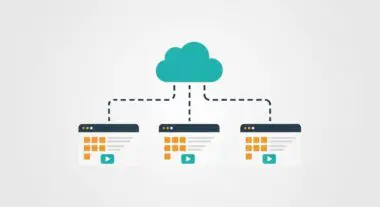
- Enables modularity and scalability by decoupling front-end interfaces from complex back-end logic and third-party APIs.
What is Middleware?
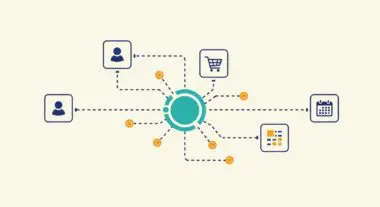
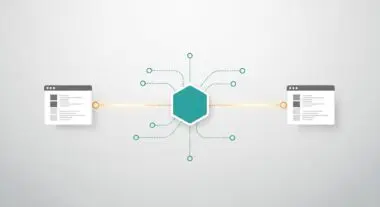
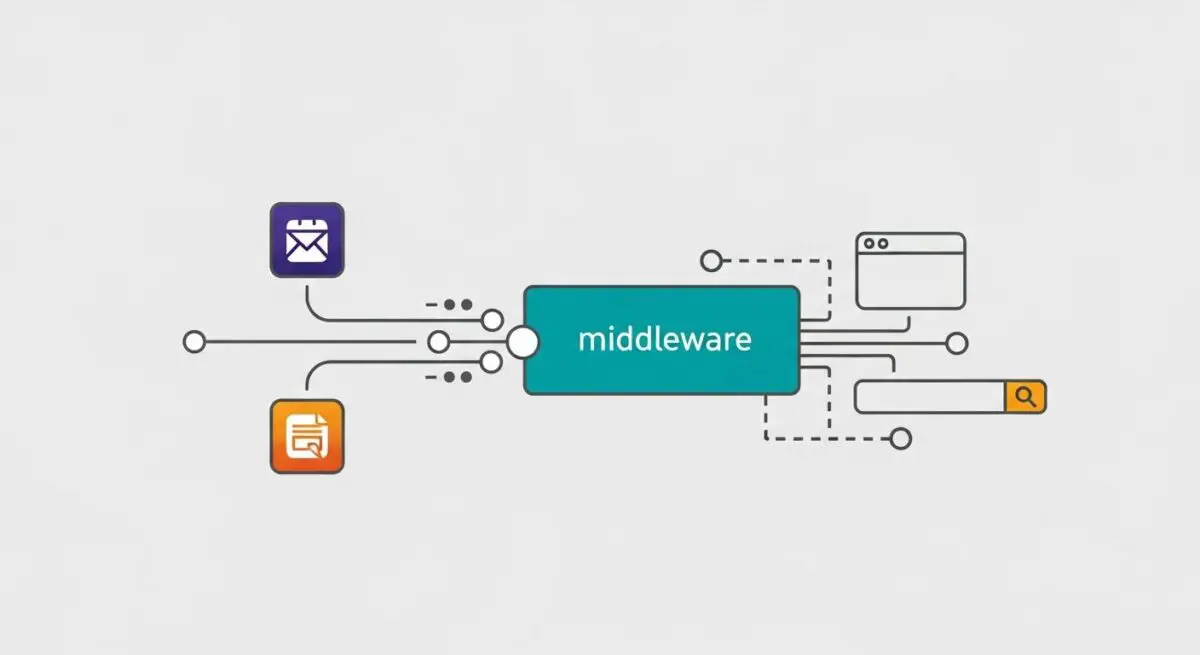
Middleware is a specialized software layer that resides between disparate applications, operating systems, or distributed components to facilitate communication and data management. In the context of modern AI automations, it functions as the connective tissue or software glue that enables heterogeneous systems—such as a legacy CRM, a cloud-based LLM, and a headless CMS—to exchange information seamlessly without requiring direct integration between every individual node.
Technically, middleware abstracts the complexities of network protocols, data formats, and hardware architectures. It provides a standardized set of services, including message queuing, authentication, and data transformation. By handling the interoperability layer, middleware allows developers to focus on business logic rather than the underlying mechanics of data transport and synchronization across distributed environments.
The Real-World Analogy
Imagine a high-level diplomatic summit where leaders from twenty different countries meet to negotiate a complex treaty. Each leader speaks a different language and follows different cultural protocols. Instead of every leader trying to learn nineteen other languages, the summit employs a centralized team of expert translators and protocol officers. These intermediaries—the middleware—ensure that every message is accurately translated, formatted correctly for the recipient, and delivered through the appropriate channel, allowing the leaders to focus on the high-level negotiation rather than the mechanics of communication.
Why is Middleware Critical for Autonomous Workflows and AI Content Ops?
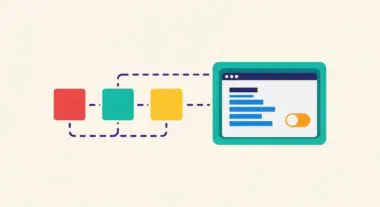
In autonomous workflows, middleware is the engine of stateless automation. It manages the state and context of data as it moves through an API pipeline, ensuring that JSON payloads are validated and transformed before reaching their destination. For AI content operations, middleware is essential for data normalization; it can ingest raw data from multiple SEO tools, clean the noise, and present a unified, structured prompt to an LLM, ensuring consistent output quality.
Furthermore, middleware provides the necessary infrastructure for serverless scaling and rate limiting. When executing programmatic SEO at scale, middleware can buffer requests to prevent hitting API limits, handle retries for failed executions, and log every transaction for auditability. This decoupling of the data source from the AI processing layer ensures that the entire system remains resilient even if one component experiences latency or downtime.
Best Practices & Implementation
- Implement Robust Data Validation: Use middleware to sanitize and validate all incoming payloads before they reach your core logic to prevent injection attacks and data corruption.
- Enforce Centralized Authentication: Manage API keys, OAuth tokens, and security headers within the middleware layer to ensure consistent security across all connected services.
- Utilize Asynchronous Messaging: Implement message queues within your middleware to handle high-volume traffic without blocking execution threads, improving overall system throughput.
- Prioritize Observability: Integrate comprehensive logging and monitoring at the middleware level to track data flow, latency, and error rates across the entire automation stack.
Common Mistakes to Avoid
One frequent error is over-engineering the middleware layer, creating unnecessary latency by adding too many transformation steps or complex logic that should reside in the application itself. Another critical mistake is failing to implement idempotency; without it, a retried request through the middleware could result in duplicate data entries or redundant API charges. Finally, many organizations neglect error-handling schemas, leading to silent failures where the middleware fails to notify the primary system of a broken connection.
Conclusion
Middleware is the foundational architecture that enables complex, multi-tool AI automations to function as a cohesive, scalable system. By mastering its implementation, organizations can ensure high-integrity data pipelines and resilient autonomous workflows.