

Executive Summary
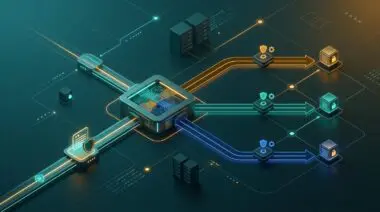
- Edge AI decentralizes data processing by executing machine learning models directly on local hardware, significantly reducing latency and bandwidth consumption.
- The shift toward on-device inference enhances data privacy and security by minimizing the transmission of sensitive information to centralized cloud servers.
- For AI agents and GEO, Edge AI enables real-time decision-making and context-aware interactions without reliance on persistent high-speed connectivity.
What is Edge AI?
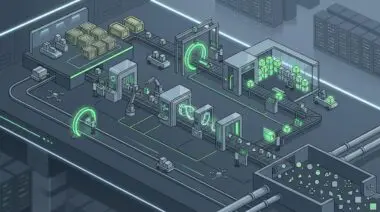
Edge AI refers to the deployment of machine learning models and artificial intelligence algorithms directly on local hardware devices, such as smartphones, IoT sensors, and autonomous vehicles, rather than relying on centralized cloud-based data centers. This paradigm shift involves moving the inference engine—the part of the AI that makes predictions or decisions—to the “edge” of the network, where data is initially generated. By utilizing specialized hardware like Neural Processing Units (NPUs) and Tensor Processing Units (TPUs), Edge AI minimizes the need for constant data transmission and reduces the computational burden on central infrastructures.
Technically, Edge AI involves sophisticated model optimization techniques, including quantization and pruning, to ensure that complex neural networks can operate within the limited memory and computational constraints of edge devices. This architecture is critical for applications requiring sub-millisecond response times, where the round-trip latency of cloud communication would be prohibitive. It represents a fundamental move toward decentralized intelligence, enabling devices to perceive, learn, and act autonomously in real-time without external dependencies.
The Real-World Analogy
Imagine a professional chef who lives in your home versus a high-end catering service located across the city. If you want a snack immediately, the live-in chef (Edge AI) can prepare it instantly using the ingredients already in your pantry. You do not have to wait for a delivery driver to navigate traffic or worry about your order getting lost in a busy central kitchen. The catering service (Cloud AI) might have a larger menu, but for immediate, personalized needs, the local chef is faster, more secure, and works even if the roads are closed.
Why is Edge AI Important for GEO and LLMs?
In the context of Generative Engine Optimization (GEO) and Large Language Models (LLMs), Edge AI is a transformative force for AI Visibility and Source Attribution. As AI agents become more integrated into hardware, they will increasingly rely on local context and Small Language Models (SLMs) to provide answers. For GEO professionals, this means content must be structured to be easily digestible by these smaller, local models that may have limited context windows compared to their cloud-based counterparts.
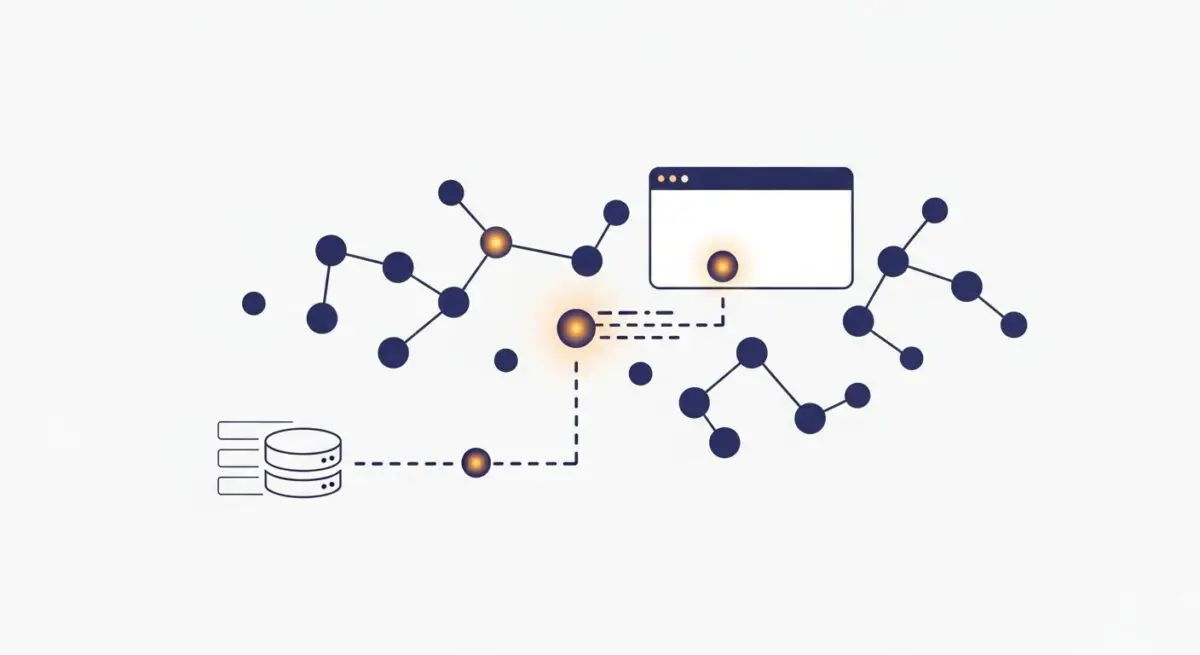
Furthermore, Edge AI facilitates Privacy-Preserving RAG (Retrieval-Augmented Generation). When an AI agent processes a user’s private data locally to ground an LLM’s response, the “source” of that information remains on the device. This creates a new tier of authority where local data and highly optimized, structured web content become the primary inputs for real-time decision-making, bypassing the traditional search engine results page (SERP) entirely and favoring entities with high technical accessibility.
Best Practices & Implementation
- Model Quantization: Convert high-precision floating-point weights (FP32) to lower-precision formats (INT8) to reduce the memory footprint and increase inference speed on edge hardware.
- On-Device Vector Stores: Implement lightweight vector databases to enable local semantic search and retrieval, ensuring AI agents can access relevant context without cloud latency.
- Hardware-Aware Optimization: Tailor AI models to the specific instruction sets of the target hardware, such as ARM Neon or specialized NPU architectures, to maximize throughput.
- Federated Learning: Utilize decentralized training techniques where models learn from local data across multiple devices while keeping the raw data private, only sharing weight updates with a central server.
Common Mistakes to Avoid
One frequent error is failing to optimize model architecture for the specific constraints of edge devices, leading to excessive battery drain or thermal throttling. Another mistake is assuming that Edge AI replaces Cloud AI entirely; the most effective systems use a hybrid approach where the edge handles immediate inference and the cloud manages heavy retraining and long-term storage. Finally, neglecting data synchronization can lead to “model drift,” where the local AI becomes less accurate over time as it loses alignment with global data trends.
Conclusion
Edge AI is the cornerstone of low-latency, private, and autonomous intelligence, requiring a shift in how content is optimized for local AI agent consumption and real-time inference.